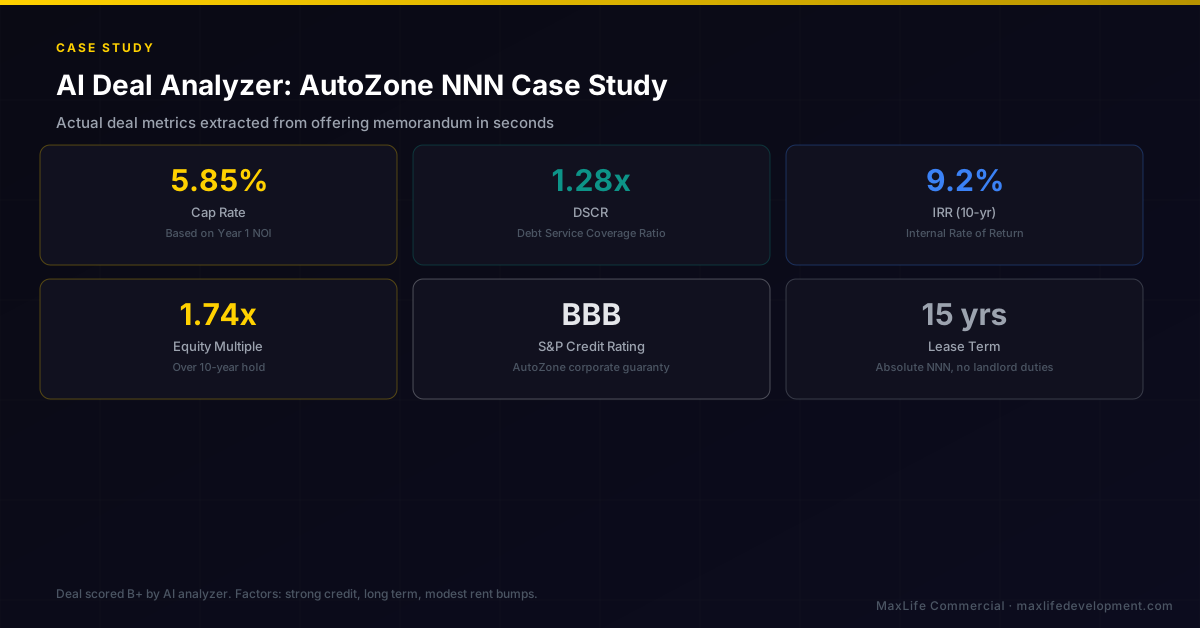
Case Study · CRE Underwriting
I Built an AI to Underwrite CRE Deals in 10 Seconds. Here’s What It Caught on a Real AutoZone OM.
I’ve been a Florida CRE broker for 11 years. The most common mistake I see first-time commercial buyers make is the same one, over and over: they look at the cap rate, see a number that beats their savings account, and skip the math that actually matters.
So I built a free tool to do the math for them. You drop in any offering memorandum (PDF), and an AI reads the entire document, extracts the deal terms, and runs a full underwriting in about ten seconds — IRR, DSCR, cash-on-cash, equity multiple, and a letter-grade deal score. It lives at maxlifedevelopment.com/pdf-analyzer.
To show what it does, I dropped in a real OM I had on file: a $1.2M AutoZone ground lease in Orlando (801 S Goldenrod Rd, listed at a 5.04% cap rate). On paper, this looks like a great deal. NYSE-traded credit tenant. Absolute NNN structure. Zero landlord responsibilities. Twenty-year initial term with four 5-year renewals.
Here’s what the AI flagged in 6.7 seconds:
IRR
3.86%
FAIL · target >12%
DSCR
0.86x
FAIL · target >1.25x
Cash-on-Cash
-1.17%
FAIL · negative
Equity Multiple
1.50x
FAIL · target >2.0x
The Negative Leverage Trap
The killer metric is the DSCR of 0.86x. Here’s what that means in plain English: the property generates $60,500 a year in net operating income. With a standard 25% down (= $300K equity) financed at today’s 6.75% interest over 30 years, the annual debt service is $70,049.
That’s right — your mortgage payment is $9,549 more per year than the property earns. Year one, you write a check out of your own pocket just to keep the deal alive. Year two, three, four — same thing, every month, until rent escalations kick in or you sell.
CRE professionals call this negative leverage: buying at a cap rate lower than your borrowing cost. It’s mathematically guaranteed to lose you money on a current-yield basis until rates fall, rents rise, or the market re-rates the asset upward — none of which you can control.
But the OM Looks Beautiful
And this is the trap. The offering memorandum for this AutoZone is 21 pages of glossy photos, demographic charts, drone shots of 41,000 vehicles per day on Goldenrod Road, and the words “corporate guarantee” and “NYSE-listed” in roughly twenty places. Nowhere in the document does it warn you that financing this at the asking price means losing money every month from day one.
The listing broker isn’t lying — the cap rate is mathematically real. They’re just selling you the story you want to hear: name-brand tenant, passive income, leave-it-alone asset. The math the AI surfaces is the math your accountant would tell you about three months after closing, when you call to ask why your bank account keeps going down.
What an AI Analyzer Actually Catches
The mechanics matter. The AI’s job isn’t to tell you whether to buy a deal — that’s your job, your CPA’s job, and your lender’s job. The AI’s job is to turn a 21-page PDF into the four numbers that matter before you spend a week of your life building a pro forma in Excel on a deal that was never going to pencil.
Here’s what it caught on this AutoZone in seconds:
- 5.04% entrance cap is below today’s borrowing cost. Negative leverage from day one at any standard LTV.
- Only ~3 years remain on the lease. The 20-year term started in 2009 and the “four 5-year renewals” are at AutoZone’s option, not yours. If they don’t exercise, you’re holding a vacant 7,008-SF box on a half-acre.
- Year 1 cash flow is negative $9,549. That’s before any maintenance, vacancy, or surprises.
- Equity multiple of 1.5x over a 10-year hold. Even if you held the full ten years and exited at the same cap rate, you’d 1.5x your money — versus an S&P index fund historically averaging ~2.6x over the same window with zero effort.
The Counter-Argument (And Why It Still Doesn’t Hold)
A sophisticated NNN buyer might say: “Sure, the cash-on-cash is bad, but I’m buying the dirt. In ten years this is a redevelopment play — out parcel near major intersection, BU-1A zoning, density of new rooftops in Orlando. I’ll tear it down and build a 5,000 SF medical retail building.”
Fair argument — but if that’s your thesis, you should be paying land value, not stabilized-NNN value. Run the same tool with the “land value at exit” assumption and the grade improves. But that’s a development bet, not a passive income bet, and it’s not what the OM is selling.
The Update: How This Deal Actually Closed
Here’s the part that matters — and a little transparency: this was my listing.I acted as transaction broker on the sale, working with both the seller and the buyer. And I’ll be straight with you, the same way the analyzer is: the initial 5.04% asking cap was aspirational. The tool showed exactly why a financed buyer couldn’t make it work at that number — and the market agreed. A listing that sits on a price that won’t clear doesn’t help anyone; it has to be priced where it actually trades.
So we marketed it properly — professional drone and HDR photography, a full OM, outreach to the net-lease buyer pool — and worked directly with the buyer, a licensed principal investor. The deal moved from an $857,000 opening all-cash offer to a $950,000 close in March 2026 — a 6.37% cap rate on the same $60,500 of NOI. That’s about $93,000 above the opening offer, and a fast, clean close. The price pencils for a buyer and gave the seller a certain, on-time exit. That’s what honest analysis does — even on your own listing, it tells you where a deal really clears so it can get done.
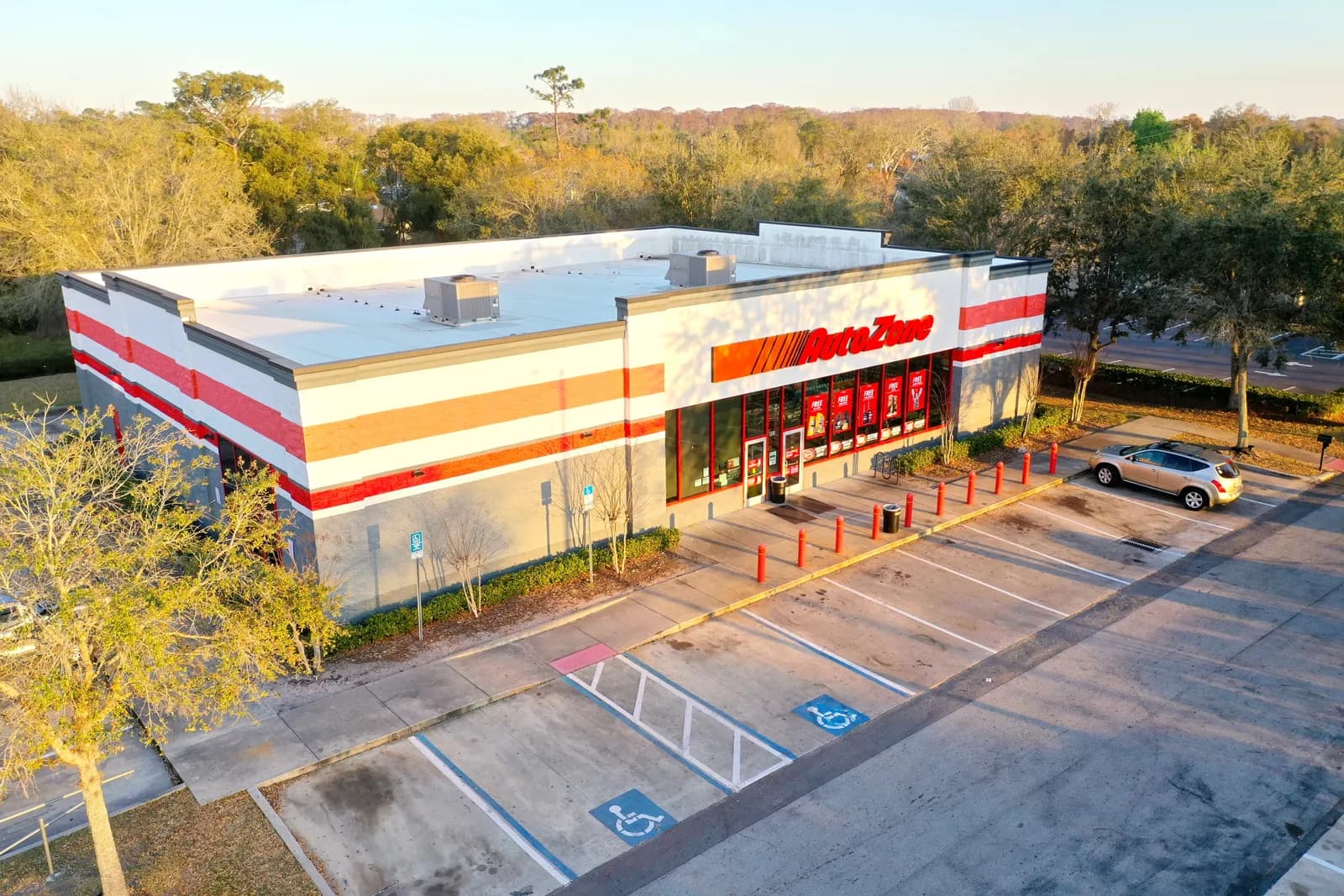
801 S Goldenrod Rd, Orlando — our AutoZone listing, sold March 2026. See the full case study.
Try It on Your Own Deal
The PDF Deal Analyzer is free — just add your name and email so I can send your results and follow up personally. Drop any offering memorandum — NNN, multifamily, retail strip, industrial, medical office — and you’ll get the full analysis back in about ten seconds.
Free · No Signup
Run an OM Through the AI Analyzer
Drop any commercial offering memorandum. Get IRR, DSCR, cash-on-cash, equity multiple, and a letter-grade in about ten seconds.
Try the PDF Deal Analyzer →A few notes
The numbers above use today’s defaults: 25% down, 6.75% interest, 30-year amortization, 10-year hold, 0.5% exit cap spread. All overrideable in the tool. If you’re an all-cash buyer or you’re putting 50% down, the math obviously changes — and the AI will recalculate.
For informational purposes only. Not investment, tax, legal, or accounting advice. AI-extracted figures should always be verified against the source document.
Related Articles
How to Evaluate a Commercial Real Estate Deal
The metrics that matter — IRR, DSCR, cap rate, and equity multiple explained.
Cap Rate vs. Cash-on-Cash Return
Two numbers every CRE investor quotes, but most confuse. Here's the difference.
What Is a Triple Net (NNN) Lease?
NNN fundamentals — obligations, rent structure, and tenant credit considerations.
The Ultimate Guide to NNN Investing
How to source, underwrite, and close NNN properties across Florida.
Ground Lease vs. Fee Simple
When ground leases outperform fee simple ownership — and when they don't.
Orlando NNN Properties for Sale
Active NNN inventory and market conditions across the Orlando metro.
Get Off-Market CRE Deals in Your Inbox
Join our investor list for exclusive Central Florida opportunities, market reports, and deal analysis — delivered weekly. No spam, unsubscribe anytime.