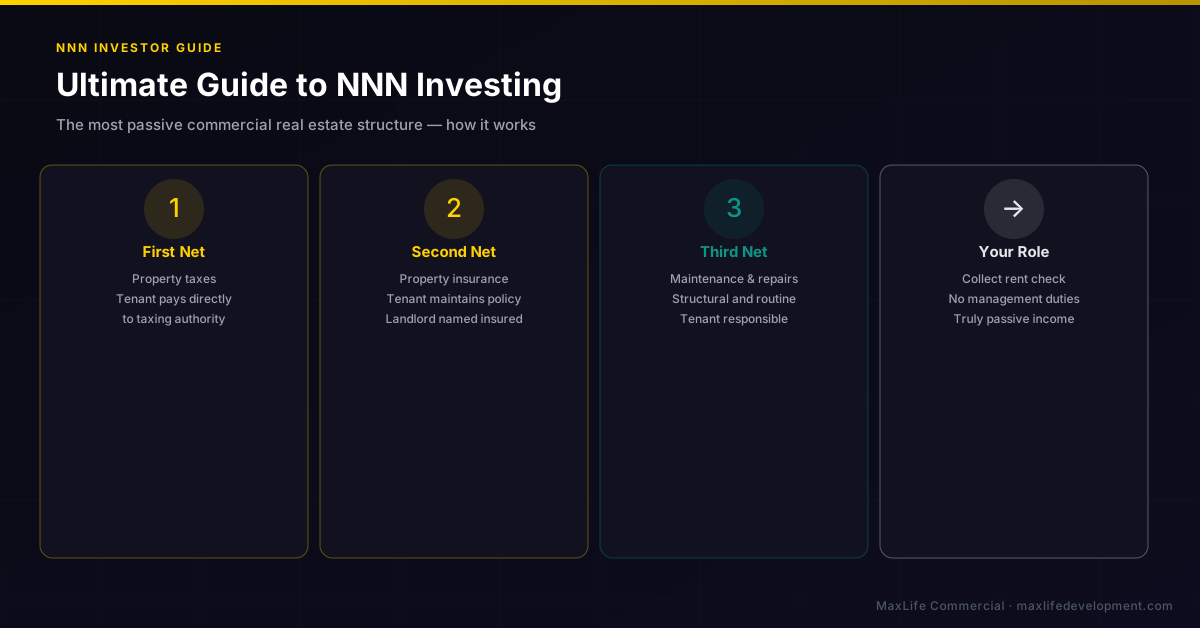
1. What Is NNN Investing?
A triple net (NNN) lease is a commercial real estate lease structure where the tenant pays all three major operating expenses — property taxes, insurance, and maintenance — in addition to base rent. This creates one of the most passive commercial real estate investments available: the landlord collects rent and the tenant handles essentially everything else.
NNN properties are typically single-tenant buildings occupied by national brands — think Walgreens, CVS, Dollar General, AutoZone, Chick-fil-A, or Starbucks. These corporations sign long-term leases (often 10-25+ years) at properties developed specifically for them, then operate with minimal landlord involvement.
2. Why Investors Love NNN
NNN has become one of the most popular commercial real estate strategies for several compelling reasons:
- Truly passive income. No tenant calls, no maintenance coordination, no management headaches. The tenant handles everything.
- Creditworthy tenants. National corporations with investment-grade credit (BBB- or better) mean extremely low default risk.
- Long-term leases. 10-25+ year initial terms with built-in rent escalations create decades of predictable income.
- Inflation protection. Most leases include 10% rent bumps every 5 years, providing income growth ahead of typical CPI.
- 1031 exchange friendly. NNN is the most popular 1031 replacement property class — easy to acquire, easy to resell.
- Recession resilient. Essential-service tenants (pharmacies, auto parts, dollar stores) perform well in downturns.
3. Lease Structures — The Details Matter
Not all "NNN" leases are created equal. Three common structures:
Absolute NNN
Tenant pays EVERYTHING — taxes, insurance, maintenance, roof, structure. Landlord has zero responsibility. Gold standard for passive investors.
NNN (Triple Net)
Tenant pays taxes, insurance, and all maintenance. Landlord may retain some structural responsibility depending on the specific lease.
NN (Double Net)
Tenant pays taxes, insurance, and day-to-day maintenance. Landlord retains roof and structural responsibility. Slightly wider cap rates.
Pro tip:Always read the specific lease. "NNN" in the listing title doesn't guarantee absolute NNN — confirm with the actual lease document during due diligence.
4. Tenant Credit and Quality
With a single-tenant property, your income entirely depends on that tenant's ability to pay rent. Tenant credit analysis is critical:
| Credit Rating | Example Tenants | Cap Rate Impact |
|---|---|---|
| A+ to AA | Chase Bank, Walmart | Tightest cap rates (4.5-5.5%) |
| BBB+ to BBB | CVS, AutoZone, Dollar General, Chipotle | Mid-range cap rates (5.5-6.5%) |
| BBB- to BB | Walgreens, Wendy's, Dollar Tree | Slightly wider (6-7%) |
| Below BB | Franchisees, smaller chains | Wider cap rates (7%+) |
Investment-grade (BBB- or higher) is the benchmark for institutional-quality NNN. For first-time buyers, stick with investment-grade tenants unless you understand the specific business and franchise dynamics of a non-IG operator.
5. Cap Rates — What to Expect
Cap rates in the NNN market reflect tenant credit, lease term remaining, location quality, and broader interest rates. As of 2026, typical NNN cap rates range:
- • Premium tenants / ground leases (Chick-fil-A, Chase): 3.75% – 5.25%
- • Investment-grade QSR / Coffee: 4.75% – 5.75%
- • Auto parts (AutoZone, O'Reilly): 5.25% – 6.0%
- • CVS Pharmacy: 5.5% – 6.5%
- • Dollar General: 5.75% – 6.5%
- • Walgreens: 6.0% – 7.0%
- • Medical (DaVita, Fresenius): 6.0% – 7.0%
- • Shorter-term or non-IG tenants: 6.75%+
6. Financing NNN Acquisitions
NNN is one of the easiest CRE categories to finance. Typical terms:
- • LTV: 70-75% for investment-grade tenants
- • DSCR required: 1.20-1.30x
- • Term: 5-10 years with 25-year amortization
- • Rate: ~6.0-7.5% (2026)
- • Recourse: Usually personal guarantee under $3M; may be non-recourse on larger deals
- • Typical close: 45-60 days from application
Lenders who specialize in NNN (private banks, credit unions, life companies, CMBS) often underwrite aggressively on investment-grade tenants — sometimes reaching 75-80% LTV with strong DSCRs.
7. Due Diligence Checklist
Even on "simple" NNN properties, don't skip diligence. Key items to review:
8. NNN and 1031 Exchanges
NNN properties are the most popular 1031 exchange replacement property class — and for good reason. Long leases, creditworthy tenants, passive income, and strong buyer demand make NNN essentially a turnkey exchange target.
Key 1031 timelines: 45 days to identify replacement properties, 180 days to close. You must engage a qualified intermediary BEFORE closing the sale of your original property. For NNN replacement property, work with a broker who can source inventory quickly and close within the timeline.
Calculate your 1031 timeline →9. Risks and How to Mitigate Them
NNN is not risk-free. Main risks and mitigation:
Tenant default / bankruptcy
Mitigation: Prioritize investment-grade tenants. Diversify across multiple tenants/categories over time.
Lease expiration without renewal
Mitigation: Buy properties with 10+ years remaining. Consider real estate value if tenant leaves.
Cap rate expansion at sale
Mitigation: Long holds or 1031 chains minimize sale timing risk. Hold through cycles.
Poor location
Mitigation: Strong trade area demographics, traffic counts, and redevelopment potential even if tenant leaves.
Deferred maintenance (older properties)
Mitigation: PCA during due diligence. Reserve for capex on NN leases.
10. Building an NNN Portfolio
Most serious NNN investors build 5-15+ property portfolios over time. Key principles:
- • Start with 1-2 investment-grade properties you understand
- • Diversify by tenant, geography, and asset category over time
- • Use 1031 exchanges to trade up and compound wealth tax-deferred
- • Reinvest cash flow systematically (don't spend early rents)
- • Build relationships with NNN brokers (on- and off-market access)
- • Consider partnering with developers on BTS for higher returns
11. Why Florida for NNN
Florida stands out for NNN investment for five reasons:
- Population growth: 300,000+ new residents annually drive retail demand
- No state income tax: More rental income stays in your pocket
- Business-friendly climate: National tenants expanding aggressively
- Active BTS pipeline: Dollar General, AutoZone, Wawa all expanding
- Strong buyer pool: 1031 buyers love Florida for its growth story
Tenant Comparison
Dollar General vs. Dollar Tree NNN Comparison
Ready to Invest?
MaxLife Commercial sources NNN investment properties across Florida — on-market and off-market. Whether you're a first-time NNN buyer, a 1031 exchange buyer on a deadline, or building a multi-property portfolio, we can help.
Request NNN InventoryRelated Articles
What Is a Triple Net (NNN) Lease?
The fundamentals — how NNN leases work and who pays what.
Orlando NNN Properties for Sale
Current NNN inventory in Central Florida's hottest market.
1031 Exchange Orlando Guide
Defer capital gains by 1031-exchanging into NNN replacement property.
NNN vs. Multifamily Investing
Compare two of the most popular passive CRE strategies.
Cap Rate vs Cash-on-Cash Return
Two key metrics to compare any NNN deal.
AutoZone NNN Case Study
Walk through a real AutoZone underwriting using our AI tools.