The Basics of a Triple Net Lease
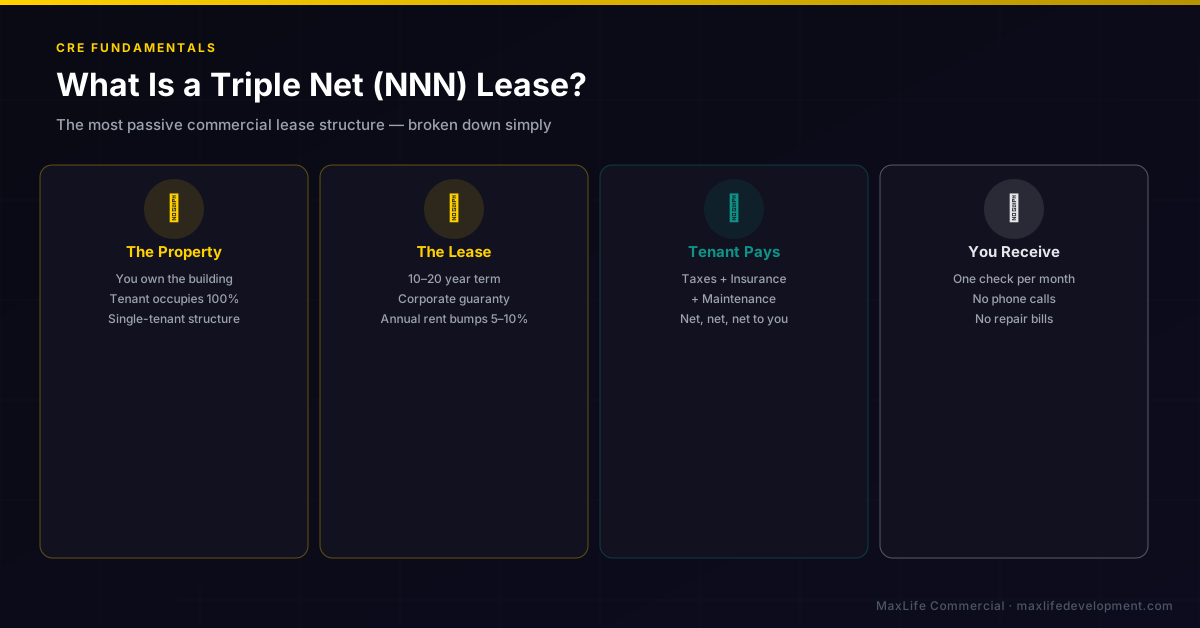
A triple net lease — commonly written as "NNN" — is a commercial real estate lease agreement where the tenant is responsible for paying three key expenses on top of their base rent: property taxes, building insurance, and maintenance costs.
For the property owner, this means a truly passive investment. You collect rent, and the tenant handles virtually everything else. It's as close to "mailbox money" as real estate investing gets.
How NNN Leases Are Structured
Typical NNN lease terms range from 10 to 25 years, often with built-in rent escalations (increases) of 1-2% annually or every 5 years. This means your income grows over time without renegotiating.
Who Are the Typical NNN Tenants?
NNN properties are usually occupied by national or regional credit tenants — companies with strong balance sheets and brand recognition. Common examples include:
The creditworthiness of the tenant is one of the most important factors in evaluating an NNN investment. A lease backed by a Fortune 500 company carries very different risk than one backed by a local business.
Benefits of NNN Investing
- Passive IncomeNo tenant management, no maintenance calls, no surprise expenses.
- Predictable Cash FlowLong-term leases with built-in escalations mean you know exactly what you'll earn.
- 1031 Exchange FriendlyNNN properties are ideal for investors looking to defer capital gains taxes.
- Low Management OverheadNo need for a property manager — the tenant handles the property.
- Recession ResilienceEssential-service tenants (pharmacies, auto parts, dollar stores) perform well in downturns.
Key Metrics: Cap Rate & NOI
Two numbers dominate NNN investing conversations:
Cap Rate
The capitalization rate measures annual return relative to purchase price. A 6% cap rate means you earn 6% of the property's value in annual net income.
NOI
Net Operating Income is the annual rent minus any owner-responsible expenses. In a true NNN lease, NOI is essentially the full rent amount.
What to Watch Out For
NNN investing isn't risk-free. Key considerations include:
- •Tenant credit risk — what if the tenant goes bankrupt?
- •Lease term remaining — a lease with 3 years left is very different from 15 years
- •Location fundamentals — the property still needs to be in a viable market
- •Roof and structure responsibility — some NNN leases have landlord carve-outs
- •Re-tenanting risk — can you find a new tenant if the current one leaves?
Related Articles
Ultimate Guide to NNN Investing
From sourcing to closing — the complete framework for NNN investors.
Orlando NNN Properties for Sale
Find current NNN inventory in the Orlando metro and Central Florida.
NNN vs. Multifamily Investing
Side-by-side comparison of two passive CRE strategies.
1031 Exchange Orlando Guide
Use NNN to defer capital gains via Section 1031 exchange.
Cap Rate vs Cash-on-Cash Return
Two metrics every NNN investor should understand before buying.
Ground Lease vs Fee Simple
How the underlying ownership structure affects NNN deal economics.
Interested in NNN Investing?
MaxLife Commercial specializes in NNN property acquisitions and dispositions across Central Florida. Let's find your next investment.
Contact UsGet Off-Market CRE Deals in Your Inbox
Join our investor list for exclusive Central Florida opportunities, market reports, and deal analysis — delivered weekly. No spam, unsubscribe anytime.