The Pharmacy NNN Landscape Has Shifted
For two decades, pharmacy NNN properties were considered among the safest single-tenant investments available. CVS and Walgreens blanketed suburban America with freestanding 10,000–14,000 SF buildings on prime corner lots, signed long-term absolute NNN leases, and paid rent without interruption through recessions, pandemics, and rate cycles. Investors paid aggressively for that stability.
That calculus has changed. Walgreens' 2024 downgrade to non-investment-grade and its announced closure of 1,200+ stores have forced investors to rethink how they underwrite pharmacy NNN. CVS, pivoting to its HealthHUB clinic model, is simultaneously closing underperformers while doubling down on its strongest locations. The landscape is more nuanced — and more opportunity-rich — than it has been in years.
Informed buyers who can accurately price dark value and re-tenanting risk are finding deals in the Walgreens closure wave that would have been unavailable when pharmacy NNN traded at 4.5–5.0% caps. This guide walks through everything you need to underwrite a pharmacy NNN in Florida in 2026.
CVS vs. Walgreens — The Two Chains
Understanding the fundamental difference between these two operators is the starting point for every pharmacy NNN underwrite.
CVS Health (S&P: BBB)
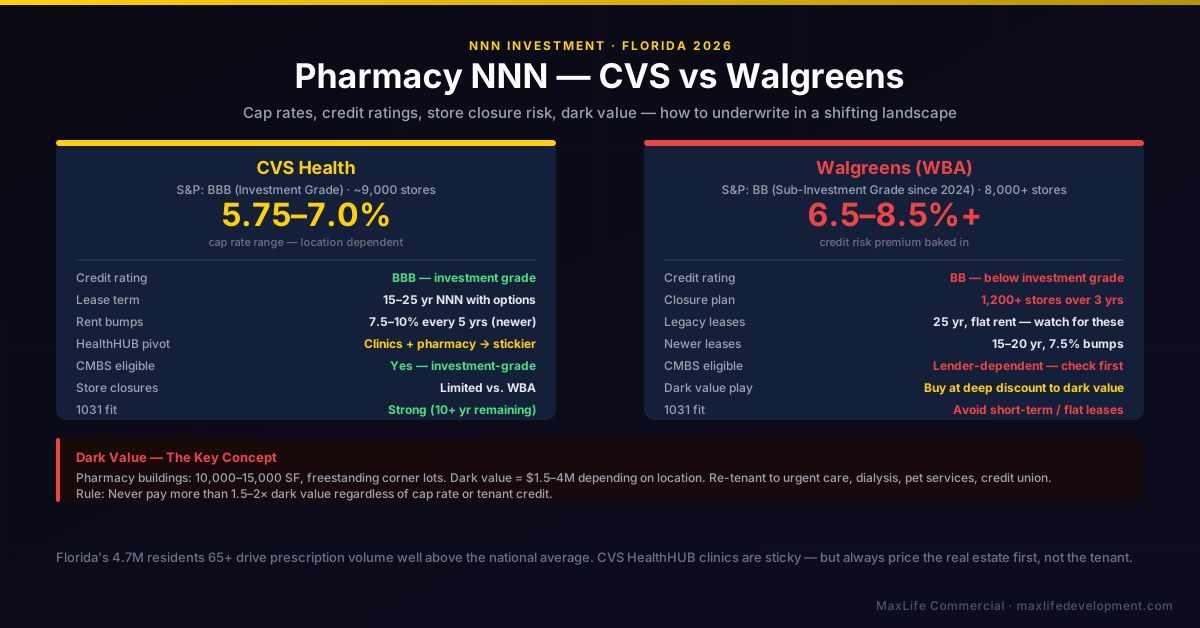
CVS remains investment-grade with approximately 9,000 stores nationwide. Its strategic pivot to the HealthHUB model — converting flagship locations into full-service health destinations with primary care clinics, mental health services, and expanded pharmacy — reinforces the long-term viability of its best real estate. CVS is closing underperformers and upgrading survivors, which means lease renewal probability is higher at HealthHUB-converted locations.
- →Investment-grade credit (BBB) — CMBS and institutional lender friendly
- →HealthHUB conversions signal long-term commitment to the location
- →Cap rates: 5.75–7.0% depending on term, bumps, and location
- →Tighter pricing reflects lower closure risk and lender acceptance
Walgreens (S&P: BB — Non-Investment-Grade Since 2024)
Walgreens' downgrade to BB marked a turning point for the investment community. The company is executing an aggressive rationalization plan — closing more than 1,200 stores over three years — as it restructures toward a leaner, more profitable footprint. That closure program has created real vacancy risk at some properties, but it has also repriced surviving Walgreens NNN to yields that compensate investors appropriately for that risk.
- →Non-investment-grade — some institutional lenders will not underwrite
- →1,200+ store closures planned over 3 years — location vetting is critical
- →Cap rates: 6.5–8.5%+ (credit risk premium over CVS)
- →Higher yield reflects higher risk — and genuine dark value opportunities for disciplined buyers
Dark Value — The Most Important Concept
Dark value is the single most important analytical concept in pharmacy NNN underwriting, and most buyers either ignore it or get it wrong. Dark value is simply what the real estate is worth without the pharmacy tenant — the value of a vacant building and its land on the open market.
Pharmacy buildings are purpose-built freestanding structures, typically 10,000–15,000 SF, on high-visibility corner lots with strong traffic counts. Those physical characteristics — corner location, prominent signage, dedicated parking, accessible ingress/egress — give the real estate substantial alternative use value even if the pharmacy vacates.
Typical Dark Value Ranges (Florida)
The rule of thumb every experienced pharmacy NNN buyer uses: never pay more than 1.5–2x dark value for a pharmacy NNN, regardless of the lease term remaining or tenant credit. If dark value is $2M and the asking price is $5M, you are paying for lease income the tenant may not deliver.
Strong re-tenanting candidates for a vacant pharmacy building include:
- →Urgent care and freestanding ER operators
- →Dialysis centers (DaVita, Fresenius — long NNN leases)
- →Specialty retail (Dollar Tree, Five Below, Tuesday Morning)
- →Credit unions and community banks
- →Pet services (Petco, VCA Animal Hospital)
Pharmacy Lease Structure Details
Pharmacy leases come in several generations, and the vintage of your lease determines the income profile of your investment. Reading the lease abstract carefully before you underwrite is non-negotiable.
- →Legacy flat leases: 25-year original term with five 5-year renewal options, zero rent bumps. Common on Walgreens properties built in the 1990s–2000s. Flat rent erodes real value over time and limits buyer pool — institutions rarely buy these. Price accordingly.
- →Newer leases with bumps: 15–20-year initial term with 7.5–10% rent increases every 5 years. Materially better — preserves purchasing power and attracts a wider institutional buyer pool at exit.
- →Absolute NNN vs. NNN with caps: Some pharmacy leases cap the tenant's maintenance obligations (e.g., roof and structure after year 10 become landlord responsibility). Read the expense section carefully — a lease with maintenance caps is not truly absolute NNN, which affects valuation.
- →Sublease and assignment rights: Critical for Walgreens underwriting. If Walgreens can sublease without landlord consent, you may receive rent from an unknown subtenant rather than Walgreens corporate. Confirm whether the corporate guarantee transfers through assignment.
Florida's Pharmacy Market
Florida is one of the strongest pharmacy markets in the country, and the structural drivers are durable. Florida's 65+ population exceeds 4.7 million — among the highest of any state — and that demographic cohort fills prescriptions at roughly 2–3x the rate of younger adults. Higher prescription volume per store means stronger pharmacy economics, which supports lease renewal probability at well-located Florida sites.
The state's continued in-migration from the Northeast and Midwest is adding to the retirement-age customer base in coastal and inland markets alike. Markets to prioritize:
- →Coastal retirement markets — Sarasota, Naples, Boca Raton: highest prescription volume, lowest vacancy risk, tightest cap rates
- →Active adult / retirement communities — The Villages, Ocala, Port St. Lucie: captive prescription customer base, strong store economics
- →Suburban growth corridors — I-4, I-75 suburban nodes: population growth drives new pharmacy demand; newer leases with bumps more common
Stores in affluent suburban areas with meaningful lease term remaining and strong prescription volume represent the best risk-adjusted pharmacy NNN opportunities in Florida today.
Get Off-Market CRE Deals in Your Inbox
Join our investor list for exclusive Central Florida opportunities, market reports, and deal analysis — delivered weekly. No spam, unsubscribe anytime.
How to Underwrite a Pharmacy NNN
A disciplined pharmacy NNN underwrite follows five steps in sequence. Do not skip to cap rate math before completing the real estate analysis.
- →Step 1 — Pull the lease abstract: Term remaining, renewal options, rent bumps, expense responsibility, sublease rights, dark clause (can tenant go dark and still pay rent?), and co-tenancy provisions.
- →Step 2 — Run comparable retail rents: What does comparable retail space lease for per SF in this market? Can the building support market rent if the pharmacy vacates? This is your dark value income test.
- →Step 3 — Traffic count and demographics: Target 20,000+ AADT on the primary road and 50,000+ population within a 3-mile ring. Below these thresholds, re-tenanting optionality shrinks materially.
- →Step 4 — Dark value analysis: Engage a local Florida broker for re-tenanting comps. What have comparable vacant pharmacy buildings traded for and re-leased at in this submarket?
- →Step 5 — Environmental Phase I: Many pharmacy sites were previously gas stations. A Phase I ESA is mandatory. If RECs (recognized environmental conditions) are flagged, proceed to Phase II before going hard on your deposit.
The Walgreens closure wave has created buying opportunities — but only for investors who can accurately price dark value and re-tenanting risk. Buyers who skip the real estate analysis and focus only on the lease yield are taking on risk they have not priced.
Financing Pharmacy NNN
Pharmacy NNN financing has bifurcated since the Walgreens downgrade. How you finance depends on which chain you're buying.
- →CMBS lenders have historically favored pharmacy NNN for long leases and absolute NNN structure — CVS properties remain CMBS-friendly
- →Post-BB downgrade, many institutional lenders have tightened or eliminated Walgreens underwriting guidelines — confirm lender appetite before signing an LOI
- →CVS HealthHUB conversion leases with a healthcare component may qualify for SBA 504 financing in some configurations — worth exploring with an SBA lender
- →Typical LTV: 65–70% for CVS; 60–65% for Walgreens where lenders will engage
- →Interest-only periods available for strong credit tenants on longer lease terms
Pharmacy NNN as a 1031 Exchange Vehicle
Pharmacy NNN properties have long been a go-to 1031 exchange replacement asset — long leases, corporate tenants, passive income, no management. But the 2026 market requires sharper targeting than in prior years.
- →Strong 1031 candidate: CVS with 10+ years remaining term and documented rent bumps. Predictable income stream, investment-grade credit, liquid resale market
- →Avoid for 1031: Walgreens with a short remaining term (under 7 years) unless acquiring at a deep discount to dark value — too much re-tenanting risk inside a 45/180-day exchange timeline
- →Florida tax advantage: No state income tax on NNN cash flow is a meaningful advantage for out-of-state investors exchanging into Florida pharmacy NNN
For a full breakdown of the 1031 process and replacement property rules, see our 1031 exchange Orlando guide.
NNN Asset Profile
Pharmacy NNN Investment Overview
Looking for Pharmacy NNN Properties in Florida?
Ryan Solberg at MaxLife Commercial specializes in NNN investment properties across Central Florida. Whether you're evaluating a CVS, Walgreens, or independent pharmacy NNN opportunity, we can help you run the dark value analysis and find the right deal for your portfolio.
Frequently Asked Questions
What is the cap rate for CVS NNN in Florida?
CVS NNN properties in Florida typically trade at 5.75–7.0% cap rates in 2026, depending on lease term remaining, rent bump schedule, and location quality. Newer CVS HealthHUB leases with rent bumps command the tightest pricing. Older flat-rent leases with short remaining term trade at the wide end.
Are Walgreens properties still good investments?
Walgreens NNN properties can still be good investments — but require careful underwriting. Following its 2024 downgrade to non-investment-grade (BB) and the 1,200+ store closure plan, investors must prioritize dark value analysis. Stores in affluent suburban Florida markets with strong demographics and long remaining lease term offer the best risk-adjusted returns at 6.5–8.5%+ cap rates. Never pay more than 1.5–2x dark value.
What is dark value in pharmacy NNN investing?
Dark value is what a pharmacy building is worth without the pharmacy tenant — i.e., its value on a vacant basis. Pharmacy buildings are 10,000–15,000 SF freestanding structures on high-visibility corner lots with strong alternative use potential (urgent care, dialysis, specialty retail). In Florida, dark value typically ranges from $1.5–4M depending on location and traffic. The rule: never pay more than 1.5–2x dark value for any pharmacy NNN.
How do I find pharmacy NNN properties for sale in Florida?
Pharmacy NNN properties are listed on LoopNet, CoStar, and CREXI, and through NNN broker networks. Working with a local Florida NNN broker like MaxLife Commercial gives you access to off-market opportunities and local context on dark value and re-tenanting comps. Contact Ryan Solberg at MaxLife Commercial to discuss available opportunities.
Related Articles
Net Lease Investing in Florida
The complete guide to NNN, NN, and single-tenant net lease investing across Florida markets.
How to Analyze a NNN Deal
Step-by-step framework for underwriting any single-tenant NNN property from LOI to close.
Orlando NNN Properties for Sale 2026
National credit tenants, cap rates, and acquisition strategy for NNN investors in Central Florida.
The Ultimate Guide to NNN Investing
How to source, underwrite, and close NNN properties across Florida.
1031 Exchange Orlando Guide
NNN properties are the most popular 1031 replacement asset — here's how the process works.
Cap Rate vs. Cash-on-Cash Return
Two numbers every NNN investor quotes — and why leverage changes everything.