Why MOBs Outperform Other CRE Sectors
Medical office buildings occupy a uniquely recession-resistant corner of the commercial real estate market. Healthcare demand does not contract in downturns — patients need colonoscopies, dialysis, and orthopedic surgery regardless of what the stock market is doing. During the 2008 financial crisis and the early months of the COVID pandemic, MOB occupancy held far better than conventional office, retail, or hospitality.
The structural tailwind for Florida MOBs is demographic. Florida is home to more than 4.7 million residents aged 65 and older — the largest concentration of seniors of any state in the country. Healthcare utilization rates rise sharply with age, and the outpatient care model (physician offices, imaging, infusion, surgery centers) continues to capture volume that previously required expensive inpatient hospitalization.
The result is a steadily growing pipeline of healthcare real estate demand that investors are increasingly recognizing as a core allocation alongside traditional NNN net lease assets.
Florida's 4.7M residents aged 65+ make it the #1 state for healthcare real estate demand — and the outpatient care shift means that demand is flowing directly into medical office buildings.
On-Campus vs. Off-Campus: The Most Important Distinction
The single most important variable in MOB underwriting is whether the building is on-campus or off-campus. On-campus MOBs are physically connected to or situated on the grounds of a major hospital or health system campus. Off-campus MOBs are freestanding medical office buildings in suburban or community locations, often anchored by a health system outpatient brand but without the direct hospital adjacency.
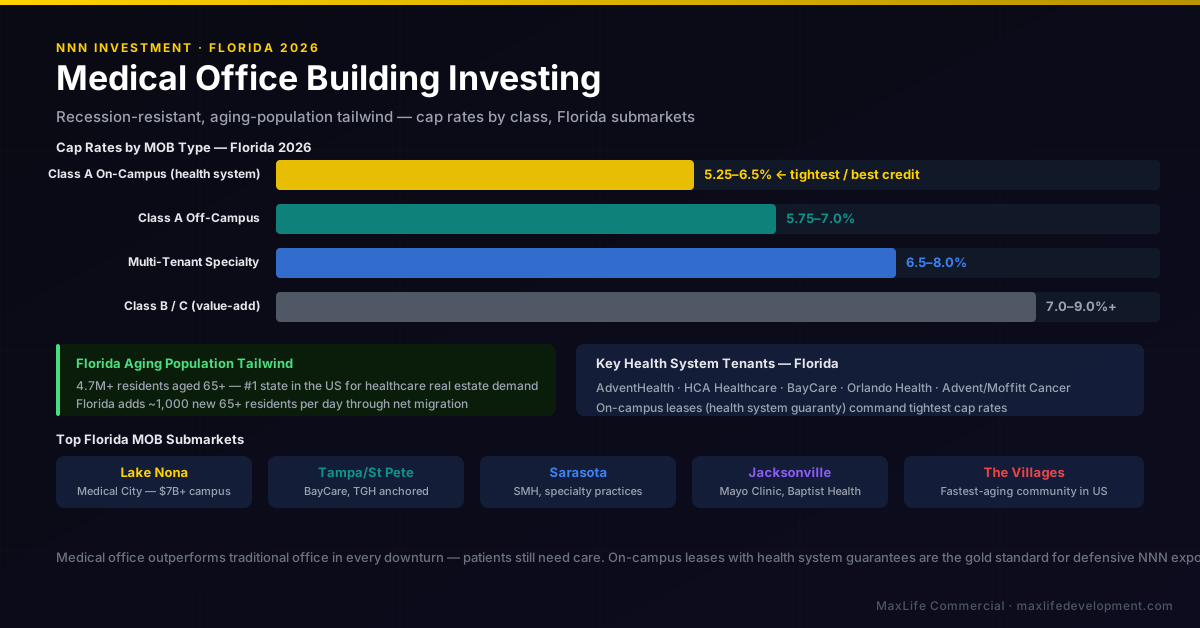
- →On-campus MOBs benefit from physician referral patterns tied to the host hospital, captive patient flow from the hospital campus, and health system credit backing the lease. Occupancy is typically 95%+ with long lease terms. These trade at the tightest cap rates: 5.25–6.5% for Class A.
- →Off-campus MOBs serve community populations and typically house specialty practices, urgent care, imaging centers, and outpatient therapy. They offer wider cap rates (5.75–7.0% Class A) and can still deliver excellent risk-adjusted returns with the right tenant mix and lease structure.
On-campus product is highly sought by institutional buyers — REITs like Healthpeak and Physicians Realty Trust compete aggressively for it, which compresses cap rates. Individual and private capital investors typically find better value in quality off-campus MOBs with health system anchor tenants.
Cap Rates by Quality Tier (Florida 2026)
Florida MOB cap rates are driven by asset quality, campus status, lease structure, and tenant credit. Here is where the market is pricing in mid-2026:
For a broader context on NNN cap rates across all asset types in Central Florida, see our Orlando cap rates investor guide.
NNN vs. Gross Lease Structures in Medical Office
MOB lease structures are more varied than traditional NNN retail. Unlike a Dollar General or AutoZone — where the lease is virtually always absolute NNN — medical office buildings contain a mix of structures depending on the tenant type and building class.
- →Absolute NNN: Most common with health system anchors (AdventHealth, HCA, BayCare) on long-term leases. Tenant pays all taxes, insurance, and maintenance. Investor receives truly passive income.
- →Modified Gross with Expense Stop: Common in Class B multi-tenant buildings. Tenant pays operating expenses above a base year stop. Landlord retains exposure to expense inflation below the stop. Requires active property management.
- →Full-Service Gross: Less common; typically older Class C buildings. Landlord bears all operating costs. Highest management intensity and greatest capex exposure.
Before acquiring any MOB, read every lease in the rent roll individually. The headline cap rate means little if three tenants are on full-service gross leases with expiring terms.
Get Off-Market CRE Deals in Your Inbox
Join our investor list for exclusive Central Florida opportunities, market reports, and deal analysis — delivered weekly. No spam, unsubscribe anytime.
Key Tenants: Health Systems and Specialty Practices
Tenant quality is the backbone of MOB value. The best Florida medical office buildings are anchored by investment-grade health systems with billions in revenue and regional market dominance.
Major Florida Health System Tenants
- →AdventHealth — dominant in Central Florida, Ocala, and the Panhandle; investment-grade credit
- →HCA Healthcare — for-profit giant, extensive Florida footprint; publicly traded (NYSE: HCA)
- →BayCare Health System — dominant Tampa Bay / Pinellas market presence
- →Tampa General Hospital / USF Health — flagship academic medical system
- →Mayo Clinic — Jacksonville campus; highly sought-after MOB anchor
- →UF Health — Gainesville flagship and Jacksonville expansion
- →Baptist Health — Jacksonville and South Florida markets
Beyond health system anchors, strong secondary tenants include specialty practices (orthopedics, cardiology, oncology, GI), urgent care operators (Concentra, NextCare), imaging centers (RadNet, SimonMed), infusion therapy, and ambulatory surgery centers. These tenants add density and diversification to the rent roll but generally do not carry investment-grade credit ratings.
Top Florida Submarkets for Medical Office
Florida's MOB market is not monolithic. Each major metro has distinct health system dynamics, development pipelines, and cap rate profiles.
- →I-Drive / Orlando Medical Corridor: The AdventHealth main campus on Rollins Street is one of the largest hospital complexes in the Southeast. Surrounding MOBs trade at 5.25–6.0% on-campus and 5.75–6.5% off-campus. Strong physician density and growing outpatient surgery volume.
- →Tampa / St. Pete: BayCare, Tampa General, and HCA West Florida anchor a competitive multi-system market. Clearwater / Pinellas medical corridor is a deep market for Class B multi-tenant MOBs with value-add potential.
- →Sarasota / Manatee: One of the fastest-aging demographics in Florida. Sarasota Memorial Hospital's expansion into Venice and North Port is generating MOB demand in formerly underserved corridors. Cap rates 6.0–7.5% on newer Class A off-campus product.
- →Jacksonville: Mayo Clinic, Baptist Health, and UF Health create a three-anchor institutional market. On-campus Mayo product is extremely illiquid and rarely traded. Off-campus community MOBs with Baptist or UF affiliation offer 6.0–7.0% entry points.
How to Underwrite a Medical Office Acquisition
MOB underwriting has several layers that conventional NNN analysis does not require. Work through each category before you submit a Letter of Intent.
- →Tenant Mix: What percentage of GLA is occupied by health system-affiliated tenants vs. independent practices? Independent practices carry higher lease risk — physician group dissolution, retirement, or acquisition can create sudden vacancy.
- →Lease Expiry Stagger: Avoid buildings where more than 30% of GLA rolls within any 24-month window. Medical tenant TI buildouts are expensive — $80–150/SF is common for clinical space — so concentrated rollover creates meaningful capital calls.
- →Anchored vs. Standalone: An anchored MOB with a 15,000+ SF health system tenant is fundamentally different from a collection of small suites. The anchor drives patient flow and validates the location for all other tenants.
- →Payor Mix: Request the anchor tenant's payor mix if available. Practices heavily weighted toward Medicare and Medicaid face revenue pressure from reimbursement rate changes. Commercial-heavy practices are more stable.
- →Medical Use Infrastructure: Confirm the building has medical-grade plumbing, HVAC zoning, electrical capacity, and ADA compliance. Re-tenanting a medically improved building to a non-medical tenant is difficult; re-tenanting to another medical tenant is far easier if the infrastructure is already in place.
Use our Deal Analyzer to stress-test NOI projections across different vacancy and expense scenarios before committing capital.
Sale-Leaseback Opportunities in Healthcare
The sale-leaseback structure is increasingly popular in the healthcare real estate sector. Physician groups and health systems own significant real estate that ties up capital better deployed in clinical operations, equipment, or acquisition of practices.
In a healthcare sale-leaseback, a physician group or health system sells their MOB to a passive investor and simultaneously signs a long-term NNN lease to continue occupying the space. The seller unlocks equity for reinvestment in the practice; the investor acquires a fully occupied building with a known operator who has an operational stake in staying long-term.
- →Typical transaction size: $2–15M depending on building size and market
- →Lease terms: 10–20 years NNN or modified gross with renewal options
- →Rent bumps: 2–3% annually or CPI-linked escalations
- →Best candidates: established specialist groups (orthopedic, cardiology, dental DSOs) owning their building
1031 Exchange Fit for Medical Office
MOBs are an excellent 1031 exchange replacement property. The combination of long lease terms (10–20 years), investment-grade or near-investment-grade credit tenants, and recession-resistant demand makes MOBs a preferred exchange target for investors upgrading from smaller multifamily or retail assets.
- →Long initial lease terms satisfy the passive income objective of most 1031 exchangors
- →Health system tenants rarely vacate — high switching costs make renewal likely
- →Depreciation benefits apply to MOBs as 39-year commercial property (cost segregation can accelerate this)
- →Florida has no state income tax — passive rental income is untaxed at the state level
For passive income investors, the passive income case for Florida CRE is particularly compelling when anchored by healthcare tenants whose business is structurally growing.
Looking for Medical Office Investments in Florida?
Ryan Solberg and the MaxLife Commercial team track MOB sale-leaseback opportunities, physician group dispositions, and off-market healthcare real estate across Central Florida. Whether you're a 1031 exchanger or building a healthcare NNN portfolio, we can help you find and evaluate the right deal.
Frequently Asked Questions
What cap rates should I expect on a Florida medical office building?
Cap rates vary by quality tier and campus status. Class A on-campus MOBs trade at 5.25–6.5%. Class A off-campus with health system anchors trade at 5.75–7.0%. Class B/C community medical office trades at 7.0–9.0%. The premium for on-campus reflects lower re-tenanting risk and institutional health system backing.
Are medical office buildings NNN leases?
MOB lease structures vary. Health system anchors (AdventHealth, HCA, BayCare) typically sign absolute NNN or modified gross with fixed expense stops. Smaller specialty practices may be on modified gross or full-service gross leases. Always review every lease in the rent roll individually — the blended structure determines your true net income and capital expenditure exposure.
What are the best Florida submarkets for medical office investment?
Top submarkets include the I-Drive/Orlando medical corridor (AdventHealth flagship), Tampa/St. Pete (BayCare, HCA West Florida, Tampa General), Sarasota (rapidly aging demographic, Sarasota Memorial expansion), and Jacksonville (Mayo Clinic, UF Health, Baptist Health). Secondary markets like Ocala and Brevard County offer value-add opportunities as health systems expand outpatient footprints.
How do I underwrite a medical office building acquisition?
Key underwriting factors: tenant mix (health system anchor vs. independent practices), lease expiry stagger (avoid >30% rolling in any 24-month window), on-campus vs. off-campus status, payor mix of the anchor practice, TI/LL allowances in existing leases, and whether the building has medical-grade infrastructure (specialized plumbing, HVAC, electrical) that supports re-tenanting to another medical user.
Related Articles
Net Lease Investing in Florida
The case for NNN real estate in Florida — tenant credit, cap rates, and how to source deals.
Sale-Leaseback Real Estate Florida
How sale-leasebacks work, why businesses use them, and how investors underwrite the structure.
1031 Exchange Orlando Guide
NNN properties are the most popular 1031 replacement asset — here's how the process works.
The Ultimate Guide to NNN Investing
How to source, underwrite, and close NNN properties across Florida.
Orlando Cap Rates Investor Guide
Current cap rates across NNN, industrial, retail, and office in the Orlando market.
Passive Income from Florida CRE
How NNN and healthcare real estate generate truly passive income for investors.