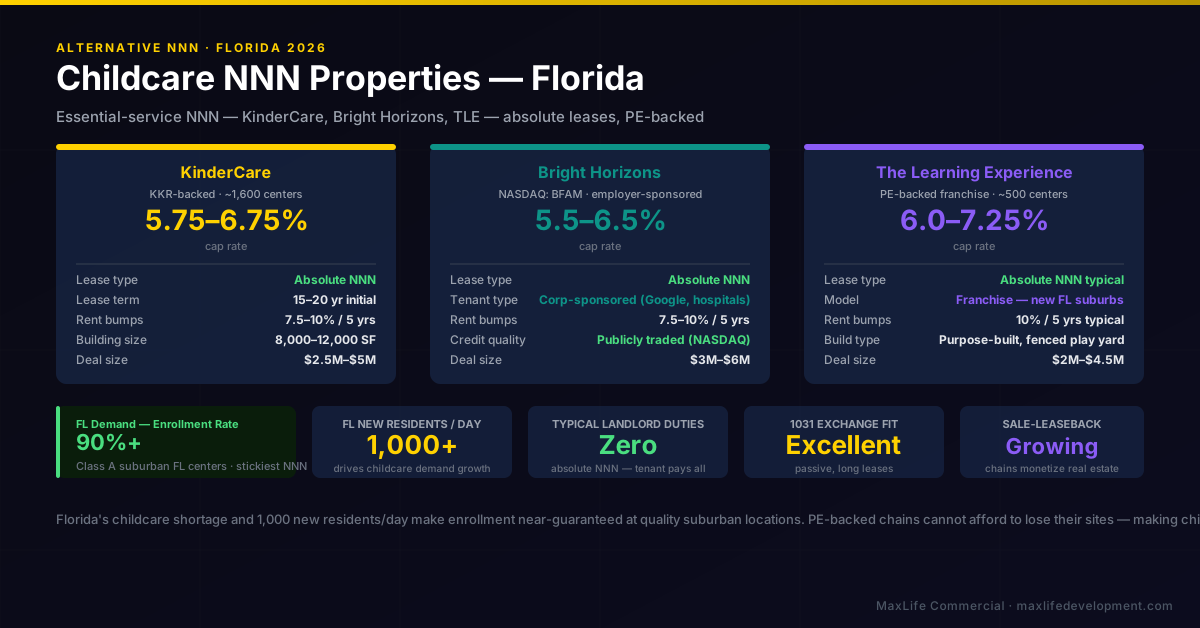
Why Childcare NNN Has Gone Institutional
Childcare real estate has quietly become one of the hottest segments in alternative NNN investing. Private equity has recognized what individual investors are just beginning to understand: childcare is an essential service, recession-resistant, and operationally sticky in ways that most retail NNN tenants simply are not. KKR acquired KinderCare Learning Centers. Warburg Pincus has backed multiple regional childcare chains. Goldman Sachs has financed sale-leaseback portfolios for growing operators. When institutional capital moves into a category at that scale, it signals a durable investment thesis.
The investment case is straightforward. Parents depend on childcare to work — it is not a discretionary purchase. Licensed childcare centers cannot simply relocate: the regulatory approval process (state licensing, zoning, building inspections, fire marshal sign-off) can take 12–24 months and cost $200,000+. That switching cost is the landlord's best friend. When a childcare operator's lease expires, they almost always renew — the alternative is closing or rebuilding their regulatory position from scratch.
Absolute NNN leases with 15–20 year initial terms are standard in the institutional childcare market. Landlords have zero management obligations — no roof repairs, no HVAC calls, no parking lot maintenance. For passive income investors and 1031 exchange buyers, childcare NNN checks every box.
Major Tenant Comparison: KinderCare, Bright Horizons, TLE
Not all childcare NNN operators carry equal credit. Here is how the three largest institutional operators stack up from an investment standpoint.
KinderCare Learning Centers
~1,600 centers nationwide · Backed by KKR · S&P BB+ (corporate)
The largest childcare chain in the US. KinderCare operates community-facing retail centers in high-traffic suburban locations. KKR's ownership has accelerated both the expansion playbook and the sale-leaseback program — they actively monetize real estate to fund new center growth. Leases are absolute NNN with 15–20 year initial terms and 7.5–10% rent bumps every 5 years.
- →Cap rates: 5.75–6.75% (Florida market, 2026)
- →Lease type: Absolute NNN, 15–20 yr initial term
- →Rent bumps: 7.5–10% every 5 years
- →Building: 8,000–12,000 SF, fenced outdoor play yard, purpose-built
- →Liquidity: Strong institutional buyer pool on resale
Bright Horizons Family Solutions
NASDAQ: BFAM · ~1,000 centers · Employer-sponsored model
Bright Horizons operates under a fundamentally different model: employer-sponsored childcare, where corporations (Microsoft, Google, major hospital systems) contract with Bright Horizons to provide on-site or nearby childcare as an employee benefit. This creates an exceptionally sticky occupancy profile — the employer is the economic backstop. However, the model limits market-rate expansion and ties performance to corporate partner health.
- →Cap rates: 5.5–6.5% (tighter due to perceived credit quality)
- →Lease type: Absolute NNN or modified NNN depending on site
- →Primary locations: Corporate campuses, hospital systems, urban/suburban mixed
- →Key risk: Employer contract termination can affect occupancy
- →BFAM public company financials available for underwriting
The Learning Experience (TLE)
Private, PE-backed · ~500 centers · Franchise model
TLE is one of the most active childcare franchise expansion operators in Florida, with aggressive growth in suburban markets across Central Florida. New builds dominate their expansion — purpose-built facilities in fast-growing communities like Wesley Chapel, Horizon West, and St. Cloud. The franchise model means individual franchise operators sign leases, backed by TLE's corporate guarantee structure. Always confirm the guarantee chain.
- →Cap rates: 6.0–7.25% (Florida, new construction)
- →Lease type: Absolute NNN, 15–20 yr initial term typical
- →Expansion focus: FL suburban growth markets
- →Rent bumps: 10% every 5 years standard
- →Due diligence: Confirm corporate vs. franchisee guarantee
Independent / Regional Operators
Single-location or small-chain operators trade at 7.0–9.0%+ cap rates. Higher yield reflects weaker credit, shorter lease terms, and a smaller institutional buyer pool on exit. Not recommended as a primary NNN strategy unless you have deep local knowledge of the operator and market.
Childcare NNN Lease Structure
The lease is the investment. Understanding what is standard in institutional childcare NNN protects you from underwriting a modified lease as if it were absolute NNN.
- →Absolute NNN: Tenant responsible for all property taxes, insurance, and maintenance including roof, structure, HVAC, and parking. Landlord has zero obligations. This is the standard for KinderCare and TLE sale-leasebacks.
- →Initial Term: 15–20 years initial term with 4–5 renewal options at 5 years each. Total lease duration of 35–45 years is common for new-build sale-leasebacks.
- →Rent Bumps: 7.5–10% every 5 years is the childcare NNN market standard. Some operators offer 1.5–2% annual bumps. Both provide meaningful inflation protection over a 15–20 year hold.
- →Dark Clause: Check whether the tenant is obligated to continue operating (go-dark clause). A tenant who can pay rent without operating is lower risk than one who can abandon — but know what your lease says.
- →Purpose-Built Buildings: Childcare buildings are single-purpose: 8,000–12,000 SF, single-story, with fenced outdoor play areas, child-height fixtures, and specific HVAC and bathroom requirements. Re-tenanting is possible (medical, therapy, other educational uses) but not trivial.
Florida Demand Drivers
Florida's population growth is not just a headline — it is a direct driver of childcare demand. The state added more than 365,000 net new residents in 2024, and the demographic composition of that growth matters: millennials with young children represent the single largest in-migration cohort. Dual-income households — which drive childcare enrollment — are the norm, not the exception, in Florida's growing suburban communities.
Florida leads the US in new childcare center openings, yet still has a documented supply shortage. All 74 counties are experiencing childcare capacity constraints. The Florida Department of Children and Families (DCFS) licensing backlog is itself a barrier to new supply — which is a structural tailwind for existing licensed operators. An operator who holds a license at a good suburban location holds a real competitive advantage.
The growth markets driving the most new childcare NNN activity include Wesley Chapel, Horizon West, St. Cloud, Apopka, Palm Bay, and the I-4 corridor between Orlando and Lakeland. These are the same communities where TLE, KinderCare, and regional operators are signing leases on new builds — making them prime hunting ground for sale-leaseback investors.
How to Underwrite a Childcare NNN Property
Childcare NNN due diligence has several items that differ from standard retail NNN. Work through each category before you submit an LOI.
State Licensing
Verify the Florida DCFS license is active and in good standing. Check for any violations, complaints, or probationary conditions in the DCFS database. A license with unresolved violations is a red flag regardless of operator size.
Enrollment Rate
Request enrollment data from the operator. 80%+ full enrollment indicates a healthy, self-sustaining center. Below 70% is a warning sign — you need to understand why. 90%+ at a Class A suburban center indicates the operator cannot afford to lose this location.
Location and Trade Area
Suburban residential density is everything. Look for 25,000+ households in the 3-mile ring, 0.5–2 mile trade area, and proximity to residential subdivisions (not industrial parks or commercial corridors). Competing childcare centers within 0.5 miles are a red flag.
Building Condition
ADA compliant. Fenced outdoor play area in good condition. Single-story preferred. Adequate parking for drop-off/pick-up stacking (this is the most common operational complaint from parents). HVAC must be in good working order — childcare centers run HVAC year-round.
Lease Review
Confirm absolute NNN structure — no landlord carve-outs for roof or structure. Review dark clause, assignment rights, and exclusivity provisions. Check co-tenancy language if the building is part of a larger development.
Environmental (Phase I)
Phase I ESA on any site older than 15 years. Older childcare buildings may have lead paint, asbestos, or underground storage tank history. Modern purpose-built NNN centers are typically clean, but Phase I is always warranted.
Florida's childcare shortage has created a landlord's market — enrollment rates above 90% at Class A suburban centers mean operators cannot afford to lose their locations, making childcare NNN one of the stickiest tenant categories available in net lease today.
Get Off-Market CRE Deals in Your Inbox
Join our investor list for exclusive Central Florida opportunities, market reports, and deal analysis — delivered weekly. No spam, unsubscribe anytime.
Sale-Leaseback Opportunity
The most active transaction structure in institutional childcare is the sale-leaseback. Growing chains — KinderCare, TLE, and well-capitalized regional operators — are selling their real estate to fund expansion capital. Operators prefer to own their brand, not their building. The result is a consistent supply of new absolute NNN childcare properties entering the investment market.
For passive investors, sale-leasebacks at 5.75–6.75% for strong operators represent a compelling entry point — particularly in Florida suburban growth markets where demographic tailwinds are strongest. The operator benefits from liquidity; the investor gets a long-term absolute NNN lease at a going-in yield that is difficult to replicate in other investment-grade NNN categories.
For a deeper look at the sale-leaseback transaction structure, see our guide to sale-leaseback real estate in Florida.
Childcare NNN as a 1031 Exchange Target
Childcare NNN properties are among the best 1031 replacement asset candidates available in the current market. The long absolute NNN lease (15–20 years) eliminates re-leasing risk within any realistic holding period. Passive income with zero management responsibility fits the profile of most 1031 investors who are stepping out of active management — from apartments, retail centers, or active rentals. And the defined rent escalation schedule provides predictable income for trust structures, retirement accounts, and estate planning vehicles.
Childcare NNN also closes cleanly — due diligence is standardized and the 180-day 1031 timeline is achievable when you have a qualified NNN broker building your pipeline before the exchange closes. For a full walkthrough of 1031 strategy into NNN, see how to use a 1031 exchange to buy NNN property.
Looking for Childcare NNN Properties in Florida?
MaxLife Commercial tracks childcare and daycare NNN opportunities across Central Florida. Whether you're deploying 1031 exchange capital or building a passive income NNN portfolio, Ryan Solberg can help you identify and evaluate the right deal.
Frequently Asked Questions
What are typical cap rates for childcare NNN properties in Florida?
Cap rates range from 5.5–6.5% for Bright Horizons (employer-sponsored, tightest pricing), 5.75–6.75% for KinderCare (KKR-backed, absolute NNN), and 6.0–7.25% for The Learning Experience (PE-backed franchise). Independent or regional operators trade at 7.0–9.0%+ depending on enrollment and location quality.
Is KinderCare or Bright Horizons a better NNN investment?
Both are strong operators with distinct models. Bright Horizons (NASDAQ: BFAM) is employer-sponsored with very sticky occupancy but limited Florida market-rate expansion. KinderCare operates community-facing retail centers backed by KKR capital with standardized absolute NNN leases ideal for passive income. Bright Horizons typically prices 25–50 bps tighter. KinderCare offers slightly higher yield with comparable lease quality.
How do I find childcare NNN properties for sale in Florida?
Childcare NNN properties trade on Loopnet/CoStar and through national net lease brokers. Sale-leaseback opportunities from operators like TLE and KinderCare often circulate before public listing. Working with a Central Florida NNN specialist at MaxLife Commercial gives you access to deal flow from operators seeking sale-leaseback capital early in the process.
What should I underwrite in a childcare NNN property?
Key underwriting items: (1) Florida DCFS license — active, no violations; (2) enrollment rate — 80%+ healthy, below 70% is a red flag; (3) location — 25,000+ households in 3-mile ring; (4) building — ADA compliant, fenced play area, single-story preferred; (5) lease — confirm absolute NNN, check dark clause and assignment rights; (6) Phase I environmental on any older site.
Related Articles
Net Lease Investing Florida
The complete guide to NNN, NN, and absolute net lease investing across Florida markets.
Orlando NNN Properties for Sale 2026
National credit tenants, cap rates, and acquisition strategy for NNN investors in Central Florida.
Sale-Leaseback Real Estate Florida
How Florida operators are monetizing real estate — and what investors should look for.
1031 Exchange Into NNN Property
How to swap appreciated property for passive NNN income using a 1031 exchange.
Passive Income CRE Florida
The best passive income strategies in Florida commercial real estate — NNN, industrial, and more.
The Ultimate Guide to NNN Investing
How to source, underwrite, and close NNN properties across Florida.