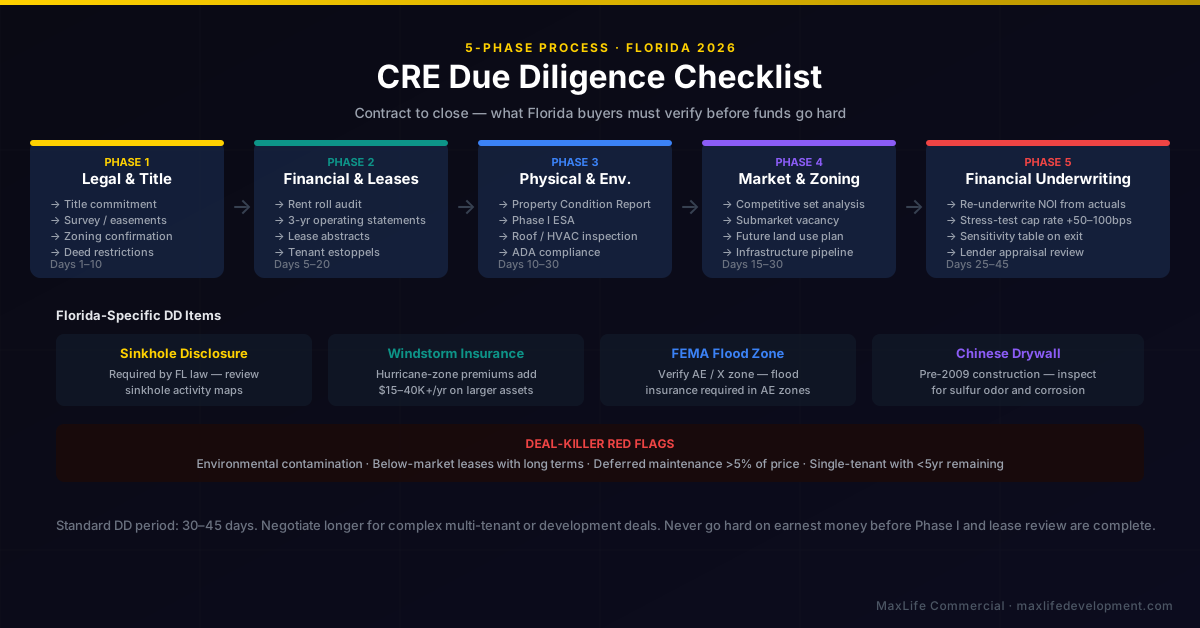
Why Due Diligence Defines Your Return
The purchase price gets the headlines, but due diligence determines whether the deal actually pencils. Most costly surprises in commercial real estate — deferred maintenance, environmental contamination, below-market leases locked in for a decade, unresolved title clouds — are discoverable during due diligence. They only become expensive when buyers skip steps, rush the process, or trust seller-provided documents without independent verification.
Florida has specific disclosure requirements for commercial properties: sellers must disclose known material defects, and sinkhole activity must be disclosed under Florida law. But "known" is the operative word — discovery of issues the seller didn't know about (or chose not to know about) is your job during the contingency period.
Standard due diligence periods in Florida run 30 to 45 days for most commercial transactions. Larger or more complex deals routinely negotiate 60 to 90 days. Use every day. The cost of thorough due diligence — typically $10,000 to $30,000 — is trivial relative to the cost of inheriting a problem you could have identified.
Phase 1 — Legal & Title Review
Title and legal review should begin immediately after going under contract. Your real estate attorney orders the title commitment and reviews the chain of ownership for clouds, encumbrances, or defects that could affect your ownership rights after closing.
Title Commitment & Survey
The title commitment will identify Schedule B exceptions — items the title company will not insure. Review every exception carefully with your attorney. Common issues include easements that restrict use, old mortgages that need to be released, mechanic's liens from prior contractors, and boundary disputes. Order an ALTA/NSPS survey to confirm legal boundaries, identify encroachments, and locate easements not visible from the property.
Zoning & Land Use Confirmation
Verify the property's current zoning classification and confirm that the intended use is permitted by right — not by conditional use or variance. Request a zoning verification letter from the municipality. Review the future land use map to understand what the jurisdiction envisions for the area long-term.
- →Title commitment — review all Schedule B exceptions with counsel
- →ALTA/NSPS survey — boundaries, easements, encroachments
- →Zoning verification letter from county or municipality
- →Deed restrictions, CC&Rs, and HOA/CDD documents
- →Easement review — ingress/egress, utility, drainage, shared parking
- →Existing mortgage payoff and lien releases confirmed
Phase 2 — Financial & Lease Review
The financial review is where most purchase prices are renegotiated. The goal is to replace the seller's pro forma with verified actuals — then re-underwrite the deal from scratch on those actuals.
Rent Roll Audit
Obtain the current rent roll and cross-reference every line item against executed leases. Verify that rent amounts, lease commencement and expiration dates, security deposit amounts, and tenant names match. Discrepancies between the rent roll and the actual leases are a red flag — sometimes accidental, sometimes deliberate.
Lease Abstracts & Key Provisions
Read every lease in full. Create abstracts that document: lease term and options, base rent and scheduled rent bumps, CAM expense stops and caps, co-tenancy clauses (which allow tenants to reduce rent or terminate if an anchor vacates), exclusive use provisions, permitted assignment and subletting rights, and any outstanding landlord obligations.
Operating Statements & Occupancy History
Request three years of operating statements plus a trailing 12-month (T-12) income and expense report. Verify gross revenue against lease abstracts. Scrutinize expense categories — are management fees and reserves included? Is the pro forma adding back expenses that a new owner will actually incur? Review occupancy history to understand whether vacancies are a trend or an anomaly.
- →All executed leases, amendments, and side letters
- →Rent roll cross-referenced against every lease
- →3-year operating statements + T-12 actual P&L
- →Tenant estoppel certificates from all material tenants
- →SNDA agreements (Subordination, Non-Disturbance, Attornment) for lender
- →Security deposit accounts — confirm balances held and applicable law
- →Outstanding tenant improvement obligations or free rent remaining
Get Off-Market CRE Deals in Your Inbox
Join our investor list for exclusive Central Florida opportunities, market reports, and deal analysis — delivered weekly. No spam, unsubscribe anytime.
Phase 3 — Physical & Environmental Inspection
Even a fully-leased property with an investment-grade tenant can harbor costly physical problems. The physical inspection phase quantifies deferred maintenance, assesses structural and mechanical systems, and identifies any environmental concerns that could impair title, financing, or future use.
Property Condition Report (PCR)
A Property Condition Report (also called a Property Condition Assessment or PCA) is a comprehensive inspection by a licensed engineer or inspector covering roof, structure, HVAC and mechanical systems, plumbing, electrical, parking lot, ADA compliance, and site drainage. The report will quantify immediate repair needs and estimate reserves for capital expenditures over 5, 10, and 15 years. Use the deferred maintenance estimate to renegotiate price or require seller credits at closing.
Phase I Environmental Site Assessment
Every Florida commercial property acquisition should include a Phase I ESA conducted by a licensed environmental professional (EP) per ASTM Standard E1527-21. The Phase I reviews historical property uses, regulatory agency records, aerial photographs, and includes a site walk. If the Phase I identifies recognized environmental conditions (RECs), a Phase II ESA — involving soil borings and laboratory analysis — is warranted before proceeding to closing.
Environmental is the one DD domain where a finding can exceed the purchase price, and it is the domain most buyers know least about. For the deeper treatment — what a Phase I excludes, how to read an HREC versus a CREC, the Florida-specific patterns (former citrus groves, dry cleaners, underground storage tanks), and the state cleanup programs that can fund remediation — see our guide to environmental due diligence in Florida.
- →Property Condition Report / PCA from licensed engineer
- →Phase I ESA (Phase II if RECs identified)
- →Roof inspection with core samples on built-up roofing
- →HVAC/mechanical systems — age, condition, replacement timeline
- →ADA compliance review — parking, accessible routes, restrooms
- →Parking count verification against lease requirements
- →Deferred maintenance estimate as % of purchase price
Phase 4 — Market & Zoning Analysis
Understanding the market context of the property is as important as understanding the property itself. A great building in a declining submarket can be a value trap. A modest property in a strengthening corridor can generate returns that exceed your underwriting.
Competitive Set Analysis
Identify the three to five most comparable properties within the trade area. Compare asking rents, vacancy rates, tenant quality, and recent lease comps. If your property's in-place rents are significantly above market, you have renewal risk. If they're below market, you have upside — or a tenant who knows it and won't exercise renewal options.
Future Land Use & Infrastructure
Review the county's future land use map and any adopted area plans. Are there road widening projects that will affect access? Any planned developments nearby that could compete with your tenants — or add rooftops that increase the trade area population? Contact the local planning department if the future land use designation raises any questions.
- →Submarket vacancy rates and absorption trends
- →Competitive set — comparable properties within trade area
- →Zoning verification and permitted use confirmation
- →Future land use designation and consistency with intended use
- →Planned infrastructure — road widening, new interchange, transit
- →Planned nearby development (competing retail, residential rooftops)
- →Traffic counts — current and projected
Phase 5 — Financial Underwriting
The final phase of due diligence is rebuilding your financial model from verified actuals — not from the seller's pro forma. This is where you determine whether the deal you contracted for is the deal you're actually buying.
Re-Underwrite NOI from Verified Actuals
Start with gross revenue per the verified rent roll. Deduct actual vacancy (use trailing 12-month, not seller's "stabilized" assumption). Add operating expenses from actual T-12 statements — including management fees, taxes (use the post-sale assessed value estimate, not current taxes), insurance, repairs, and reserves. The resulting NOI is your basis for valuation.
Stress Test Cap Rate & Exit Assumptions
Run your IRR and equity multiple analysis at the purchase cap rate, then stress test at cap rate +50 bps and +100 bps at exit. What happens to your return if the market softens and you sell at a wider cap rate? If the deal only works at the best-case exit scenario, it's priced for perfection — and commercial real estate rarely delivers perfection.
Underwriting Discipline
A deal that only works at the seller's pro forma NOI is not a deal — it's a hope. Re-underwrite every income line with verified leases and every expense line with actual T-12 data. If the NOI after verification is materially lower than the seller's representation, you have grounds to renegotiate the purchase price or walk away within the due diligence period.
Red Flags That Kill Deals
Some issues discovered during due diligence are negotiable — price reductions, seller credits, holdbacks, or remediation requirements. Others are deal-killers. Know the difference before you spend 45 days on a property you should walk from on day five.
Due Diligence Deal-Killers
- →Environmental contamination — Phase II confirms soil or groundwater RECs that exceed regulatory thresholds. Cleanup liability can dwarf the property value.
- →Below-market leases with 7+ years remaining — you're buying locked-in below-market income. Discount heavily or walk.
- →Deferred maintenance exceeding 5% of purchase price — capital needs that large require a significant price reduction to maintain return targets.
- →Single-tenant risk with less than 5 years remaining — you're paying for occupancy that may not extend, effectively buying a vacant building at occupied-property pricing.
- →Undisclosed title defects or liens — unresolved mechanic's liens, judgment liens, or easement disputes that the title company won't insure over.
- →Co-tenancy clause at risk — a co-tenancy clause tied to a shaky anchor tenant could trigger rent reductions or termination rights for other tenants.
Florida-Specific Due Diligence Items
Florida has unique physical, regulatory, and market characteristics that affect commercial real estate due diligence in ways that out-of-state buyers sometimes underestimate.
Sinkholes
Florida's limestone karst geology creates sinkhole risk, particularly in Hillsborough, Pasco, Hernando, and Marion counties. Florida Statute §627.7073 requires insurers to investigate reported sinkhole claims. Buyers should review prior insurance claims on the property, confirm sinkhole coverage is available and at what premium, and consider ground-penetrating radar (GPR) surveys for properties in high-risk areas.
Hurricane Windstorm Insurance
Florida commercial properties — particularly those within 25 miles of the coast — carry significant windstorm insurance costs. Windstorm coverage is frequently excluded from standard commercial property policies and must be purchased separately, often at substantial cost. Obtain windstorm insurance quotes during due diligence. The actual insurance cost can dramatically affect NOI and value — never rely on the seller's current premium as your going-forward cost estimate.
Flood Zone & FEMA Maps
Verify the property's FEMA flood zone designation using the current FIRM (Flood Insurance Rate Map). Properties in Zone A or AE carry mandatory flood insurance requirements for federally-backed financing. Even properties in Zone X should be reviewed — FEMA map revisions can change designations. Flood insurance costs vary dramatically and must be included in your pro forma expense modeling.
Chinese Drywall
Buildings constructed or significantly renovated between 2001 and 2009 may contain defective Chinese drywall that off-gasses sulfur compounds, corrodes electrical wiring, and causes health issues. Florida had significant Chinese drywall issues in the residential market, but some commercial properties are also affected. For buildings in this vintage, specifically request testing or prior remediation documentation.
- →Sinkhole disclosure review and insurance claims history
- →Windstorm insurance quote — obtain independently, not from seller
- →FEMA flood zone designation — current FIRM map
- →Chinese drywall disclosure for 2001-2009 construction vintage
- →Florida documentary stamp tax calculation — buyer's cost
- →Post-sale real estate tax assessment — will value be reassessed to purchase price?
Phase I & II ESA
Environmental Due Diligence in CRE
Underwrite Your Deal Before You Commit
MaxLife Commercial's Deal Analyzer helps you run verified NOI, stress-test exit cap rates, and model your returns before you spend 45 days on due diligence — so you know if the deal is worth pursuing before you go under contract.
Frequently Asked Questions
How long is the due diligence period for commercial real estate in Florida?
The standard commercial real estate due diligence period in Florida is 30 to 45 days from the effective date of the contract. Larger or more complex transactions may negotiate 60 to 90 days. Use every day of your contingency period — rushing due diligence to please a seller is one of the most common and costly mistakes buyers make.
How much does commercial real estate due diligence cost in Florida?
Expect to spend $10,000 to $30,000 on due diligence for a mid-market Florida commercial acquisition. A Phase I ESA runs $2,000–$4,500. A Property Condition Report costs $2,500–$7,500. An ALTA survey is $3,000–$8,000. Legal review, lease abstracts, and specialized inspections add additional cost. This is non-refundable risk capital — budget for it before going under contract.
Who hires the property inspector during commercial real estate due diligence?
The buyer hires and pays for all third-party due diligence vendors — environmental consultant, property inspector, surveyor, and title company. Always obtain reports addressed to you as buyer (not to the seller or a prior buyer). A report obtained for a previous buyer provides no liability protection and may be based on outdated or incomplete information.
What is a tenant estoppel certificate?
A tenant estoppel certificate is a signed statement from a tenant confirming the current status of their lease — including rent amounts, term, options, security deposit, and any landlord defaults or outstanding claims. Request estoppels from all material tenants during due diligence. Discrepancies between an estoppel and the lease as presented by the seller are significant red flags.
What is a Phase I Environmental Site Assessment?
A Phase I ESA is a standardized environmental review of a property's history and current conditions to identify recognized environmental conditions (RECs) that might indicate contamination. No testing is performed in a Phase I — it is a records review and site walk. If RECs are identified, a Phase II ESA with soil and groundwater sampling is the next step. All Florida commercial buyers should obtain a Phase I ESA.
Are sinkholes a concern for commercial real estate in Florida?
Yes — Florida's limestone geology creates sinkhole risk, particularly in central and north Florida counties. Sellers must disclose known sinkhole activity. Buyers should review the property's insurance claims history, confirm sinkhole coverage availability and cost, and consider a ground-penetrating radar (GPR) survey for properties in high-risk areas or with unusual settlement patterns.
Related Articles
How to Buy Commercial Property in Orlando
Step-by-step acquisition framework — sourcing, underwriting, financing, and closing in the Orlando market.
Florida CRE Investor Guide
Market overview, asset classes, and investment strategies across Florida's commercial real estate landscape.
How to Evaluate a CRE Deal
IRR, DSCR, equity multiple, and cap rate — the underwriting framework for any commercial property.
Cap Rate vs Cash-on-Cash Return
Two key metrics every CRE buyer needs to understand before going under contract.
1031 Exchange Orlando Guide
Defer capital gains by exchanging into replacement property — timelines, rules, and Florida market options.
Orlando CRE Market Trends 2026
Current market conditions, cap rates, and submarket analysis for Central Florida commercial real estate.