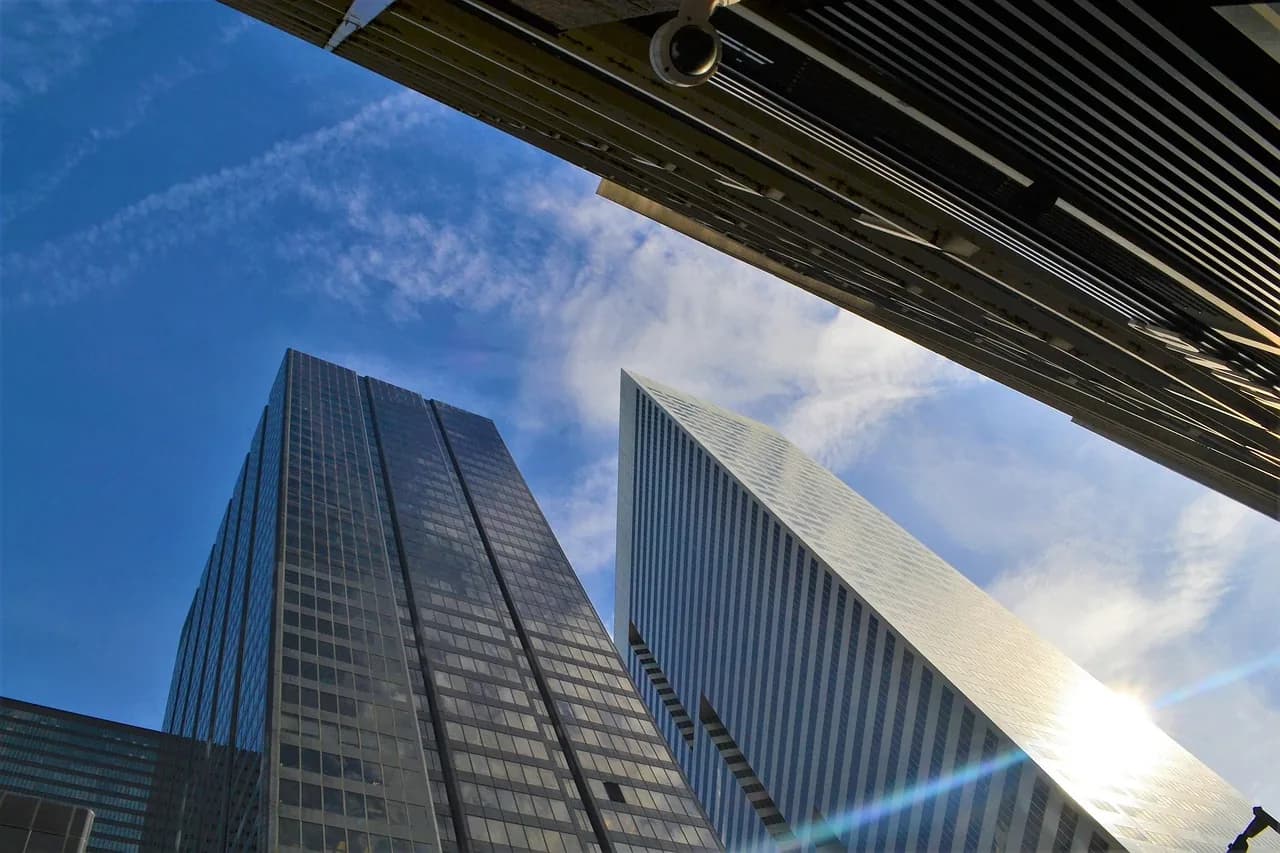
Orlando Commercial Real Estate Market Trends 2026
A comprehensive guide to trends, investment opportunities, cap rate analysis, and market outlook for commercial real estate investors across Orlando's fastest-growing corridors and submarkets.
Market Overview
The Orlando commercial real estate market enters 2026 on solid footing. After navigating interest rate uncertainty over the past two years, cap rates have stabilized across most asset classes, and transaction volume is rebounding. Investors who were sidelined are re-entering the market, particularly in the NNN, multifamily, and industrial sectors where fundamentals remain strong.
Orlando's population growth continues to outpace national averages, fueled by domestic migration from higher-cost markets. This demographic tailwind supports demand across all commercial property types — from retail and dining to housing and employment space.
The Federal Reserve's pivot toward rate stabilization in late 2025 gave lenders and borrowers renewed confidence. Debt markets have loosened meaningfully compared to the tighter conditions of 2023–2024, and CMBS issuance is on the rise. For Orlando specifically, local and regional banks remain active in the 5–15 million dollar range, creating competitive financing options for middle-market investors who know how to structure deals.
Perhaps more importantly, the supply-demand imbalance that defines Orlando's growth story shows no signs of easing. The metro area added roughly 60,000 new residents in 2025 according to U.S. Census estimates, and Moody's projects a similar pace through 2028. That population growth translates directly into demand for housing, retail services, healthcare, and employment space — the core asset types that drive commercial real estate investment returns.
What makes the 2026 vintage particularly interesting is the convergence of stabilized pricing, improving debt availability, and continued demand-side growth. This is the environment where disciplined investors — those who can source, underwrite, and execute efficiently — tend to generate outsized risk-adjusted returns.
Orlando's Entertainment & Tourism Economy
No discussion of Orlando commercial real estate is complete without addressing the 800-pound gorilla: the tourism and entertainment economy. Orlando welcomed over 80 million visitors in 2025, reclaiming its position as the most-visited destination in the United States. That visitor volume does not just fill hotel rooms — it creates a massive, self-reinforcing demand engine for commercial real estate across dozens of asset types.
Universal's Epic Universe & the Ripple Effect
Universal Orlando's Epic Universe opened in 2025 as the largest theme park built in the United States in decades. The park spans over 750 acres and features worlds themed around Nintendo, Harry Potter, Universal Monsters, and more. Beyond the park gates, Epic Universe has catalyzed billions of dollars in ancillary development along the International Drive corridor — new hotels, restaurants, entertainment venues, and retail centers are either open or under construction within a two-mile radius.
The employment impact alone is staggering. Universal estimated 14,000 new direct jobs from Epic Universe, with another 20,000-plus indirect and induced positions across the region. That employment base needs housing, needs to eat, needs healthcare, and needs services — all of which drive commercial real estate demand in surrounding submarkets.
Walt Disney World's $17 Billion Expansion
Disney has committed approximately $17 billion in capital investment across its Florida properties over the coming decade. This is not speculative — it is approved, permitted, and actively under way. The scope includes new attractions, new themed lands, hotel renovations, and expanded capacity across all four theme parks. The scale of investment reinforces Disney's long-term commitment to Central Florida and provides a durable demand catalyst for the entire south Orlando and Osceola County commercial market.
For commercial real estate investors, Disney's capital plan is significant because it ensures continued employment growth, visitor volume, and ancillary commercial demand in the US-192 corridor, the Celebration area, ChampionsGate, and Four Corners for years to come. When Disney invests $17 billion, the private sector responds with multiples of that in surrounding development.
Orange County Convention Center Expansion
The Orange County Convention Center — already one of the largest in the nation — is undergoing a major expansion that will add approximately 500,000 square feet of new exhibit space along with a new headquarters hotel. The expansion is designed to attract larger conventions and trade shows that previously bypassed Orlando due to space constraints. Conventions drive midweek hotel occupancy and create demand for nearby restaurants, retail, and business services.
Hotel & Hospitality Investment
Orlando's hotel market comprises over 130,000 rooms, making it one of the largest lodging markets in the world. Occupancy rates have recovered to pre-pandemic levels, and RevPAR (revenue per available room) growth in 2025 outpaced the national average. For investors, hospitality opportunities in Orlando range from ground-up select-service development near the parks to value-add repositioning of older properties along tourist corridors. Hotel conversion to alternative uses — such as workforce housing or extended-stay concepts — is also an emerging strategy in secondary tourist locations.
Tourism Employment Driving Retail & Housing Demand
Orlando's tourism sector employs roughly 350,000 workers directly and supports hundreds of thousands more in adjacent industries. That workforce needs affordable and workforce housing, grocery-anchored retail, medical offices, childcare, and everyday services. The connection between tourism employment and commercial real estate demand is one of the most underappreciated aspects of the Orlando investment thesis. When investors think "Orlando tourism," they often think only of hotels — but the downstream demand for neighborhood-serving commercial assets is where much of the durable investment opportunity lives.
The International Drive Corridor
International Drive — known locally as I-Drive — is one of the most dynamic commercial real estate corridors in the southeastern United States. Stretching roughly 15 miles through the heart of Orlando's tourism district, I-Drive connects Universal Orlando, the Orange County Convention Center, SeaWorld, ICON Park, and thousands of hotel rooms, restaurants, and retail venues.
Epic Universe's Transformation of South I-Drive
The opening of Epic Universe on the southern end of I-Drive has fundamentally repositioned the corridor. Previously, the southern stretch was characterized by older hotels and underperforming retail. Today, the area surrounding Epic Universe is one of the most active development zones in Central Florida. Multiple branded hotel projects are under construction, new dining and entertainment concepts are opening, and land values have appreciated significantly.
Retail, Restaurants & Entertainment Venues
I-Drive has always been a retail and dining destination, but the mix is shifting toward higher-quality, experiential concepts. National restaurant groups, entertainment-focused retail tenants, and fast-casual dining chains are all competing for space along the corridor. For investors, this translates into strong leasing demand for well-located retail outparcels and inline spaces, as well as opportunities to reposition older retail centers for higher-rent tenants.
Hotel Conversions & Repositioning
One of the most compelling investment themes on I-Drive is hotel repositioning. Dozens of older, independently operated hotels along the corridor are candidates for renovation, rebranding, or conversion. Some investors are acquiring underperforming hotel assets and converting them to extended-stay or workforce housing concepts, which can generate stronger risk-adjusted returns than traditional transient hospitality in secondary locations along the corridor.
I-Drive 2040 Master Plan & Transit Improvements
Orange County's I-Drive 2040 master plan envisions the corridor as a more walkable, transit-connected, mixed-use district. Planned improvements include dedicated transit lanes, enhanced pedestrian infrastructure, and zoning changes that encourage higher-density mixed-use development. For long-term investors, the I-Drive 2040 plan signals a shift from a car-dependent tourist strip to a more urban, mixed-use corridor — a transition that historically creates significant real estate value.
Disney Area / US-192 / Kissimmee Corridor
The area surrounding Walt Disney World — including the US-192 corridor (Irlo Bronson Memorial Highway), Celebration, ChampionsGate, and the broader western Osceola County market — is one of the most active commercial real estate investment zones in Central Florida. Disney's ongoing $17 billion capital plan ensures that this area will continue to benefit from sustained employment growth, visitor traffic, and ancillary development demand for years to come.
Disney's Campus Investment & Ancillary Demand
Beyond the parks themselves, Disney has continued investing in its broader Central Florida campus, including corporate offices, employee training facilities, and infrastructure improvements. The relocation of Disney's Parks & Resorts division employees from California to the Lake Nona area has brought high-income households into the market, further driving demand for upscale retail, dining, and housing in the south Orlando corridor.
Celebration & the Surrounding Commercial Market
Celebration, the master-planned community originally developed by Disney, has matured into a desirable residential and mixed-use market. The town center features retail, dining, and office space with consistently high occupancy rates. Properties in and around Celebration benefit from the community's reputation, strong demographics, and proximity to Disney employment centers. Commercial properties here trade at premium valuations relative to the broader Osceola County market.
US-192 Retail Corridor
US-192 is a dual-market corridor that serves both tourist retail (souvenir shops, restaurants, attractions) and residential services (grocery, medical, fitness, education). The most compelling investment opportunities along US-192 tend to be properties that serve the growing residential population rather than purely tourist-dependent tenants. As the corridor densifies with residential development, demand for grocery-anchored retail, medical offices, and service-oriented commercial space continues to strengthen.
Vacation Rental & Short-Term Rental Conversion Market
The Disney-adjacent area has one of the highest concentrations of vacation rental properties in the country. As the short-term rental market matures and regulatory frameworks tighten, some investors are exploring conversion strategies — repositioning underperforming vacation rental communities for long-term residential or workforce housing use. This niche presents compelling value-add opportunities for investors who understand the local zoning and regulatory landscape.
ChampionsGate & Four Corners Growth Area
The ChampionsGate and Four Corners area — where Orange, Osceola, Polk, and Lake counties converge — has emerged as one of the fastest-growing residential and commercial corridors in Central Florida. Major national homebuilders have active communities throughout the area, and the resulting population growth is driving demand for all forms of commercial real estate. Retail outparcels, medical offices, and NNN investment opportunities along the US-27 and US-192 corridors are particularly active.
Looking to Invest in Orlando?
Get access to current opportunities and off-market deals across Orlando's highest-growth corridors.
Lake Nona & Medical City
Lake Nona has evolved from an ambitious master-planned vision into one of the most talked-about growth stories in the southeastern United States. What began as a healthcare-focused development has expanded into a full mixed-use ecosystem encompassing medical, office, retail, multifamily, and single-family residential — all anchored by institutions and employers that provide durable demand.
Healthcare & Institutional Anchors
Lake Nona Medical City is home to the Orlando VA Medical Center, Nemours Children's Hospital, UCF College of Medicine, UCF Academic Health Sciences Center, and the Burnett School of Biomedical Sciences. Together, these institutions employ thousands of healthcare professionals and researchers, creating a high-income employment base that drives demand for quality housing and commercial services in the surrounding area.
Life Sciences & Biotech
Lake Nona's concentration of healthcare and research institutions is attracting life sciences and biotech firms that benefit from proximity to academic medical centers and a skilled talent pool. The emerging life sciences cluster is still in its early stages, but it mirrors patterns seen in other healthcare campus-driven markets like Research Triangle, NC and the Texas Medical Center area in Houston. For investors, this translates into demand for specialized medical office, laboratory, and flex-space assets.
Office, Medical Office & Retail
Traditional office occupancy in Lake Nona has outperformed the broader Orlando office market, driven by tenants that benefit from the area's healthcare ecosystem and quality-of-life amenities. Medical office, in particular, has been one of the strongest performers — as healthcare employment grows, demand for outpatient clinics, specialist offices, and ancillary medical services follows. Retail in Lake Nona benefits from affluent demographics and a captive residential population, with grocery-anchored centers and restaurant-driven concepts performing well.
Residential Growth Driving Commercial Demand
Lake Nona's residential growth has been remarkable — thousands of new homes have been delivered over the past five years, with thousands more in the pipeline. Each new household generates demand for approximately 40–60 square feet of retail space and additional demand for healthcare, education, fitness, and dining. For commercial investors, following the rooftops is one of the most reliable strategies, and Lake Nona's rooftop trajectory remains one of the steepest in Central Florida.
Orlando's Population Growth & Migration Trends
Population growth is the single most important demand driver for commercial real estate, and Orlando is one of the fastest-growing metros in the country. The Orlando-Kissimmee- Sanford MSA has consistently ranked among the top 10 metro areas for net domestic migration over the past five years, and that trend accelerated in 2025.
Migration Patterns
The largest sources of inbound migration to Orlando include the New York/New Jersey metro, the greater Chicago area, the Philadelphia/DMV corridor, and increasingly, California. Migrants from these higher-cost markets bring higher incomes and savings, which supports demand for quality housing, retail, and services. The migration is not purely retiree-driven — a significant share of inbound movers are working-age adults and young families attracted by Orlando's lower cost of living, absence of state income tax, and growing economy.
Remote Workers Choosing Orlando
The rise of remote and hybrid work has been a structural tailwind for Orlando. Workers who previously needed to live near expensive coastal employment centers can now earn coastal salaries while living in a market with meaningfully lower housing and living costs. This cohort tends to be younger, higher-income, and more mobile — and they are choosing Orlando in growing numbers. The remote worker influx drives demand for quality multifamily, co-working space, and lifestyle-oriented retail and dining.
Impact on Housing & Commercial Real Estate
Population growth of 50,000–60,000 new residents per year translates into demand for approximately 20,000–25,000 new housing units annually, plus corresponding demand for retail, medical, educational, and employment space. When new housing construction lags population growth — as it has in several Orlando submarkets — the result is rising rents, compressed vacancy rates, and upward pressure on commercial property values.
Demographics & Household Formation
Orlando's median age skews younger than the Florida average, driven by UCF (one of the largest universities in the country), a young tourism workforce, and the inbound migration of working-age adults. Younger demographics translate into higher rates of household formation, which is the most direct driver of housing demand. The combination of strong household formation and limited housing supply is the fundamental reason why multifamily and build-to-rent investments in Orlando continue to perform well.
Infrastructure & Transportation
Transportation infrastructure is one of the most powerful — and often underappreciated — drivers of commercial real estate value. Orlando is in the middle of a generational infrastructure cycle, with multiple major projects either recently completed or actively under construction. Each of these projects reshapes accessibility, commute patterns, and ultimately property values.
I-4 Ultimate Completion
The I-4 Ultimate project — a $2.3 billion reconstruction of 21 miles of Interstate 4 through the core of Orlando — has reached substantial completion. The project added express toll lanes, rebuilt interchanges, and improved access throughout the central corridor. For commercial real estate, the completion of I-4 Ultimate improves accessibility to downtown Orlando, the tourist district, and employment centers along the I-4 spine. Properties near improved interchanges and access points stand to benefit from reduced congestion and improved visibility.
Brightline Orlando Station at MCO
Brightline's high-speed rail service connecting Orlando International Airport (MCO) to Miami, Fort Lauderdale, and West Palm Beach is operational and ramping ridership. The Orlando Brightline station at MCO creates a direct, high-speed link between Orlando and the South Florida market — the first inter-city passenger rail service in Florida in decades. For commercial real estate, the Brightline connection makes Orlando more accessible to South Florida capital, businesses, and talent. Properties near MCO and in the southeast Orlando corridor benefit from this improved connectivity.
SunRail Expansion
SunRail, Orlando's commuter rail system, continues to expand its footprint and ridership. Extensions and operational improvements are bringing more of the metro area within convenient rail access, which supports transit-oriented development (TOD) opportunities near stations. Commercial properties near SunRail stations — particularly in downtown Orlando, Maitland, and Sanford — benefit from improved accessibility and the premium that employers and residents increasingly place on transit connectivity.
Road Expansions in South Orange County & Osceola
As residential development pushes south and southeast, major road widening and new road construction projects are improving connectivity in south Orange County and Osceola County. The widening of Narcoossee Road, improvements along Boggy Creek Road, and new connections in the Tohoqua and Sunbridge master-planned community areas are all opening up new commercial development opportunities. Investors who identify commercially zoned parcels along these newly improved corridors — before the residential rooftops fully arrive — are well positioned for appreciation and development gains.
Sector-by-Sector Outlook
NNN Investments
NNN investment properties remain one of the most active segments in the Orlando market. National credit tenants — including quick-service restaurants, convenience stores, auto parts retailers, dollar stores, and medical-related users — continue expanding across Central Florida, providing a steady supply of investment opportunities. Cap rates for credit-tenant NNN deals have settled in the 5.5%–6.5% range, with strong demand from 1031 exchange buyers and passive income investors.
The Orlando NNN market benefits from a unique dynamic: high population growth creates a continuous pipeline of new development, which means new-construction NNN assets with long-term leases are regularly coming to market. Investors who can act quickly on newly-built NNN properties in high-growth corridors — before they hit the broader market — tend to secure the most attractive risk-adjusted returns.
Multifamily
Rental demand remains robust as homeownership affordability challenges persist. Value-add multifamily — particularly Class B and C assets with below-market rents — continues to offer attractive risk-adjusted returns. Investors who can renovate units and push rents to market rate are seeing meaningful NOI growth.
New multifamily deliveries in 2025 modestly increased vacancy in some submarkets, but absorption has been healthy given Orlando's population growth. The key to successful multifamily investing in this market is location discipline — properties in high-growth corridors with employment anchors (Lake Nona, Disney area, I-4 corridor) continue to outperform, while properties in oversupplied submarkets face near-term rent pressure.
Industrial & Logistics
Industrial remains one of the tightest sectors in Central Florida. E-commerce growth and Orlando's central location as a distribution hub keep vacancy rates near historic lows. New construction is being absorbed quickly, and rental rates continue trending upward.
The Sanford/North Orange County corridor and the SR-429/West Orange corridor have emerged as the primary industrial growth axes, with new speculative and build-to-suit projects delivering throughout 2025 and 2026. Small-bay industrial (units under 5,000 SF) remains chronically undersupplied and commands premium rents — a niche that savvy investors are targeting.
Retail
Reports of retail's demise have been greatly exaggerated — especially in high-growth markets like Orlando. Population growth is driving demand for service-oriented retail, restaurants, and medical uses. Multi-tenant strip centers in high-growth corridors with below-market rents offer compelling value-add opportunities.
The strongest retail fundamentals are found in grocery-anchored centers, outparcels to major retail nodes, and new-construction pads leased to national credit tenants. Tourist- dependent retail along I-Drive and US-192 has also benefited from the surge in visitor volumes following Epic Universe's opening.
Office & Medical Office
The traditional office market in Orlando mirrors national trends — suburban office with flexible floor plates is outperforming older downtown inventory. Medical office, however, continues to be a standout performer. Orlando's growing and aging population drives consistent demand for outpatient medical, dental, and specialty clinic space. Medical office assets leased to creditworthy health systems trade at cap rates 50–100 basis points tighter than comparable traditional office.
Land & Development
As residential development pushes into suburban and exurban areas, commercially zoned land in the path of growth continues to appreciate. The southeast Orange County corridor and the US-27 corridor into Lake County are among the most active development areas. Entitled commercial land near active residential communities commands premium pricing, and the window to acquire pre-development parcels at value-oriented pricing narrows each quarter as rooftop counts increase.
Cap Rate Analysis by Property Type
Understanding where cap rates are today — and where they are heading — is essential for underwriting Orlando investment opportunities. The following ranges represent typical market cap rates for stabilized assets in the Orlando metro area as of early 2026. Value-add and repositioning opportunities will generally trade at higher going-in cap rates with the expectation of compression through execution.
NNN (Credit Tenant)
5.25% – 6.50%
Investment-grade tenants with 10+ year terms at the low end
NNN (Non-Credit / Local)
6.50% – 8.00%
Shorter lease terms and local operators at the higher end
Multi-Tenant Retail
6.50% – 8.50%
Grocery-anchored at the low end; unanchored strip at the high end
Multifamily (Stabilized)
5.25% – 6.25%
Class A in prime submarkets at the low end
Multifamily (Value-Add)
5.75% – 7.00%
Going-in cap rate; stabilized yield targets 7%+
Industrial / Warehouse
5.50% – 7.00%
Modern distribution at the low end; older flex at the high end
Medical Office
6.00% – 7.50%
Credit health system tenants at the low end
Traditional Office (Suburban)
7.00% – 9.00%
Wide range reflecting flight-to-quality dynamics
Hospitality / Hotels
7.50% – 10.00%
Select-service near parks at the low end; older independents higher
Development Land
N/A
Priced on residual land value; returns depend on entitlements and timing
Cap rates in Orlando have stabilized after the upward adjustment of 2023–2024. With the Fed signaling a steady rate environment, most market participants expect cap rates to hold near current levels through 2026, with potential for modest compression in the strongest asset classes (NNN, industrial, medical office) if the 10-year Treasury moves lower.
Key Submarkets to Watch
Orlando is not a monolithic market — it is a collection of distinct submarkets, each with its own demand drivers, growth trajectory, and investment profile. The following eight submarkets represent the areas we are most focused on for commercial investment opportunities in 2026.
Lake Nona / Medical City
Healthcare and life sciences anchors driving office, medical office, retail, and multifamily demand in one of the nation's top master-planned communities
International Drive / Universal
Epic Universe catalyzing billions in new hotel, retail, and entertainment development along Orlando's premier tourism corridor
I-4 Corridor / Sanford
Corporate relocations, industrial growth, and multifamily expansion driven by improving I-4 accessibility and lower land costs
US-192 / Kissimmee
Disney expansion driving tourism retail alongside growing residential population creating demand for neighborhood-serving commercial
Downtown Orlando / Creative Village
Urban infill, mixed-use development, and growing tech/creative sector employment around the UCF downtown campus
Winter Park / Maitland
Affluent demographics, strong retail fundamentals, and suburban office demand from professional services and healthcare tenants
Clermont / West Orange
Explosive residential growth along the US-27 and SR-429 corridors creating demand for new commercial development in every category
Southeast Orlando / Airport Area
Brightline station at MCO, road improvements, and proximity to Lake Nona driving industrial, flex, and commercial development
Want to Discuss a Specific Submarket?
Our team tracks every corridor in Central Florida. Let's talk about which submarket fits your investment criteria and timeline.
2026 Investment Strategies
Given the current market dynamics — stabilized cap rates, improving debt availability, and continued population growth — the following strategies are particularly well-suited for the Orlando market in 2026.
1. Value-Add Multifamily in High-Growth Corridors
Acquire Class B and C multifamily properties with below-market rents in corridors with strong employment growth (Lake Nona, Disney/Kissimmee area, I-4 corridor). Execute interior renovations and amenity upgrades to push rents to market rate. The combination of organic rent growth from population pressure and forced appreciation from renovations can generate compelling total returns, particularly for investors with a 3–5 year hold period.
2. NNN Development & Sale-Leaseback
Orlando's population growth creates a continuous pipeline of new commercial development, and national tenants are actively seeking pad sites and build-to-suit opportunities. Investors who can control entitled land in growth corridors and execute build-to-suit or development deals with credit tenants can create NNN assets at yields well above market cap rates. The spread between development yield and market cap rate represents immediate value creation at stabilization.
3. Medical Office Acquisition
Medical office is one of the most defensive and growing asset classes in the Orlando market. As the population grows and ages, demand for outpatient healthcare services increases predictably. Acquiring medical office assets leased to creditworthy health systems or multi-provider practices — particularly near hospital campuses and in high-growth residential areas — offers investors stable cash flow with embedded rent growth.
4. Retail Repositioning in Growth Corridors
Older multi-tenant retail centers in corridors that have experienced significant residential growth often have below-market rents and underperforming tenant mixes. Acquiring these centers, upgrading the physical plant, and releasing to stronger tenants at market rents is a proven value-add strategy. The key is targeting corridors where population growth has outpaced the existing retail supply — creating pent-up tenant demand that supports rapid releasing.
5. Land Banking in the Path of Growth
For patient capital, acquiring commercially zoned or commercially entitled land in the path of residential growth remains one of the most reliable strategies in the Orlando market. Key target areas include south Orange County along Narcoossee Road, the US-27 corridor through Four Corners and into Lake County, and the Tohoqua/Sunbridge area in southeast Orlando. The returns from land investment are lumpy and illiquid, but the risk-adjusted outcome for well-located parcels in the path of growth has historically been very attractive.
6. Tourism Corridor Repositioning
The surge in tourism activity driven by Epic Universe and Disney's expansion has created opportunities to reposition underperforming assets along I-Drive, US-192, and other tourism corridors. Older hotels, outdated retail centers, and underutilized commercial properties in these corridors can be acquired at value-oriented pricing and repositioned to capture the increased visitor traffic and spending. This strategy requires local market knowledge and operational capability, but the upside in a rising tourism market can be substantial.
What This Means for Investors
For investors targeting the Orlando market in 2026, the opportunity set is strong but requires discipline. Stabilized cap rates mean pricing is more predictable, but the best risk-adjusted returns will come from investors who can identify value-add opportunities, source off-market deals, and execute efficiently.
The macro tailwinds — population growth, tourism expansion, infrastructure investment, and improving debt markets — create a favorable backdrop. But macro tailwinds do not guarantee success at the property level. The difference between a good investment and a mediocre one in Orlando often comes down to submarket selection, deal sourcing, and execution quality.
Investors who are new to the Orlando market should be aware that it is a large, diverse metro with submarkets that can perform very differently from one another. A multifamily property in Lake Nona will have a fundamentally different risk-return profile than one in an oversupplied suburban submarket. A NNN property on a high-traffic corridor with strong demographics will outperform one in a secondary location with limited population growth. Submarket selection matters enormously.
Whether you're a first-time commercial investor or expanding an existing portfolio, working with a broker who understands the nuances of Orlando's submarkets is critical to finding the right opportunities and avoiding overpriced assets. The best deals in this market are often off-market or early-to-market — relationships and local knowledge are the competitive advantages that separate successful Orlando investors from the rest.
Related Reading
Office Space for Lease in Orlando
Class A, B, and flex office space across Downtown, Lake Nona, Maitland, Winter Park, and Sand Lake.
Retail Space for Rent in Orlando
Endcap, inline, and anchored retail space across I-Drive, Sand Lake, Winter Park, and Lake Nona.
Industrial Property for Sale in Central Florida
Warehouse, flex, distribution, and manufacturing across the I-4 corridor and Space Coast.
Build-to-Suit Development in Orlando
Site selection, entitlements, and turnkey construction for retail, QSR, medical, and industrial users.
Orlando Entertainment District Investment Guide
Deep dive into Disney, Universal, and I-Drive corridor investment opportunities for commercial real estate investors.
Orlando Commercial Real Estate Market
Explore investment properties, market stats, and opportunities across Orange County and the Orlando metro.
Ready to Invest in Orlando Commercial Real Estate?
Explore current listings or get access to off-market deals curated for serious investors.
Get Off-Market CRE Deals in Your Inbox
Join our investor list for exclusive Central Florida opportunities, market reports, and deal analysis — delivered weekly. No spam, unsubscribe anytime.