Sarasota Overview
The Sarasota-Manatee MSA has a combined population exceeding 850,000 and has posted the fastest per-capita income growth of any Florida metro over the past decade. U.S. News & World Report ranked Sarasota the #1 city in the United States for quality of life in 2024 — a distinction that drives relentless in-migration of high-net-worth retirees, remote professionals, and healthcare workers that creates sustained commercial real estate demand.
Major employers anchoring the MSA include Sarasota Memorial Health System (one of Florida's largest public hospital systems), PGT Innovations, Sun Hydraulics (now Helios Technologies), and a robust tourism and hospitality sector tied to Siesta Key, Lido Beach, and St. Armands Circle. The metro sits 60 miles south of Tampa Bay on the Gulf Coast — well-connected by I-75 but deliberately less dense, creating the barrier-to-entry dynamics that define its investment case.
Why Sarasota for CRE Investment
Five structural factors define Sarasota as a compelling CRE market:
- →Wealthy demographic: Median household income $78K+ with significant high-net-worth retiree population driving above-average retail spending per capita — structurally supportive for NNN retail and medical office demand.
- →Barrier-to-entry coastal location: Gulf Coast geography, land scarcity, and restrictive zoning limit new supply — especially for retail and medical office — creating durable rental pricing power for existing assets.
- →No developable land pressure: Unlike inland Florida metros, Sarasota's core has extremely limited large-parcel development sites. The resulting supply constraint benefits owners of existing commercial product.
- →Florida tax climate: No state income tax amplifies NNN appeal for high-income investors. The Sarasota market is a preferred 1031 exchange destination for investors exiting high-tax-state assets.
- →Tech and remote worker influx: Post-COVID, Sarasota captured significant inflow of remote professionals and tech workers from California, New York, and Chicago, broadening the employment base and supporting multifamily and retail demand beyond the traditional retiree demographic.
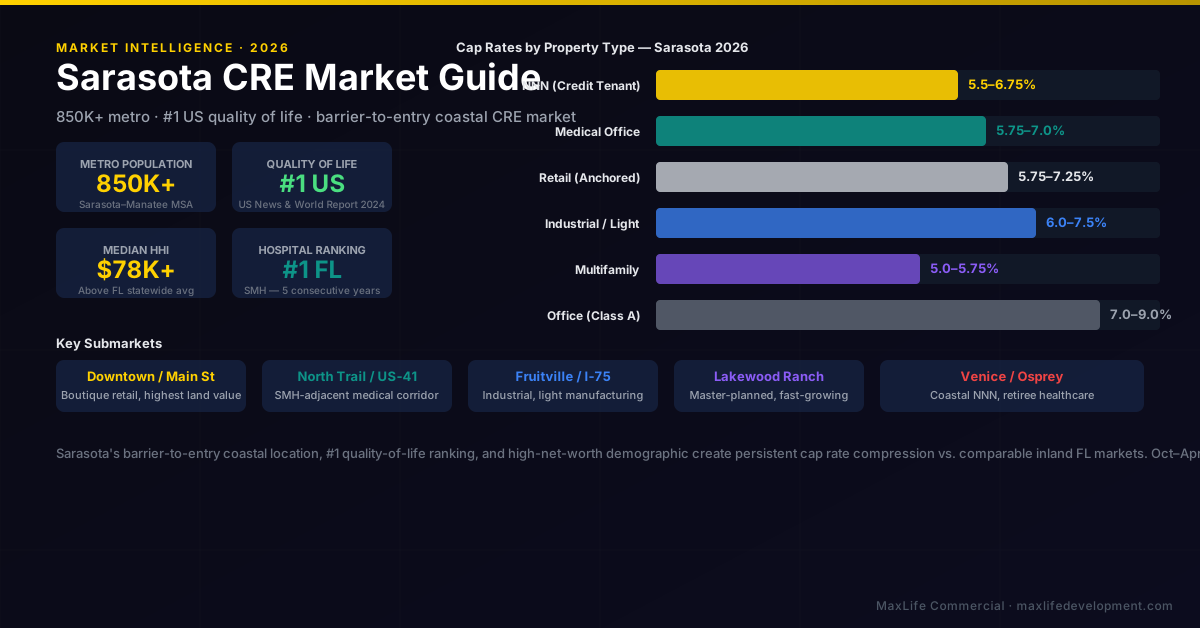
Cap Rates by Property Type (2026)
| Asset Class | Cap Rate Range |
|---|---|
| NNN Credit Tenant Retail | 5.5 – 6.75% |
| Medical Office (MOB) | 5.75 – 7.0% |
| Retail (Anchored Center) | 5.75 – 7.25% |
| Industrial / Light Industrial | 6.0 – 7.5% |
| Multifamily (Class A) | 5.0 – 5.75% |
| Office (Class A) | 7.0 – 9.0% |
Industry estimates — directional, not audited. Cap rates vary by specific location, tenant credit, lease term, and property condition.
Key Sarasota Submarkets
Downtown Sarasota / Main Street
Boutique retail, professional office, and mixed-use. Highest land values in the MSA. Strong foot traffic from arts district, marina district, and affluent residential. Limited new supply; owners have exceptional pricing power.
Fruitville Road / I-75
Sarasota's primary industrial corridor. Light manufacturing, trade contractors, HVAC/plumbing suppliers, and construction-related users. Limited land for new development supports existing asset values. Rents $9–13/sf NNN.
North Trail / US-41
Sarasota's medical office corridor, anchored by Sarasota Memorial Hospital. MOB demand is structurally strong and physician-driven. Sub-7% cap rates for well-located, well-tenanted medical product adjacent to SMH.
Lakewood Ranch (Manatee County)
Master-planned community with 30,000+ homes planned. One of the fastest-growing retail and medical demand nodes in the MSA. National tenants (Publix, Starbucks, national QSR) expanding aggressively. Manatee County's growth trajectory rivals Pasco County on the Tampa side.
Venice
Coastal retail, healthcare services, and retiree-driven NNN. SMH Venice campus anchor. Slower growth than Lakewood Ranch but stable, high-income demographic supporting sustained retail spending.
Osprey / Nokomis
Coastal NNN corridor connecting Sarasota and Venice. Boutique retail and strip center product. Less institutional capital flow allows for higher-yield acquisition opportunities in the 6.5–7.5% range for well-located strip retail.
Get Off-Market CRE Deals in Your Inbox
Join our investor list for exclusive Central Florida opportunities, market reports, and deal analysis — delivered weekly. No spam, unsubscribe anytime.
Medical Office
Medical office is Sarasota's highest-conviction asset class. Sarasota Memorial Hospital has been ranked the #1 hospital in Florida for five consecutive years by US News & World Report, creating a gravitational pull on physician practices, specialist groups, and outpatient operators who want proximity to the system.
SMH is in an active expansion phase — the Venice campus, new specialty programs, and outpatient network growth are generating persistent demand for medical office space well beyond what the existing North Trail supply can absorb. This supply/demand imbalance is driving the construction of new MOB product along the US-41 corridor and satellite locations in Lakewood Ranch.
- →Physician migration: High-tax-state physicians (California, New York, New Jersey) continue to relocate to Sarasota for lifestyle and tax reasons, bolstering the independent practice tenant pool.
- →Cap rates: 5.75–7.0% for well-located MOB with multi-year leases. Hospital-campus-adjacent product at the tight end; secondary locations and shorter WALT trade wider.
- →Demographics: Aging-in-place retiree population creates structurally growing demand for primary care, cardiology, orthopedics, and outpatient surgery — the core medical office tenants.
Retail
Sarasota's high household income drives retail spending that consistently outperforms Florida averages. The market supports a tiered retail landscape:
- →St. Armands Circle: One of Florida's premier boutique retail destinations. Direct-to-consumer brands, fine dining, and luxury retail. Virtually zero institutional availability; trophy pricing.
- →Grocery-anchored: Publix is the dominant grocer and preferred anchor. Publix-shadow outparcels — Starbucks, Chase Bank, nail/spa — command 5.5–6.25% caps due to traffic and covenant strength.
- →National NNN (Starbucks, Chick-fil-A, McDonald's): Sub-6% cap rates for Sarasota-area locations due to sales volume premium from high-income, high-density trade area. Investors consistently assign location quality premium to Sarasota over comparable inland Florida product.
- →Lakewood Ranch retail corridor: Fast-growing, new-construction retail absorbing national tenant expansion. Slightly higher cap rates (5.75–7.0%) reflect lease-up risk on newer product.
Industrial
Sarasota is a light industrial market, not a bulk logistics hub. The Fruitville Road industrial corridor east of I-75 serves the construction and trade contractor economy that has boomed alongside residential development across the MSA.
- →Primary tenants: HVAC contractors, plumbing supply, electrical, landscaping, general contractors, and light manufacturing. Smaller bay sizes (1,500–10,000 sf) dominate the existing inventory.
- →Rents: $9–13/sf NNN, reflecting tightened vacancy (below 5% in core Fruitville Road product) and limited new supply given land constraints.
- →Cap rates: 6.0–7.5% — attractive relative to coastal NNN retail given higher yield and structural supply constraints.
For investors seeking higher industrial yields and bulk logistics exposure, the I-4 corridor (Lakeland) and Tampa MSA are better-suited alternatives. Sarasota industrial is a hold-and-clip strategy for investors who want coastal market exposure with yield above NNN retail.
Seasonal Dynamics
Sarasota's commercial real estate market operates on a seasonal cycle driven by snowbird in-migration from October through April. During peak season, the effective population of the MSA roughly doubles, creating outsized retail, hospitality, and food-and-beverage demand that directly impacts NNN tenant performance.
- →October–April: Peak season. Retail revenues spike. Buyers closing in this window capture first-year income from peak season tenancy. Optimal listing window for sellers seeking maximum price discovery.
- →May–September: Off-season. Retail foot traffic drops 30–50% in tourist-dependent locations. Strong-covenant NNN tenants (national credit) insulate investors; local service tenants more exposed to seasonal revenue dips.
- →Underwriting note: Pro-forma underwriting should reflect trailing 12-month NOI blended across both seasons. Off-season sale of tourism-adjacent retail may create acquisition opportunities for buyers who understand the seasonality discount.
“Sarasota's barrier-to-entry coastal location, #1 quality-of-life ranking, and high-net-worth demographic make it one of Florida's most competitive commercial real estate markets for NNN and medical office.”
Frequently Asked Questions
What are Sarasota commercial real estate cap rates in 2026?
NNN credit tenant: 5.5–6.75%. Medical office: 5.75–7.0%. Anchored retail: 5.75–7.25%. Light industrial: 6.0–7.5%. Multifamily Class A: 5.0–5.75%. Office Class A: 7.0–9.0%. Location quality and demographic strength compress NNN and medical cap rates below comparable inland Florida markets.
What is the best commercial real estate investment in Sarasota?
Medical office and NNN credit tenant retail are the two strongest plays. SMH-adjacent medical office benefits from structurally growing demand and physician migration. High-income-area NNN (Publix outparcels, Chick-fil-A, Starbucks) commands pricing power from the wealthy coastal demographic and October-April snowbird peak.
How does Sarasota compare to Naples for commercial real estate?
Both are high-barrier coastal markets with wealthy demographics. Naples skews higher net worth and commands tighter cap rates for trophy NNN product. Sarasota has a more diverse economy with stronger medical, industrial, and multifamily depth via Lakewood Ranch. Both are excellent for NNN and medical office; Naples typically wins on price for the highest-quality product.
What is the industrial market like in Sarasota?
Sarasota is a light industrial market centered on the Fruitville Road corridor east of I-75. Trade contractors, construction, and light manufacturing dominate. Vacancy is below 5% in core product, rents run $9–13/sf NNN, and cap rates are 6.0–7.5%. Limited developable land supports values for existing assets.
Invest in the Sarasota Market
Ryan Solberg at MaxLife Commercial works with investors across Florida's Gulf Coast and I-4 corridor, including NNN, medical office, and industrial acquisitions in the Sarasota-Manatee MSA. Whether you're completing a 1031 exchange or building a coastal Florida CRE portfolio, we can help you identify the right opportunity.
Related Articles
Tampa Commercial Real Estate Guide
Cap rates, submarkets, and investment opportunities across the Tampa Bay metro.
Medical Office Investing in Florida
MOB cap rates, tenant demand, and why Florida's healthcare growth makes medical office a core CRE strategy.
Net Lease Investing in Florida
NNN fundamentals, cap rate benchmarks, and why Florida's tax climate makes net lease the preferred income strategy.
Medical Office in Central Florida
Lake Nona, AdventHealth, and the growing MOB demand across Central Florida's healthcare corridor.
Florida CRE Investor Guide
Statewide market overview — population, tax advantages, and asset class fundamentals across Florida.
Orlando vs Tampa CRE: Where to Invest
Head-to-head comparison of Florida's two largest inland CRE markets for 2026 investors.