What Is a Cell Tower Ground Lease?
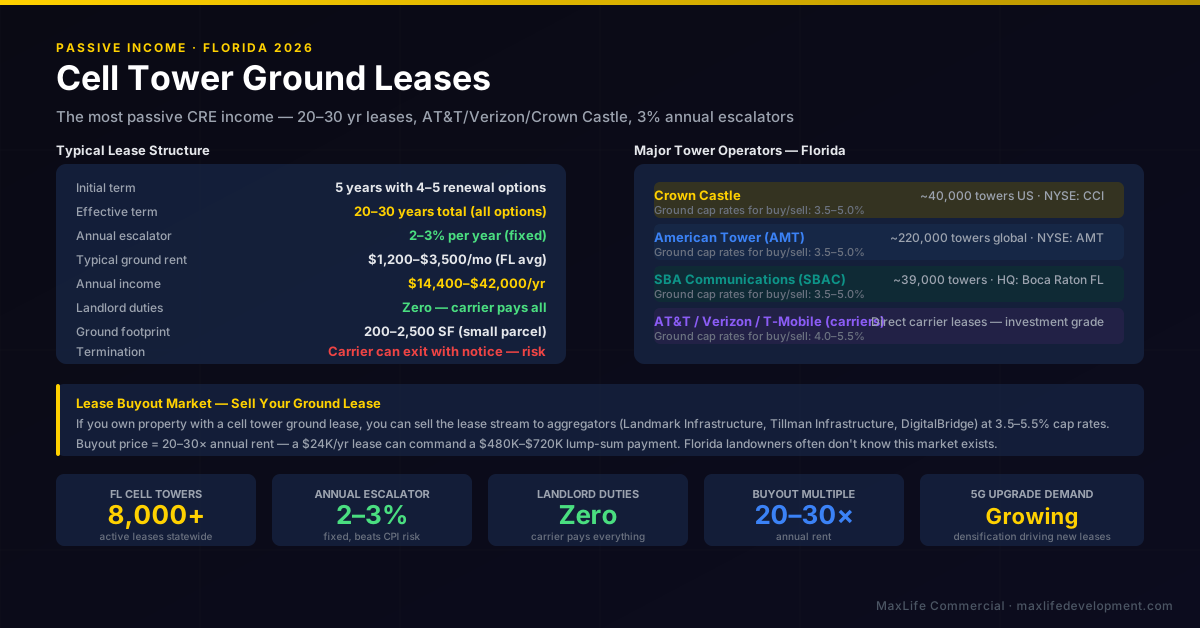
A cell tower ground lease is a long-term agreement where a wireless tower operator or carrier leases a small parcel of your land (typically 200–2,500 SF) to erect a cell tower or antenna structure. You, the landowner, receive monthly rent while the carrier builds, operates, and maintains the tower entirely at their expense.
Initial lease terms are typically 5 years with 4–5 automatic renewal options, creating an effective lease term of 20–30 years. The tenant almost always exercises renewals because relocating a functioning tower disrupts wireless coverage for thousands of subscribers — a cost that far exceeds any rent increase you might negotiate.
Florida has 8,000+ active cell tower ground leases statewide. Most landowners discover them through unsolicited carrier outreach — but the initial lease offer is rarely the best deal available. Carriers are trained to lock in below-market rates early.
Typical Cell Tower Lease Structure in Florida
| Initial term | 5 years |
| Renewal options | 4–5 options at carrier's election |
| Effective lease term | 20–30 years total (all options) |
| Annual escalator | 2–3% per year (fixed) |
| Typical ground rent (FL avg) | $1,200–$3,500/month |
| Annual income | $14,400–$42,000/year |
| Landlord responsibilities | Zero — carrier pays all costs |
| Ground footprint leased | 200–2,500 SF (small parcel) |
| Termination risk | Carrier can exit with notice (rare, but possible) |
Major Tower Operators in Florida
Crown Castle (NYSE: CCI)
~40,000 US towersThe largest US tower company by tower count, Crown Castle is heavily concentrated in urban and suburban markets. Strong Florida presence in Tampa, Orlando, Miami, and Jacksonville corridors. Ground leases for buy/sell trade at 3.5–5.0% cap rates.
American Tower (NYSE: AMT)
~220,000 global towersThe global tower giant, AMT has significant Florida presence particularly along I-95 and urban cores. Investment-grade credit, long-established lease structures. Ground cap rates for buy/sell: 3.5–5.0%.
SBA Communications (NASDAQ: SBAC)
~39,000 towers · HQ: Boca Raton, FLFlorida-headquartered SBAC has deep roots in the state and a growing domestic portfolio. Particularly active in Southeast and Central Florida markets. Ground cap rates: 3.5–5.0%.
AT&T / Verizon / T-Mobile (Direct Carrier)
Investment-grade creditDirect carrier leases exist where carriers own the tower or lease directly from landowners. These carry the strongest credit (investment-grade rated) but pricing is often below tower company rates. Ground cap rates for buy/sell: 4.0–5.5%.
Get Off-Market CRE Deals in Your Inbox
Join our investor list for exclusive Central Florida opportunities, market reports, and deal analysis — delivered weekly. No spam, unsubscribe anytime.
The Lease Buyout Market: Sell Your Ground Lease
One of the least-known opportunities in Florida real estate is the cell tower ground lease buyout market. If you own property with a cell tower on it, you can sell the future lease payments to a specialized aggregator in exchange for a lump-sum cash payment.
Typical Buyout Multiple: 20–30× Annual Rent
A lease generating $24,000/year can command a $480,000–$720,000 lump-sum payment from a buyout aggregator.
Active lease aggregators in Florida include Landmark Infrastructure, Tillman Infrastructure, DigitalBridge, and private equity funds specializing in telecom infrastructure. They compete aggressively for Florida leases given the state's population density, 5G densification demand, and strong tower economics.
The buyout doesn't end your ownership of the land — you typically retain fee simple ownership and the right to sell or develop the rest of the parcel. The aggregator purchases only the lease payment rights.
- →Receive immediate capital instead of waiting for monthly rent payments
- →Buyout proceeds can be 1031-exchanged into replacement property (consult tax advisor)
- →You retain fee simple ownership of the underlying land
- →Best time to sell: when rates are low and competition among aggregators is high
5G Densification: Why Tower Demand Is Growing
5G networks require significantly more tower density than 4G LTE. Where a 4G network might cover a given area with one macro tower, 5G often requires multiple small cells and densified macro sites to deliver the ultra-low-latency performance carriers advertise. This is creating new ground lease demand in markets that were already well-served by legacy 4G infrastructure.
Florida's population density, tourism infrastructure, and rapid suburban growth make it a primary 5G densification target. Port cities, resort corridors, and expanding suburban rings around Tampa, Orlando, and Miami are seeing new lease outreach from carriers and tower companies that had no prior site interest.
For property owners who receive unsolicited lease offers: the carrier's initial offer is rarely market rate. Before signing, get an independent valuation and have a telecom attorney review the lease terms — particularly the termination provisions and renewal rent escalators.
Does Your Florida Property Qualify for a Cell Tower?
Not every property is a tower candidate, but demand is broader than most landowners assume:
- →Location in a coverage gap: Carriers prioritize properties that fill network coverage holes. Rural Florida along I-75 and US-27 still has significant gaps.
- →Height advantage: Elevated parcels, water towers, and buildings with rooftop access command premium rates due to the coverage advantage.
- →Size: As little as 200 SF of land can accommodate a tower base. Rooftop sites need even less physical space.
- →Zoning: Some Florida municipalities restrict tower height or placement. Tower companies handle zoning and permitting — this is generally not a landowner issue.
- →Existing co-location: A property with one carrier already paying rent may be attractive to additional carriers for co-location — each adding incremental rent.
Cell Tower Ground Leases and CRE Strategy
Cell tower ground leases represent an increasingly important component of Florida commercial real estate portfolios — whether you're a landowner evaluating a new lease offer, considering a buyout, or an investor acquiring tower-leased commercial land as a passive income position. MaxLife Commercial advises clients on telecom ground lease valuation and acquisition strategy across Florida.
Ground Lease Strategy Consultation
Evaluating a cell tower lease offer or buyout? Ryan Solberg provides commercial real estate advisory for Florida landowners and investors in the telecom ground lease market.