Central Florida Developments
Transportation & Infrastructure
Rail, roads, and airport expansions reshaping how Central Florida connects — and where value follows.
By Ryan Solberg, Licensed FL Real Estate Broker (BK3354351) · Updated
Transportation infrastructure is the single most reliable predictor of where commercial real estate demand moves next. In Central Florida, the current pipeline of rail, road, and airport projects represents the largest coordinated infrastructure investment in the region's history — and every station, interchange, and terminal expansion creates a commercial opportunity radius around it.
The I-4 Ultimate project has already reshuffled development patterns along the corridor. Brightline's planned Tampa extension would create the first inter-city passenger rail link between Orlando and Tampa, unlocking transit-oriented development opportunities at each planned stop. SunRail extensions would push commuter access deeper into Osceola and Volusia counties. MCO's Terminal C expansion positions Orlando as a hub capable of handling 40+ million passengers annually — with the commercial demand that follows.
For commercial real estate investors, the opportunity is in anticipating where these projects land before the market prices them in. Stations, interchanges, and airport corridors don't just move people — they move capital.
Key Projects
Brightline Orlando–Tampa Extension
Orlando to Tampa (I-4 Corridor)
Brightline — the only privately owned intercity passenger railroad in the U.S. — completed its Miami-to-Orlando route in 2023 with a station inside Orlando International Airport. The Tampa extension would add 80 miles of new track along the I-4 corridor with planned stops in Osceola County, Polk County, and Hillsborough County. Each stop represents a transit-oriented development node where mixed-use, multifamily, and retail commercial uses cluster within a walkable radius of the station. As of mid-2026 the extension remains in the financing and preliminary engineering stage — Brightline is pursuing tax-exempt bond financing for the segment and no construction start date has been announced.
CRE Investor Impact
Station areas in Osceola and Polk counties — currently undervalued relative to Orlando — would become TOD (transit-oriented development) targets. Expect multifamily, mixed-use retail, and hotel demand within a half-mile of each station. Land positioned near planned stops is the highest-upside early bet — sized for the execution risk of a project that has not yet closed its financing.
SunRail Extensions
Osceola County (south) / Volusia County (north)
SunRail's existing commuter line runs from DeLand in the north through downtown Orlando to Poinciana in the south. Proposed extensions would push service further south into Osceola County toward St. Cloud and north toward DeLand's outer communities. Additional stations would open new commercial corridors to commuter-driven retail, office, and mixed-use development that performs better with transit access.
CRE Investor Impact
New SunRail stations consistently generate walkable retail, medical office, and multifamily demand within a quarter-mile radius. South Osceola stations in particular would catalyze commercial development in areas currently priced well below equivalent Orlando submarkets.
MCO Airport Expansion (Terminal C + Future Phases)
Orlando International Airport, South Orlando
Terminal C — the NorthStar terminal — opened in 2022 adding capacity for 40+ airlines. Further expansion phases are planned to handle continued passenger growth as Orlando approaches 60 million annual passengers. Airport growth of this scale drives demand for adjacent hotels, car rental facilities, cargo logistics, and the full ring of commercial services that cluster around major airports. The planned Brightline station inside MCO makes it the only airport in the Southeast with intercity rail access.
CRE Investor Impact
Airport adjacency remains one of the most durable commercial demand drivers. Hotel, short-term office, logistics, and convenience retail within 5 miles of MCO benefit from every capacity expansion. Lake Nona's proximity to MCO has been a core part of its development thesis.
I-4 Express Lanes
Tampa to Daytona, 132 miles
The I-4 Ultimate project — the largest road project in Florida history — added express lanes, rebuilt 15 miles of interchanges through downtown Orlando, and improved access at 13 exits between SR-408 and SR-434. The rebuilt interchanges at US-192, SR-528, and the downtown splits have already redirected commercial development interest toward previously underutilized interchange corners that now have grade-separated access and higher traffic counts.
CRE Investor Impact
Rebuilt interchange corners along I-4 — particularly at US-192 (Kissimmee), SR-528 (south Orlando), and the SR-408 split — have become active targets for gas/convenience, QSR, and pad-site development. The improved access translates directly into higher traffic counts and better tenant economics.
Investor Takeaway
Transportation infrastructure doesn't create demand — it redirects it. The areas positioned to capture the next transit node or interchange improvement are where commercial real estate returns have historically been highest. In Central Florida's current pipeline, Osceola County station areas (Brightline/SunRail) and airport-adjacent Lake Nona represent the clearest early-mover opportunities.
Frequently Asked Questions
Where would the Brightline Orlando–Tampa extension stop?
Planned stops are in Osceola County, Polk County, and Hillsborough County along the I-4 corridor, ending in Tampa. As of mid-2026 the project is still in the financing and preliminary engineering stage, so station locations are not final and no construction start date has been announced.
How does transportation infrastructure affect commercial real estate values?
Infrastructure redirects demand rather than creating it. New rail stations, rebuilt interchanges, and airport expansions each create a commercial opportunity radius — typically a half-mile around transit stations and the immediate corners around upgraded interchanges — where traffic counts and tenant economics improve faster than the market reprices the land.
What did the I-4 Ultimate project change for investors?
The $2.3 billion project — the largest road project in Florida history, completed in 2022 — rebuilt 15 interchanges and added express lanes through Orlando. The rebuilt interchange corners, particularly at US-192, SR-528, and the SR-408 split, now support gas/convenience, QSR, and pad-site development that the old configurations could not.
Sources & Further Reading
Related Resources
Live Listings Near Transportation & Infrastructure
Active commercial inventory along the I-4 & Brightline corridors — live from Stellar MLS, straight through MaxLife.
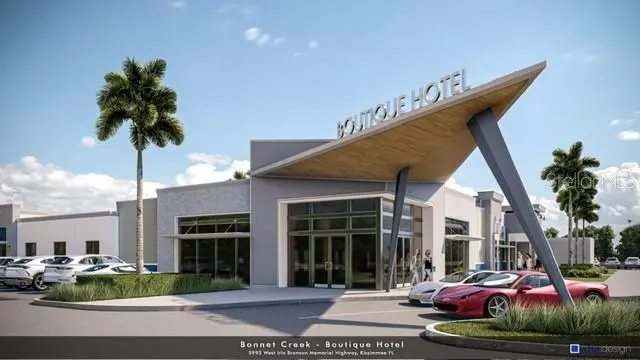

$32.00M
5995 W Irlo Bronson Memorial Hwy
Kissimmee, FL 34747
95,480 SF · 7.46 ac · Built 1984
Acreage & Unrec
MLS #O6386757, COLDWELL BANKER REALTY.
Listing provided by Stellar MLS
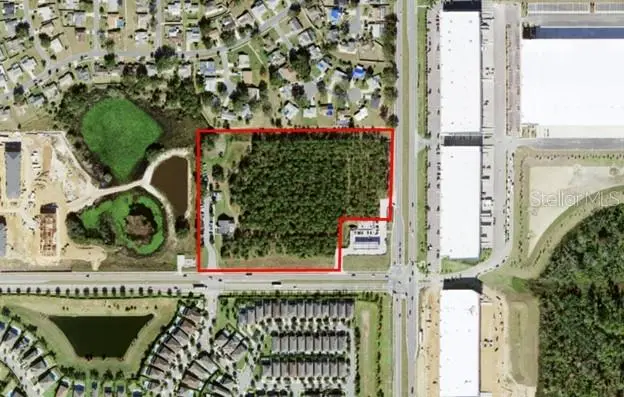
$15.00M
7625 Sinclair Rd
Kissimmee, FL 34747
2,500 SF · 13.31 ac · Built 2014
Sinclair Corners
MLS #R4910040, RICHARD L. FULLERTON INC.
Listing provided by Stellar MLS
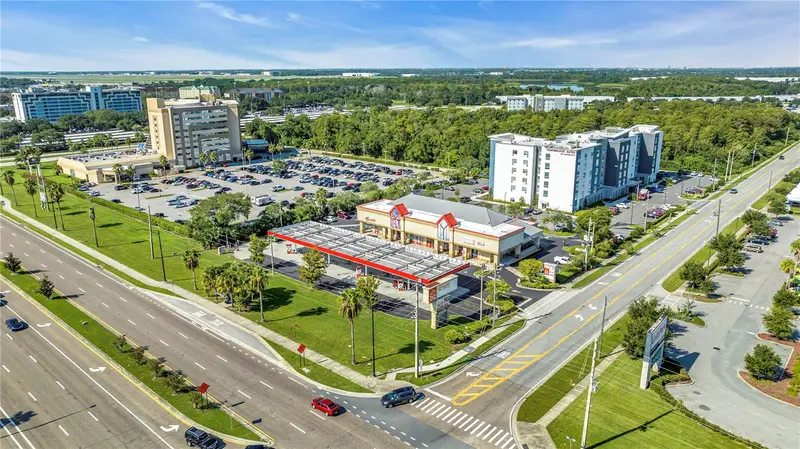
$12.78M
5600 Butler National Dr
Orlando, FL 32812
7,866 SF · 1.37 ac · Built 2000
MLS #O6059518, ORLANDO PROPERTY ADVISORS.
Listing provided by Stellar MLS
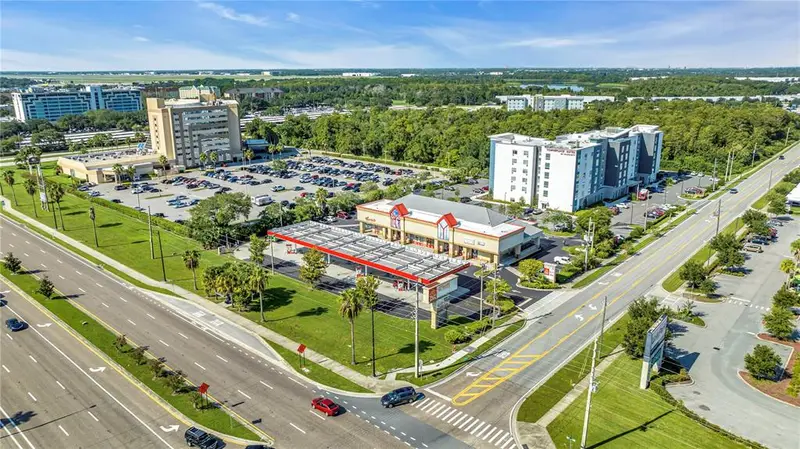
$12.78M
5600 Butler National Dr
Orlando, FL 32812
7,866 SF · 1.37 ac · Built 2000
MLS #O6059705, ORLANDO PROPERTY ADVISORS.
Listing provided by Stellar MLS
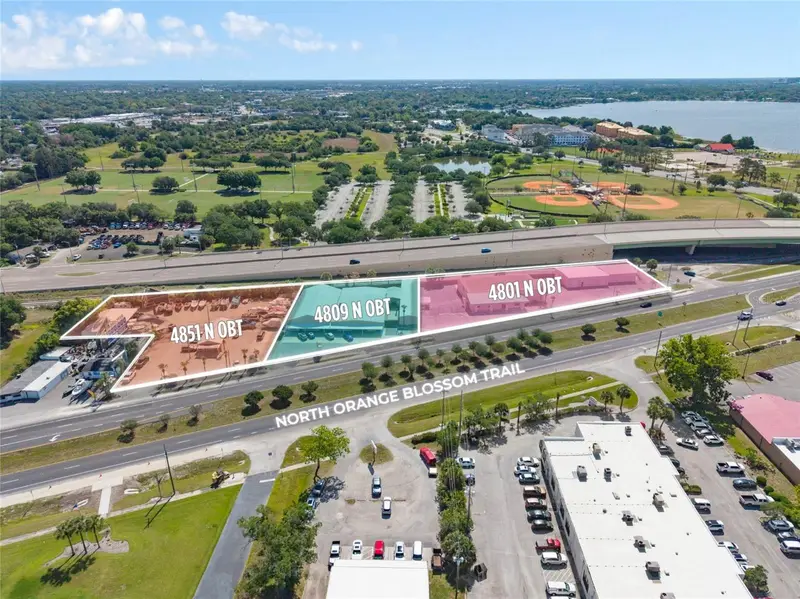
$7.50M
4809 N Orange Blossom Trl
Orlando, FL 32810
36,048 SF · 2.54 ac · Built 1960
MLS #O6418001, RE/MAX ASSURED.
Listing provided by Stellar MLS

$6.95M
1101 Albright Rd
Sanford, FL 32771
13,675 SF · 5.09 ac · Built 1985
A F G Vegetable Tr
MLS #O6437446, SLOANE REALTY, LLC.
Listing provided by Stellar MLS
Listings courtesy of Stellar MLS as distributed by MLS GRID. Data deemed reliable but not guaranteed.
Want to invest in Central Florida CRE?
We source commercial real estate opportunities across the corridors and submarkets these projects are reshaping. Tell us your criteria and we'll send matching opportunities.