Industrial Outdoor Storage (IOS) in Florida: 2026 Investor Guide
IOS has emerged as the hottest new industrial category in America — and Florida is among the most active markets. Here's what investors need to know about buying IOS in 2026.
By Ryan Solberg · May 2026 · 7 min read
Cap Rate Range
6.75% – 8.00%
Typical Site Size
2 – 15+ Acres
Typical Deal Size
$2M – $25M
Lease Terms
1 – 3 Years
What Is Industrial Outdoor Storage (IOS)?
Industrial outdoor storage (IOS) refers to fenced, paved or graveled outdoor yards used to store tractor-trailers, shipping containers, heavy equipment, construction materials, and fleet vehicles. The category is a sub-segment of industrial real estate with minimal or no permanent building — the value is in the land, its zoning, and its location relative to logistics corridors.
IOS is different from self-storage: there are no climate-controlled units, no individual lockers, and no residential customers. IOS tenants are businesses — 3PL operators, trucking companies, construction firms, container leasing companies, and fleet managers.
Why Florida IOS Has Attracted Institutional Capital
Florida is one of the top IOS markets in the country for several structural reasons:
- Logistics Demand: Florida's I-4 corridor (Tampa–Orlando), I-95 (Miami–Jacksonville), and I-75 (Miami–Naples–Tampa) are among the busiest commercial freight corridors in the Southeast. 3PL operators, e-commerce distributors, and construction companies all need outdoor storage near these corridors.
- Port Activity: PortMiami, Port Everglades, Port Tampa Bay, and JAXPORT collectively handle billions in cargo annually. Container overflow storage near these ports has historically been undersupplied.
- Population Growth: Florida's 365,000+ net annual in-migration drives construction activity — every new home and commercial project needs construction equipment and materials staging.
- Zoning Scarcity: Heavy industrial zoning near population centers is scarce and difficult to entitle. Existing IOS sites have structural barriers to competition.
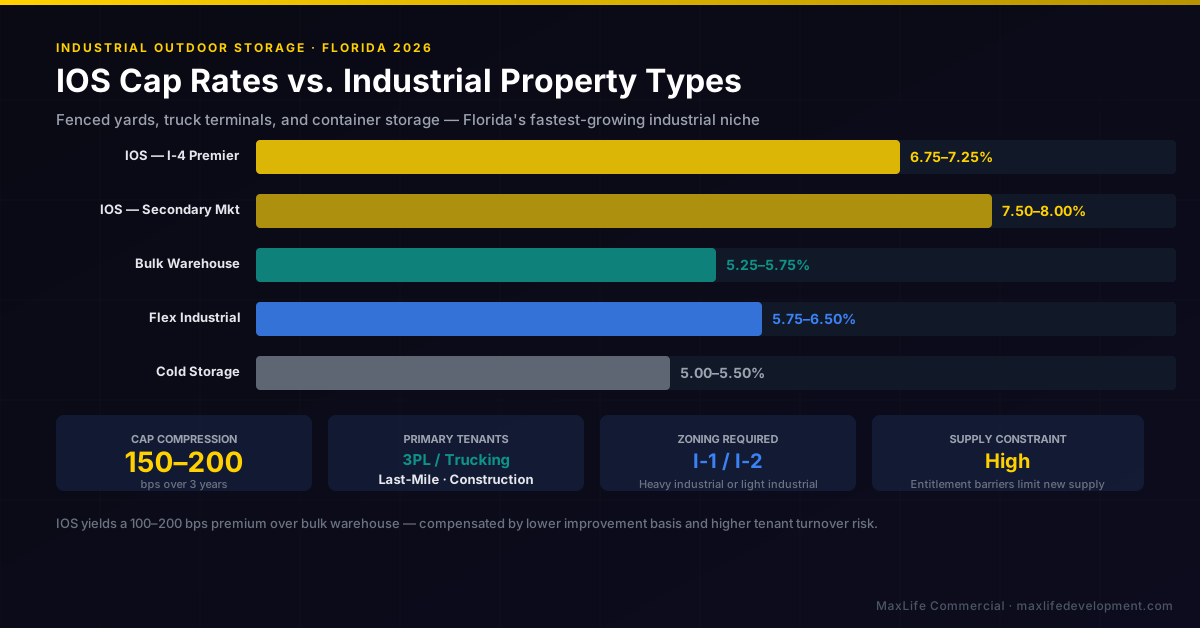
IOS Cap Rates in Florida 2026
Florida IOS cap rates have compressed significantly over the past three years as institutional capital has entered the category. Current trading ranges:
- Institutional-quality IOS (paved, secured, I-4 or I-95 corridor, 3PL tenant): 6.75%–7.25%
- Mid-market IOS (paved or gravel, secondary corridor, smaller tenant): 7.25%–7.75%
- Value-add IOS (partially improved, short or month-to-month lease): 7.75%–8.50%
These yields are meaningfully wider than comparable NNN retail or bulk warehouse, reflecting the shorter lease terms, specialized tenant pool, and higher operational complexity relative to a long-term NNN lease. For investors who understand the asset class, the yield premium is attractive.
IOS Due Diligence: What Matters Most
IOS due diligence is different from standard industrial acquisition:
- Zoning Confirmation: Confirm IOS use is permitted by right under current zoning — not as a conditional use permit that could be challenged or revoked. Many jurisdictions require I-2 or Heavy Industrial designation for open outdoor storage.
- Phase I Environmental: Mandatory. Prior industrial or automotive uses can leave legacy contamination (petroleum products, hydraulic fluid, metal shavings). Never waive Phase I on an IOS acquisition.
- Pavement Condition: IOS pad quality directly affects tenant satisfaction and rent achievability. Assess pavement thickness, drainage, and remaining useful life. Heavy truck axle loads degrade asphalt quickly.
- Stormwater Compliance: Florida requires active stormwater management permits for paved industrial areas. Verify current permits and no outstanding compliance violations with the relevant Water Management District (SJRWMD, SWFPMD, SFWMD).
- Lease Rollover: IOS leases are typically 1–3 years with renewal options. Model realistic downtime (2–4 months) between tenants in your underwriting.
- Fencing and Security: Institutional tenants require 6'+ chain-link or security fencing, lighting, and controlled-access gates. Assess the cost of upgrading existing infrastructure to tenant-grade security.
IOS Financing
IOS financing is less standardized than conventional warehouse debt. Key considerations:
- Most acquisitions require specialized industrial lenders, life companies, or debt funds — standard commercial banks are less comfortable with IOS due to short lease terms
- LTVs typically run 60%–70%; expect rates 50–100 bps above comparable warehouse debt
- Owner-occupied IOS may qualify for SBA 504 financing at favorable terms
- Bridge lending is available for value-add IOS (improving a site from gravel to paved, upgrading security, adding fencing)
Where to Buy IOS in Florida
The most active Florida IOS markets for investors:
- Orlando / I-4 Corridor: Central Florida's logistics core. East Orange County, Osceola County along I-4, and the SR-528 / SR-408 interchange areas. Active demand from 3PL, construction, and distribution tenants.
- Tampa Bay: Port Tampa Bay overflow, East Hillsborough County, and the I-4/I-75 interchange. Strong demand from port-related logistics and construction staging.
- Jacksonville: JAXPORT area, North Jacksonville, and the I-10/I-95 interchange. Container storage and trucking hubs drive demand.
- Miami / Doral: Industrial Doral and Medley are Florida's tightest IOS markets with sub-4% vacancy. Prices reflect the scarcity.
IOS Investing FAQ
What cap rates do IOS properties trade at in Florida?
Florida IOS currently trades at 6.75%–8.00% cap rates. Institutional-quality paved sites on I-4 or I-95 corridors trade toward 6.75%–7.25%. Partially improved or secondary-market sites trade 7.5%–8.5%.
Why is IOS supply constrained in Florida?
IOS supply is constrained by industrial zoning scarcity. Most jurisdictions require I-2 or Heavy Industrial zoning, which is limited near population centers. Entitling new IOS is difficult. The result: existing IOS sites have structural competitive barriers.
What is the minimum investment for Florida IOS?
Florida IOS deals typically start at $2M for smaller 2–3 acre sites in secondary markets. Institutional-grade 5–15 acre sites on primary corridors trade $5M–$25M. Owner-user IOS sites (buying your own yard) start lower — some SBA-eligible sites trade $1.5M–$3M.
How do short IOS leases affect returns?
Short 1–3 year IOS leases mean you can reset rents to market faster than NNN retail — a significant advantage in rising-rent environments. The trade-off is higher rollover risk and management intensity. Budget 2–4 months downtime between tenants in your base case underwriting.
Explore Florida IOS Properties
View the full IOS investment guide, deal analyzer pre-loaded with an IOS deal, and current Florida opportunities.
Get Off-Market CRE Deals in Your Inbox
Join our investor list for exclusive Central Florida opportunities, market reports, and deal analysis — delivered weekly. No spam, unsubscribe anytime.