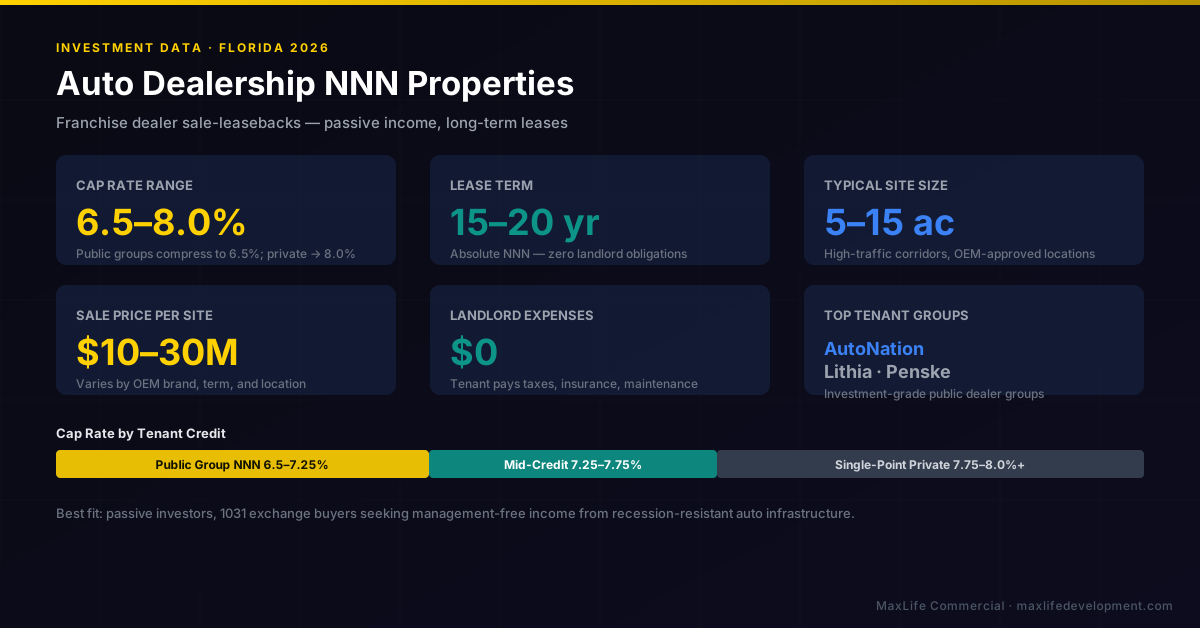

Auto Dealership Properties for Sale in Florida 2026
Florida auto dealership real estate trades at 6.5%–8.0% cap rates with 15–20-year absolute NNN leases from national franchise dealer groups. Here's what investors need to know.
By Ryan Solberg · May 2026 · 8 min read
Cap Rate Range
6.5% – 8.0%
Typical Lease Term
15 – 20 Years
Typical Deal Size
$8M – $40M
Lease Structure
Absolute NNN
Why Investors Buy Florida Auto Dealership Real Estate
Franchise auto dealership real estate has become one of the most sought-after NNN investment categories in Florida. The combination of long-term absolute NNN leases, massive tenant improvement investment, and highway-corridor land value creates a compelling investment thesis for passive income buyers — particularly those doing 1031 exchanges out of multifamily or retail assets.
Florida is especially attractive because it has one of the largest auto markets in the country: 22M+ registered vehicles, no state income tax (supporting premium brand sales), and year-round sales activity without the winter seasonality drag that affects dealers in northern states.
Cap Rates for Florida Auto Dealership Properties in 2026
Florida auto dealership NNN deals are currently trading in the 6.5%–8.0% cap rate range, depending on:
- Tenant Credit: Public dealer groups (AutoNation, Lithia, Penske) compress pricing toward 6.5%–7.25%. Private single-point franchisees trade 7.25%–8.0%+.
- OEM Brand: Toyota, Honda, Lexus, BMW, and Mercedes command tighter pricing than domestic and budget brands.
- Remaining Lease Term: 15+ years remaining trades tighter; under 10 years offers significant basis discount.
- Site Quality: Highway frontage with 25,000+ VPD signalized access and 8+ acres commands premium pricing.
These cap rates are 100–150 bps wider than comparable QSR pad sites and 150–250 bps wider than pharmacy NNN — reflecting the narrower re-leasing pool and larger deal sizes, not necessarily higher fundamental risk.
The Major Florida Dealership Groups
Florida hosts several of the largest franchise dealer groups in the country. The most active for NNN investment purposes:
- AutoNation (Fort Lauderdale, FL): America's largest public dealer group and a Florida native. AutoNation regularly executes sale-leaseback programs and has a massive Florida footprint in luxury and volume segments.
- JM Family Enterprises (Deerfield Beach, FL): Florida's largest private dealer group, Toyota/Lexus heavy with strong regional presence. Treats real estate financing as a core capital strategy.
- Morgan Auto Group (Tampa, FL): Florida-centric private group expanding aggressively. Franchise mix includes Toyota, Honda, Chevrolet, and luxury brands.
- Lithia Motors: National giant with growing Florida presence. Absolute NNN leases with corporate guarantee. Acquisition-heavy growth strategy creates consistent leaseback inventory.
- Penske Automotive: Luxury and premium franchise concentration. Penske's credit quality is among the strongest in the dealer group space.
What Due Diligence Matters Most
Auto dealership NNN investing rewards buyers who go deeper on diligence than standard NNN retail:
- OEM Facility Standards: Has the building met current OEM image requirements? Pending image upgrades create potential landlord contribution risk.
- Tenant Credit: Demand audited financials or 10-K data for publicly traded groups. Single-point private dealers require more diligence — request dealer financial statements.
- Lease Structure: Confirm absolute NNN (zero landlord obligations) vs. NN (potential roof/structure landlord responsibility). Some older dealership leases have NN provisions that eat into the passive income thesis.
- Rent-to-Revenue Ratio: Dealer rent should represent 1–3% of gross revenue. Above 3% indicates potential stress on the tenant's ability to sustain the lease.
- Redevelopment Floor: What is the land worth without the dealership lease? Highway commercial land value provides a downside underwriting floor that standard QSR sites rarely match.
Sale-Leaseback Programs from Florida Dealer Groups
Some of the best Florida dealership NNN opportunities come directly from dealer group sale-leaseback programs. AutoNation, JM Family, and Lithia all execute recurring sale-leaseback transactions where they sell portfolio sites and sign long-term leases — producing institutional-grade NNN paper at predictable intervals.
These transactions often don't hit Crexi or LoopNet before they find buyers through broker relationships. MaxLife Commercial sources dealership NNN opportunities directly from Florida dealer groups and their advisors.
Auto Dealership vs. Other NNN Categories
| Metric | Auto Dealership | QSR Pad (McDonald's) | Pharmacy (Walgreens) |
|---|---|---|---|
| Florida Cap Rate | 6.5% – 8.0% | 3.75% – 4.75% | 5.25% – 6.25% |
| Typical Lease Term | 15 – 20 years | 15 – 20 years | 20 – 25 years |
| Typical Deal Size | $8M – $40M | $2M – $5M | $5M – $12M |
| Lease Structure | Absolute NNN | Absolute NNN | NNN (some NN) |
| Tenant Pool on Rollover | Narrow (franchise dealer) | Broad (any QSR) | Moderate |
Auto Dealership Real Estate FAQ
What cap rate do auto dealership properties trade at in Florida?
Florida auto dealership properties trade at 6.5%–8.0% cap rates in 2026. Large public groups (AutoNation, Lithia, Penske) on absolute NNN leases compress toward 6.5%–7.25%. Single-point private franchisees or shorter remaining term deals trade 7.25%–8.0%+.
How does a dealership sale-leaseback work?
A sale-leaseback is when a franchise dealer group sells its real estate to an investor and simultaneously signs a 15–20 year absolute NNN lease. The dealer monetizes real estate equity (often $10M–$30M per site) while the investor acquires a passive management-free income stream.
Are auto dealerships good NNN investments?
For the right investor profile, yes. Long-duration leases, massive OEM-required tenant improvement investment, large highway-corridor land value, and above-market cap rates relative to QSR pads or pharmacies make dealerships compelling — especially for 1031 exchange buyers seeking yield and passive income.
What happens if the dealership tenant vacates?
Vacancy on corporate NNN dealership leases is uncommon but does occur. Options include: re-leasing to another franchise dealer (requires OEM approval), converting to alternative automotive use (fleet maintenance, collision center), or redeveloping the land for higher-and-better-use commercial. The large highway-corridor land value provides a meaningful downside floor.
Browse Florida Auto Dealership NNN Listings
View the full auto dealership investment guide, deal analyzer, and current Florida opportunities.
Get Off-Market CRE Deals in Your Inbox
Join our investor list for exclusive Central Florida opportunities, market reports, and deal analysis — delivered weekly. No spam, unsubscribe anytime.