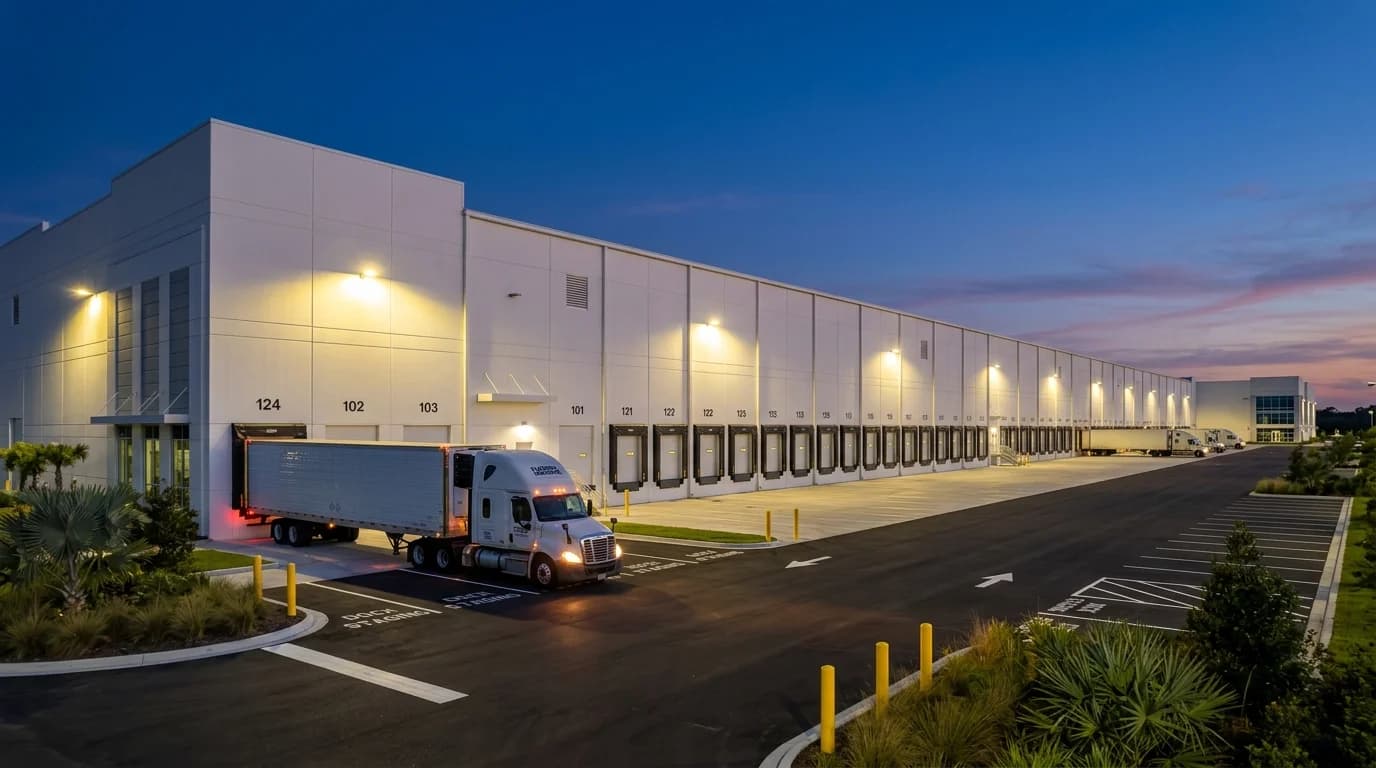
Mission-Critical Investment
Data Centers & AI Campus
Real Estate in Florida
Powered-shell, colocation, and hyperscale facilities across the Sunshine State
Data center real estate is the hottest institutional CRE category in the country — and Florida is emerging as one of the top-five hyperscale markets in North America. Explosive demand from AI model training, cloud migration, and 5G edge computing is driving unprecedented capital into mission-critical assets. MaxLife Commercial helps investors, developers, and corporate occupiers navigate this complex, high-barrier asset class across all Florida markets.
5.50% – 7.00%
Cap Rate Range — Hyperscale Tenants
$25M – $500M+
Typical Deal Size
10MW+
Critical Power to Building
What Makes Data Centers Different
Data centers are underwritten and valued differently from every other CRE asset class. The primary unit of measure is megawatts (MW), not square footage — a 100,000 SF building delivering 50MW of critical IT load is worth dramatically more than the same building with 5MW. Site selection, substation access, and utility interconnection agreements can make or break a development.
Underwriting a data center requires deep understanding of power delivery, cooling infrastructure, carrier diversity, and Tier ratings. Long-term NNN leases to hyperscale tenants with annual rent bumps create bond-like income streams with extremely low historical vacancy — making this one of the most defensible institutional CRE categories across economic cycles.
Key Underwriting Factors
- ▸Critical IT power capacity (MW) — the primary value driver
- ▸Cooling infrastructure: CRAC units, chillers, liquid cooling readiness
- ▸Carrier neutrality and Meet-Me-Room (MMR) access
- ▸Tier I–IV Uptime Institute ratings for redundancy
- ▸PUE (Power Usage Effectiveness) — efficiency metric for operating cost
- ▸10–20 year NNN lease structures with % annual rent escalations
- ▸Investment-grade hyperscale tenants (near-zero credit risk)
- ▸Sub-1% historical vacancy across institutional data center REITs
Data Center Property Types
Four distinct product types — each with unique underwriting, tenant profiles, and capital requirements.
Hyperscale Campus
100MW+ master-planned campuses purpose-built for a single cloud or AI tenant. Long-term NNN leases to investment-grade hyperscalers like AWS, Google, and Microsoft. The largest and most capital-intensive asset class in CRE.
Colocation Facility
Multi-tenant data center buildings where operators lease cabinet, cage, and suite space to enterprise and mid-market clients. Operated by Equinix, QTS, CyrusOne, and regional colo providers across Florida's major metros.
Powered Shell Development
Ground-up development of a cold or warm shell with dedicated power delivery infrastructure — substation, generators, and mechanical rough-in — delivered to a single tenant. Yield-on-cost typically 7–8.5% in Florida markets.
Edge / Micro Data Center
Smaller 1–5MW facilities sited close to end users to minimize latency for autonomous vehicles, 5G networks, and real-time AI inference. Increasingly sought after in Florida's fast-growing secondary metros.
Florida Data Center Markets
Three primary growth corridors — each with distinct infrastructure advantages.
Orlando / Osceola County
Florida's fastest-growing hyperscale corridor. Proximity to theme park power infrastructure, abundant land south of I-4, and strong fiber diversity make Osceola the state's emerging mega-campus hub. Several 100MW+ land positions are actively being entitled.
Tampa Bay
Established colo market anchored by financial services demand in downtown Tampa and St. Petersburg. The DeSoto corridor and Hillsborough County offer large-lot industrial-zoned sites with access to Duke Energy substations and carrier-neutral fiber.
Jacksonville Metro
Below-average power costs and proximity to major east coast fiber routes make Jacksonville increasingly attractive for cloud and enterprise users. Low land costs versus Northern Virginia and a growing logistics infrastructure support regional data center expansion.
Tenant Profiles
Mission-critical real estate attracts the highest-credit occupiers in the world.
Cloud Hyperscalers
AWS, Microsoft Azure, Google Cloud, Meta
Investment-grade credit. 10–20 year NNN leases with fixed annual rent bumps. The gold standard for mission-critical NNN income.
Colocation Operators
Equinix, CyrusOne, QTS, DataBank
Publicly traded REITs and institutional operators with strong credit profiles. Typically lease powered shell or build-to-suit facilities on long-term NNN structures.
Enterprise Private
Healthcare, Finance, Government
HIPAA-compliant and FedRAMP-eligible facilities serving regulated industries. Strong demand for private suites in Florida's major colo campuses.
AI / ML Compute
GPU Cluster Operators, AI Startups
Fastest-growing tenant segment driven by generative AI and large model training. Require dense power delivery (150–300W/sq ft) and advanced liquid cooling infrastructure.
Why Florida for Data Centers?
- ▸Renewable energy growth — Florida ranks top-5 nationally for new solar capacity, supporting green data center ESG mandates
- ▸Below-average power costs versus Northeast and Mid-Atlantic markets — a critical operating expense advantage
- ▸Strong fiber infrastructure — multiple long-haul routes, undersea cable landings in Miami, and growing carrier-neutral presence
- ▸No state income tax — reduces total occupancy cost for corporate operators and improves after-tax returns for investors
- ▸Land availability and entitlement speed versus saturated markets like Ashburn, VA and Silicon Valley
- ▸Low natural disaster risk in central Florida compared to coastal Florida — favorable for Tier III/IV redundancy planning
- ▸Major utility partnerships with Duke Energy and FPL driving substation expansion for large-load interconnection
- ▸Pro-business regulatory environment and fast-track permitting in key counties
Investment Thesis
Cap Rate Context
Stabilized hyperscale and colo assets trade at 5.50–7.00% cap rates — compressed versus industrial but justified by superior credit quality and lease duration. Powered shell deals with shorter remaining lease term or development upside can trade at 6.50–8.00%. Pricing is heavily driven by MW capacity, tenant credit, and remaining lease term.
Lease Structure
Typical leases run 10–20 years NNN with 2–3% annual fixed rent escalations or CPI-linked bumps. Renewal options of 5–10 years are standard. Hyperscale tenants frequently exercise renewals or expand — creating long-term sticky occupancy and compounding income growth.
Credit Quality
Amazon, Microsoft, Google, and Meta each carry investment-grade credit ratings (A+ to AA). Their core business dependency on owned and leased data center capacity makes these among the most mission-critical real estate obligations in any corporate balance sheet — churn risk is effectively zero at hyperscale.
Development Yield-on-Cost
Ground-up powered shell development in Florida currently achieves 7.0–8.5% yield-on-cost — a meaningful spread to going-in cap rates. For developers with site control, utility relationships, and construction experience, this represents compelling risk-adjusted returns versus stabilized acquisitions. Interconnection is the gating item on every one of these deals — our guide to three-phase power in industrial property covers how to verify available capacity and what a service upgrade costs and takes in Florida.
Request Data Center Listings
Tell us your power requirement, target Florida market, and investment criteria — we'll source on and off-market opportunities that fit.
Related Resources
Industrial Property Central Florida
Warehouse, flex, and IOS space across the I-4 corridor.
Florida Cap Rate Hub
Current cap rate benchmarks across all CRE asset classes.
AI Deal Analyzer
Run a quick underwriting on any Florida CRE deal.
Data Center & AI Real Estate Course
Learn the fundamentals of mission-critical CRE investing.