Port Canaveral Commercial Real Estate — Cruise Economy Guide
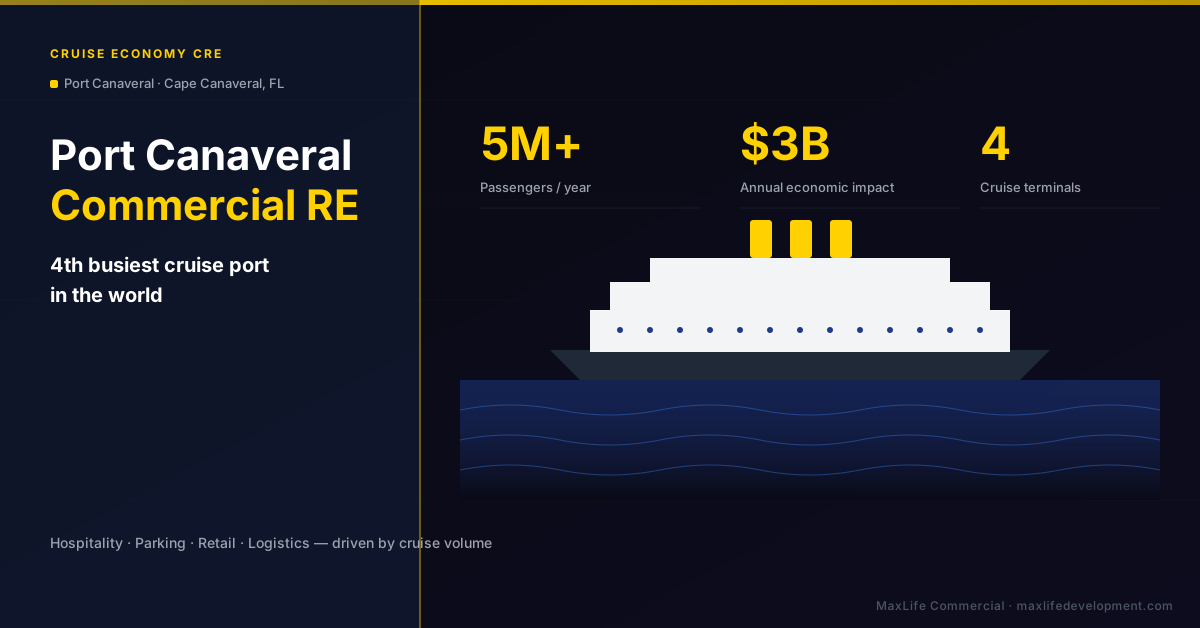
Port Canaveral is the 4th busiest cruise port in the world. Five million-plus passengers a year. Four cruise terminals. Roughly $3B in annual economic impact. That creates a commercial real estate market unlike anywhere else in Florida — and one that many out-of-area investors completely miss.
By the Numbers — Port Canaveral
Port Canaveral isn't just big — it is one of the busiest cruise ports on earth, and the most active home port for the Disney, Royal Caribbean, and Carnival brands targeting Orlando tourists looking to extend their vacation onto a cruise. Disney Cruise Line in particular has built its US home port operations around Port Canaveral, and the Disney Wish, Treasure, and Destiny all use it as their primary US port.
The cruise volume drives an unusual commercial real estate demand pattern. Roughly half of Port Canaveral cruise passengers fly into Orlando International Airport (MCO), drive 45 miles east to the port, and either cruise the same day or stay a pre-cruise night locally. After the cruise, a meaningful fraction stays another night before returning to MCO. That "pre-night / post-night" behavior is the foundation of the cruise CRE ecosystem.
The Cruise CRE Ecosystem
The cruise economy doesn't just create demand for hotel rooms. It creates a stacked set of asset class opportunities, each tied to a different slice of the passenger journey.
Limited-Service Hotels
Pre- and post-cruise night stays. Branded properties (Hampton, Holiday Inn Express, Fairfield, Residence Inn) cluster within 5-10 miles of the port. Occupancy is heavily weekend-driven and tied to cruise turn days.
Off-Site Cruise Parking
One of the most overlooked CRE plays in Florida. Port-operated parking is limited and expensive. Private off-site parking lots within 1-3 miles of the port — often combined with shuttle service — generate strong cash flow at unusually high cap rates. Many are family-owned and have not been institutionalized.
Restaurants and Retail Near Jetty Park
Walking-distance retail to the cruise terminals and Jetty Park. Smaller footprints, seasonal demand, but high-traffic locations.
Gas Stations and Car Rental
Drive-corridor retail along SR-528 and SR-A1A. Last-stop fuel for outbound passengers; first-stop for returning rental returns.
Marinas and Boat Storage
Recreational boating demand layered on top of the cruise economy. The Banana River and Indian River corridor support marinas, dry storage, and waterfront service businesses.
Last-Mile Logistics for Cruise Provisioning
Cruise ships consume enormous volumes of food, beverage, and supplies on every turn. Cold storage, dry warehousing, and last-mile distribution near the port serve this provisioning demand and tend to fly under most investors' radar.
Beyond Cruises — Cargo and Petroleum
Port Canaveral is not exclusively a cruise port. It handles cargo — bulk product, containerized cargo, project cargo — and is a petroleum receiving point that serves Central Florida fuel distribution. Florida East Coast Railway connects the port into regional rail networks. As Florida grows, the secondary cargo and petroleum business has expanded steadily.
For industrial investors, that cargo profile creates a logistics demand layer that runs parallel to the cruise traffic. Cold storage, transload facilities, and warehouse / distribution product within 10 miles of the port benefit from both volumes. SR-528 corridor industrial (the road that connects MCO airport to Port Canaveral) has been a quiet outperformer for industrial investors who got in before institutional capital noticed.
Submarkets
Port Canaveral / Cape Canaveral Retail Core
Walking-distance retail to cruise terminals. High-rent ground-floor sites; institutional-quality multitenant retail and ground-lease deals. Limited supply, high competition for the best corners.
Cocoa Beach
Drive-thru retail, hotel, and entertainment market. SR-A1A as primary corridor. Tourism plus local resident traffic. Smaller pad sites with NNN QSR opportunities; older hotels with reposition potential.
Merritt Island
Greater inventory and somewhat lower pricing. Suburban retail, light industrial, and multifamily. SR-520 corridor connects to the Cape and KSC. The 'midpoint' Brevard submarket.
SR-528 Corridor (Cocoa to MCO)
Last-mile logistics, industrial, and roadside retail. The road that connects Orlando airport tourism flow to Port Canaveral. Quietly one of the better industrial subcorridors in Central Florida.
Cap Rates and Pricing
Cruise-adjacent hotels trade at a wider cap than typical Florida hospitality because investors discount the cruise-volume concentration. Off-site parking is the genuine outlier — cap rates run 200-400 basis points wider than other Florida specialty retail because the asset class is small, fragmented, and dominated by private family operators. That spread is the opportunity.
Risks
- Cruise volume concentration. A pandemic-style shutdown is a tail risk that materialized once already. Pricing reflects that, but stress-test occupancy scenarios.
- Hurricane exposure. Coastal Brevard County. Insurance costs are elevated. Storm surge zones affect site selection and underwriting.
- Cruise line consolidation. The cruise industry is concentrated among a handful of operators. A strategic decision by Disney, Carnival, or Royal to shift home port operations would affect Port Canaveral volumes.
- Regulatory risk. Cruise operations have environmental and health regulatory exposure (e.g., emissions, water discharge, CDC). Generally manageable but should be in your risk model.
Frequently Asked Questions
How big is Port Canaveral's cruise economy?
5M+ passengers per year, 4 cruise terminals, ~$3B in annual economic impact. 4th busiest cruise port in the world. Disney, Royal Caribbean, Carnival, and MSC all home port here.
Best CRE asset classes near Port Canaveral?
Limited-service hotels, off-site cruise parking, retail near Jetty Park, gas stations and car rental, marinas, and last-mile logistics for cruise provisioning. Off-site parking is the most overlooked play.
What are cruise-adjacent hotel cap rates?
Limited-service 8-10%, extended-stay 7.5-9%, retail 6-8%, off-site parking 10-12%. The cruise volume concentration is priced into the wider caps relative to interior Florida hospitality.
Is Port Canaveral just cruises?
No — it is also a working cargo and petroleum port with rail connection via Florida East Coast Railway. Industrial, cold storage, and SR-528 logistics product benefit from cargo demand alongside cruise volume.
Underwriting a Port Canaveral Deal?
Ryan Solberg is a Florida-licensed CRE broker and NMLS-licensed mortgage originator. We work the Port Canaveral / Cape Canaveral / Cocoa Beach corridor.
Related Articles
The SpaceX Effect on Brevard Industrial RE
How 50+ Florida launches and Starship operations reshape industrial CRE.
Titusville FL Commercial Real Estate Guide
From shuttle shutdown to commercial boom — the Titusville recovery story.
Melbourne FL Industrial Real Estate Guide
Sub-3% vacancy, aerospace anchors, and the Ellis Road industrial corridor.
Brevard County Investment Property Outlook
Space Coast 2026 outlook — drivers, cap rates, and where to invest.
Get Off-Market CRE Deals in Your Inbox
Join our investor list for exclusive Central Florida opportunities, market reports, and deal analysis — delivered weekly. No spam, unsubscribe anytime.