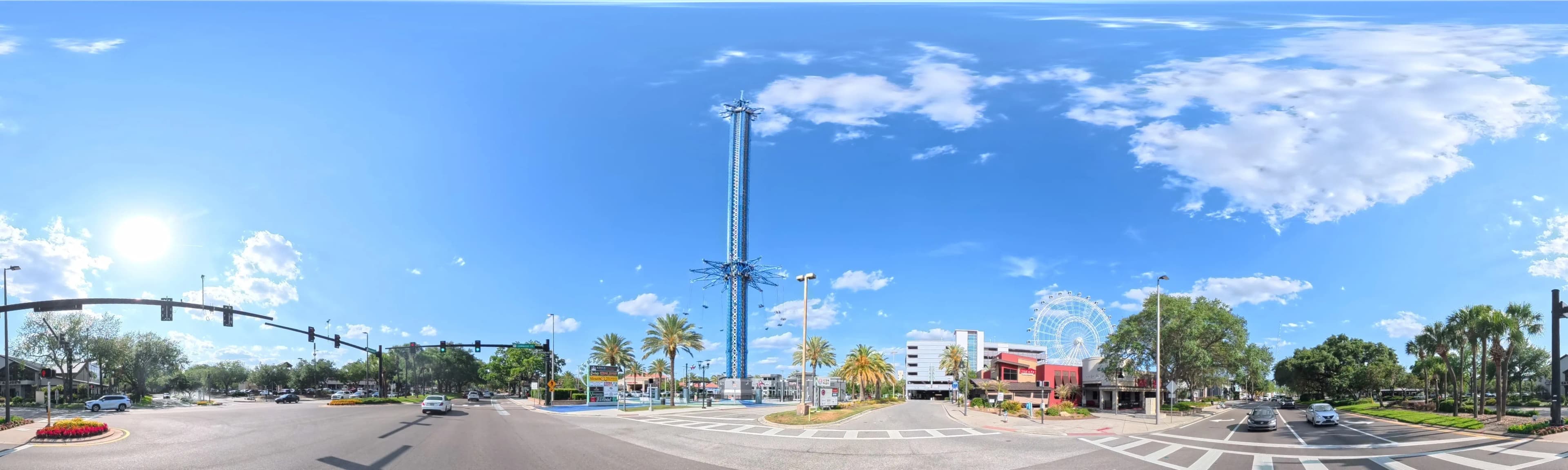
Orlando's Entertainment District: A CRE Investment Guide for the Disney, Universal & I-Drive Corridor
The definitive guide to commercial real estate investment opportunities in the nation's top tourist destination — from Epic Universe to Disney Springs, International Drive to Kissimmee, and every high-traffic corridor in between.
Orlando: The Capital of American Tourism and a CRE Powerhouse
Orlando welcomed more than 75 million visitors in 2025, reclaiming its position as the most-visited destination in the United States. That staggering volume of foot traffic does more than fill theme park turnstiles — it fuels a massive commercial real estate ecosystem of hotels, restaurants, retail centers, entertainment venues, and mixed-use developments that generate billions in annual revenue.
For commercial real estate investors, the Orlando entertainment corridor represents a unique asset class. Unlike traditional markets driven solely by population and employment, this corridor benefits from a demand engine that draws spending power from every state and dozens of countries. Tourism-driven CRE offers a diversified revenue base, premium rental rates, and long-term appreciation tied to the billions of dollars that major operators continue to invest in the region.
This guide breaks down every major submarket and property type within Orlando's entertainment district, providing institutional-quality analysis for investors looking to deploy capital in one of the most dynamic CRE markets in the country.
75M+
Annual Visitors
$98B
Tourism Economic Impact
150K+
Hotel Rooms in Metro
$6.5B
Epic Universe Investment
Epic Universe & The Universal Transformation
Universal's Epic Universe opened in May 2025 as the largest and most ambitious theme park built in Central Florida in over two decades. The $6.5 billion project added a third major gate to the Universal Orlando Resort and instantly reshaped the competitive landscape. Epic Universe features five immersive worlds, new on-site hotels, and a massive entertainment and dining complex that functions as its own commercial district.
The impact on surrounding real estate has been transformative. The park sits on a 750-acre campus south of Sand Lake Road, and the ripple effect on adjacent properties has been dramatic. Land values within a one-mile radius of the park increased an estimated 40-60% between 2022 and the park's opening. Vacant parcels that were once overlooked are now prime development sites.
Investment Opportunities Near Epic Universe
The area surrounding Epic Universe — particularly along Universal Boulevard and Destination Parkway — is experiencing a wave of new hotel, restaurant, and retail development. National chains and independent operators alike are vying for space, pushing lease rates for tourist-serving retail to $35-$55 per square foot NNN in prime locations.
For investors, the opportunity extends beyond new construction. Existing properties in the Universal corridor that were previously considered secondary are now benefiting from dramatically increased traffic. Older hotels within a 10-minute drive of Epic Universe are prime candidates for renovation and repositioning, and aging retail centers along Universal Boulevard are seeing renewed tenant interest and rising rents.
Hotel Repositioning
Older 2-3 star hotels near Universal being renovated and rebranded as demand surges from Epic Universe visitors seeking proximity.
Outparcel Development
Vacant outparcels and underutilized land near the new park command premium prices for restaurant and retail development.
Retail Value-Add
Existing strip centers in the corridor with below-market rents are seeing lease renewals at 20-30% increases as traffic grows.
Extended Stay Hotels
Construction and entertainment workers driving demand for extended stay properties near the ongoing development area.
Walt Disney World's Continued Investment
Walt Disney World remains the gravitational center of Orlando's tourism economy. Disney has committed to a multi-billion dollar expansion plan over the next decade, including new attractions at Magic Kingdom and EPCOT, resort hotel renovations, and continued development of the Disney Springs commercial district. This sustained capital investment ensures that the Disney corridor remains a premier CRE market for decades to come.
Disney Springs alone represents one of the most successful open-air retail and dining destinations in the country, attracting visitors who may not even enter the theme parks. The 120-acre complex generates enormous foot traffic and creates demand for surrounding hotels, restaurants, and retail that benefit from the Disney halo effect without paying Disney-level rents.
The Celebration & Disney-Adjacent Ecosystem
The Disney-planned community of Celebration, along with the broader Osceola County corridor south of Disney property, has evolved into a significant commercial submarket. Medical facilities, professional offices, and service-oriented retail serve both the local residential population and the enormous tourism workforce. NNN investments in this area benefit from strong demographics and relatively lower price points compared to Orange County.
Impact on Osceola County
Osceola County continues to be one of the fastest-growing counties in Florida, and Disney's ongoing investment is a major catalyst. Residential development in communities like Horizon West, Kissimmee, and St. Cloud is driving demand for commercial development — particularly neighborhood retail, medical office, and quick-service restaurant concepts. Cap rates in Osceola County typically run 50-100 basis points higher than comparable Orange County properties, offering investors a yield premium with strong growth fundamentals.
The International Drive Corridor
International Drive — universally known as I-Drive — is the spine of Orlando's tourism economy outside the theme parks. This 11-mile corridor stretches from the Premium Outlets at the north end to the Orange County Convention Center and SeaWorld at the south. It is home to more than 30,000 hotel rooms, hundreds of restaurants, and some of the highest-traffic retail locations in Central Florida.
I-Drive is not a static market. The I-Drive 2040 vision plan, adopted by Orange County, calls for a transformation of the corridor from an auto-centric tourist strip into a more walkable, mixed-use destination with improved transit, streetscaping, and higher-density development. For investors, this planned evolution creates both opportunity and urgency — properties acquired before the full impact of these improvements are realized stand to benefit from significant appreciation.
What to Look For on I-Drive
The most compelling I-Drive investments share common characteristics: high visibility, proximity to anchor destinations (Convention Center, SeaWorld, ICON Park, or the Premium Outlets), and potential for repositioning. Aging hotels with strong land value, underperforming retail centers with below-market rents, and vacant parcels zoned for mixed-use development are the primary targets.
Lease rates on I-Drive vary significantly by location. Prime tourist-facing retail near ICON Park or the Convention Center can command $40-$60 per square foot, while secondary locations further from anchor destinations may trade in the $20-$30 range — creating opportunities for investors who can identify properties poised to benefit from the corridor's ongoing transformation.
30,000+
Hotel Rooms on I-Drive
$40-$60/SF
Prime Retail Lease Rates
11 Miles
Corridor Length
US-192 / Kissimmee Tourist Corridor
US-192, also known as Irlo Bronson Memorial Highway, serves as the primary east-west gateway to Walt Disney World from the south and east. This corridor runs through the heart of Kissimmee and is lined with hotels, tourist-serving retail, vacation rental management offices, and restaurants. While it lacks the polish of I-Drive, US-192 is one of the most active value-add corridors in the Orlando entertainment district.
Tourist Retail Evolution
The character of US-192 is evolving. Once dominated by souvenir shops and budget motels, the corridor is increasingly attracting national restaurant chains, convenience-anchored retail, and service-oriented tenants catering to both tourists and the growing local population. This evolution creates a classic value-add scenario: acquire older retail properties, improve the tenant mix, and capture the rent growth driven by the corridor's transformation.
Vacation Rental Conversions
The Kissimmee area is the vacation rental capital of Florida. The proliferation of short-term rental communities south of US-192 has created a secondary demand engine for commercial services — property management offices, cleaning and maintenance companies, retail supply stores, and restaurants. This demand is steady, year-round, and largely independent of theme park attendance fluctuations.
Value-Add Opportunities in Aging Strip Centers
US-192 is home to dozens of strip retail centers built in the 1990s and early 2000s that are now approaching the end of their first lifecycle. Many have deferred maintenance, below-market rents, and sub-optimal tenant mixes. For investors with a value-add strategy, these properties offer the ability to acquire at attractive cap rates (7-9%), invest in improvements, re-tenant with higher-quality operators, and drive meaningful NOI growth.
Investing in Orlando's Tourism Corridor?
We source off-market deals in the entertainment district — hotels, retail, NNN, and development sites near the parks.
Convention Center District
The Orange County Convention Center (OCCC) is the second-largest convention facility in the United States, with over 2.1 million square feet of exhibit space. It hosts more than 200 events annually, attracting millions of business travelers who spend heavily on lodging, dining, transportation, and entertainment. The OCCC is a demand engine that operates on a fundamentally different calendar than the theme parks, providing a counter- cyclical boost to the surrounding commercial real estate market.
Orange County has approved a major expansion of the Convention Center, adding new exhibit halls, meeting space, and improved connectivity to the surrounding transportation network. This expansion will increase the facility's capacity to host multiple large-scale events simultaneously, driving additional demand for hotel rooms, restaurants, and commercial services in the immediate vicinity.
Impact on Surrounding CRE
Properties within walking distance or a short shuttle ride of the Convention Center command premium rates during major events. Hotels in the Convention Center district see occupancy spikes of 15-25% during major conventions, and restaurants report revenue increases of 30-50% during peak event weeks. For investors, proximity to the OCCC is a measurable value driver that supports both income and appreciation.
Hospitality Investment Opportunities
Orlando's hotel market is the largest in the United States outside of Las Vegas, with over 150,000 rooms across the metro area. This scale creates a deep and liquid investment market with opportunities across every segment — from budget motels to full-service luxury resorts.
Hotel & Motel Repositioning
One of the most compelling strategies in the Orlando entertainment corridor is acquiring older, independently operated hotels and repositioning them through renovation and rebranding. Many of Orlando's hotels were built during the 1990s and 2000s tourism boom and are now showing their age. Properties that have fallen to 2-star status due to deferred maintenance can be acquired at significant discounts to replacement cost, renovated, and either rebranded under a flag (Choice, Wyndham, Best Western) or repositioned as boutique/independent properties targeting a specific niche.
Branded vs. Independent
The decision to flag a hotel or operate independently depends on location and target market. Properties near the parks benefit significantly from brand affiliation and the booking channel access it provides. Hotels in more distinctive locations — near Disney Springs, in the ICON Park area, or along emerging corridors — may perform better as independents that can differentiate on experience and capture higher ADR without franchise fees.
Extended Stay Demand
Extended stay is one of the fastest-growing segments in Orlando's hospitality market. The demand is driven by multiple sources: theme park and construction workers on multi-month projects, traveling nurses at Orlando's major hospital systems, corporate relocation, and insurance-displaced residents. Extended stay properties near employment centers and along the I-4 corridor are seeing occupancy rates above 85% with strong average daily rates.
Short-Term Rental Regulations & Opportunities
The regulatory landscape for short-term rentals in the Orlando area is evolving. Orange County has implemented registration requirements and zoning restrictions, while Osceola County maintains a more permissive framework in designated resort zones. Investors should carefully evaluate the regulatory environment in their target submarket. In permitted areas, professionally managed vacation rental portfolios — particularly in purpose-built resort communities near Disney — can generate yields that exceed traditional hotel investments.
150K+
Hotel Rooms in Metro Orlando
73%
Avg. Annual Occupancy Rate
$155
Avg. Daily Rate (2025)
Retail & Restaurant Investment Near the Parks
Tourist-serving retail and restaurant properties in the Orlando entertainment corridor operate under different economics than traditional suburban retail. Foot traffic is measured in the tens of millions annually. Per-capita spending is elevated because visitors are in "vacation mode" and predisposed to spend on dining, shopping, and experiences. These dynamics support premium rental rates and strong tenant demand.
High Foot Traffic Corridors
The highest-performing retail locations cluster around anchor destinations: ICON Park and the north I-Drive entertainment district, the Convention Center area, the Universal Boulevard corridor near Epic Universe, Disney Springs and the Hotel Plaza Boulevard area, and the US-192 gateway near the Disney entrance. Properties in these micro-locations benefit from built-in demand that is largely independent of local economic conditions.
National Chains & Local Concepts
National restaurant chains aggressively target the tourism corridor because of the traffic density. Operators like Chili's, Olive Garden, McDonald's, and Starbucks often report their highest-volume locations in the Orlando entertainment district. This demand from national credit tenants creates NNN investment opportunities with strong tenant covenants and predictable income. Simultaneously, unique local restaurant concepts thrive in areas like Disney Springs and ICON Park, where visitors seek distinctive dining experiences.
Lease Structures in Tourist Areas
Lease structures in the tourism corridor often differ from traditional retail. Percentage rent clauses are more common, particularly for restaurant tenants in high-traffic locations. Shorter initial lease terms with multiple renewal options are typical, reflecting the dynamic nature of tourist-serving retail. Investors should understand these structures and their implications for income stability and property valuation.
Entertainment & Mixed-Use Development
The Orlando entertainment district is evolving beyond theme parks and traditional retail into a broader ecosystem of experiential entertainment and mixed-use development. This evolution is driven by consumer demand — both tourists and locals want immersive experiences, not just places to shop.
New Entertainment Venues
ICON Park's continued expansion, new attraction concepts on I-Drive, and entertainment-focused developments near the parks are creating a new category of CRE investment. These venues — which range from immersive art experiences and indoor adventure parks to high-tech arcades and themed dining — generate strong revenue per square foot and draw traffic that benefits surrounding retail and hospitality properties.
Mixed-Use Development Opportunities
The I-Drive 2040 plan and ongoing corridor improvements are creating opportunities for higher-density, mixed-use development that combines hospitality, retail, entertainment, and even residential components. Projects that integrate multiple uses in walkable, transit-accessible locations are attracting institutional capital and generating premium returns. For investors with development experience or access to development partners, these projects represent the next evolution of CRE in the entertainment corridor.
The "Experiential" Retail Trend
Retail properties in the tourism corridor are increasingly being repositioned toward experiential concepts. Rather than traditional merchandise retail, landlords are leasing to tenants that offer interactive experiences — cooking classes, escape rooms, virtual reality experiences, and themed pop-up concepts. These tenants typically pay higher rents per square foot and drive foot traffic that benefits the broader property, making them attractive anchors for entertainment-district retail centers.
Infrastructure Driving Value
Major infrastructure investments are reshaping accessibility and connectivity across Orlando's entertainment corridor. For CRE investors, infrastructure is one of the most reliable leading indicators of future property value appreciation.
Brightline to MCO (Orlando International Airport)
High-speed rail connecting Orlando to South Florida with a station at MCO. Increases accessibility for visitors arriving by train and creates a new demand node near the airport for hospitality and commercial services.
I-4 Ultimate Completion
The $2.3 billion I-4 reconstruction project has dramatically improved traffic flow through the tourism corridor. Express toll lanes, rebuilt interchanges, and improved access to I-Drive and the parks reduce travel times and enhance property accessibility.
International Drive Transit & Streetscaping
Planned transit improvements along I-Drive, including potential bus rapid transit and pedestrian infrastructure, will transform the corridor into a more walkable, mixed-use destination — increasing the value of properties along the route.
Orlando International Airport Expansion
MCO's new Terminal C, which opened in 2022, and ongoing capacity expansion ensure the airport can handle growing visitor volume. Proximity to MCO is a key value driver for hospitality and commercial properties in the southern entertainment corridor.
Investment Strategies for the Entertainment District
The Orlando entertainment corridor supports a range of investment strategies, from passive NNN income plays to active value-add and development. The right strategy depends on your capital, risk tolerance, and operational capacity.
NNN Tenant Targeting
National credit tenants operating in the tourism corridor — fast food, gas stations, convenience stores, pharmacies, and quick- service restaurants — often represent some of their highest-performing locations nationally. NNN properties leased to these tenants in the entertainment district offer investors passive income with strong tenant credit, escalation clauses, and a built-in demand driver that insulates against local economic downturns. Target cap rates for credit-tenant NNN in the tourism corridor range from 5.25% to 6.50% depending on tenant quality, lease term, and location.
Hotel Repositioning
As discussed in the hospitality section, acquiring underperforming hotels at a discount to replacement cost, investing in renovation, and either rebranding or repositioning is a proven strategy in this market. The key is identifying properties where the land value and location fundamentals justify the investment, and where the renovation cost can be recouped through improved occupancy and ADR within 3-5 years.
Retail Value-Add
Multi-tenant retail centers along US-192 and secondary I-Drive locations offer classic value-add opportunities. The playbook: acquire properties with below-market rents and deferred maintenance, invest in exterior renovation and signage, re-tenant with higher-quality operators, and push rents to market rate. Properties acquired at 7-9% cap rates can often be stabilized at 6-7% cap rates within 2-3 years, creating significant value through compression and NOI growth.
Land Banking Near Expansion Areas
Perhaps the highest-upside strategy in the entertainment corridor is acquiring commercially zoned land in the path of expansion. Areas adjacent to Epic Universe, along the southern I-Drive corridor, and in the Disney-adjacent areas of Osceola County are still developing. Investors who can identify and acquire entitled or entitleable land at pre-development pricing position themselves for outsized returns as development demand continues to intensify.
NNN Income
Risk: Low
Target Return: 5.25%-6.50% cap
Hold Period: Long-term hold
Hotel Repositioning
Risk: Medium-High
Target Return: 15-25% IRR
Hold Period: 3-5 year hold
Retail Value-Add
Risk: Medium
Target Return: 12-18% IRR
Hold Period: 2-4 year hold
Land Banking
Risk: High
Target Return: 2-5x equity multiple
Hold Period: 3-7 year hold
Risks & Considerations
No investment thesis is complete without an honest assessment of risks. The Orlando entertainment corridor offers compelling fundamentals, but investors must account for the unique risk factors inherent to tourism-driven commercial real estate.
Tourism Cyclicality
Orlando's tourism economy has proven remarkably resilient over the long term, but it is not immune to downturns. Recessions, pandemics, and geopolitical disruptions can temporarily reduce visitor volume and spending. The COVID-19 pandemic demonstrated both the vulnerability and the resilience of the market — occupancy cratered in 2020 but recovered to pre-pandemic levels by 2023. Investors should stress-test assumptions and maintain adequate reserves to weather temporary demand shocks.
Over-Supply Risk
The pace of new hotel and retail construction in the tourism corridor has accelerated in response to Epic Universe and broader market growth. While demand fundamentals remain strong, investors should monitor the supply pipeline carefully, particularly in the hotel segment. Markets with rapid new construction can experience temporary rate compression even when demand is growing, which can impact returns for existing properties.
Insurance & Catastrophic Risk
Florida's property insurance market remains one of the most challenging in the country. Insurance costs for commercial properties in the Orlando area have increased significantly in recent years, and availability of coverage — particularly windstorm coverage — can be limited. These costs must be factored into underwriting, and investors should budget for continued insurance cost escalation. Legislative reforms in 2023-2024 have shown early signs of stabilizing the market, but the full impact remains to be seen.
Seasonal Fluctuations
Orlando's tourism market has a well-defined seasonal pattern. Peak periods — summer, Thanksgiving through New Year, and spring break — see maximum occupancy and spending, while January through mid-February and September through early October represent shoulder seasons. Investors in hospitality and tourist-serving retail should model seasonal revenue patterns carefully and ensure properties can service debt and cover operating expenses during softer months. The Convention Center's event calendar helps fill some shoulder-season gaps but does not fully offset the seasonal pattern.
Tourism Downturn
Diversify across property types; maintain 6-12 months operating reserves; prioritize tenants with national credit.
Supply Growth
Focus on irreplaceable locations near anchor destinations; avoid commodity hotel product in oversupplied segments.
Insurance Costs
Budget 15-20% annual insurance escalation; explore surplus lines carriers; invest in wind mitigation and hardening.
Seasonal Revenue Gaps
Underwrite to shoulder-season performance; target convention-proximate properties for counter-cyclical demand.
Ready to Invest in Orlando's Entertainment Corridor?
Whether you're targeting NNN income, hotel repositioning, retail value-add, or development land — we have the local expertise and deal flow to help you find the right opportunity.
The Bottom Line
Orlando's entertainment district is not just a tourist destination — it is one of the most powerful commercial real estate markets in the United States. The combination of 75+ million annual visitors, billions in ongoing capital investment from Disney and Universal, transformative infrastructure projects, and a diversified demand base creates an environment where well-positioned commercial properties generate premium returns.
The opening of Epic Universe has accelerated growth across the entire corridor, and the I-Drive 2040 vision plan promises to further elevate the market over the coming decade. For investors who understand the nuances of tourism-driven CRE — the seasonal patterns, the lease structures, the insurance landscape, and the micro-location dynamics — the entertainment corridor offers opportunities that are difficult to replicate in any other U.S. market.
The key is working with a brokerage team that lives and breathes this market, has relationships with local operators and property owners, and can source opportunities before they hit the open market. That's what we do.
Related Articles
Orlando CRE Market Report 2026
Cap rates, sector outlooks, and the top submarkets across the Orlando metro for the 2026 vintage.
What Is a Triple Net (NNN) Lease?
NNN lease fundamentals — expense pass-throughs, tenant obligations, and how credit tenants are evaluated.
Orlando Cap Rates Investor Guide
Current cap rate benchmarks by property type and submarket across the Orlando metro.
Orlando NNN Properties for Sale
Active NNN inventory and market conditions across the Orlando metro.
Build-to-Suit vs. Existing Commercial in Orlando
When to build new vs. acquire existing — the economics, timeline, and risk comparison.
Cap Rate vs. Cash-on-Cash Return
Two metrics every investor quotes — here's the difference and when each one matters more.
Get Off-Market CRE Deals in Your Inbox
Join our investor list for exclusive Central Florida opportunities, market reports, and deal analysis — delivered weekly. No spam, unsubscribe anytime.