Comparison · Rental Strategy
Long-Term vs Short-Term Rental in Orlando — Which Strategy Wins?
Orlando is one of the few markets where both rental strategies genuinely work. The tourism economy supports premium short-term rental rates, while population growth and 17,500+ new theme park jobs create strong long-term rental demand. The question isn't which is “better” in the abstract — it's which fits your capital, your risk tolerance, and how involved you want to be.
Here's the honest head-to-head.
The Comparison
The Revenue Reality
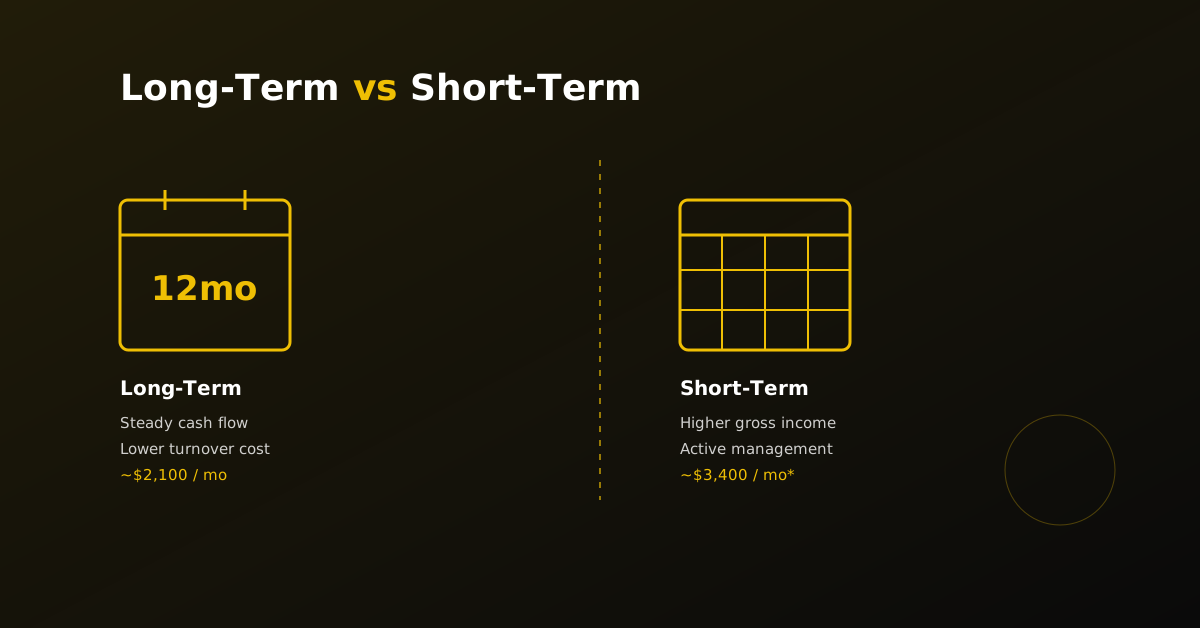
A 4-bedroom home near Disney might rent long-term for $2,600/month — about $31,200/year, gross. The same home as a short-term rental could gross $55,000–70,000. On the surface, STR wins by a mile.
But the STR's expenses are dramatically higher: 25% management ($14–17K), cleaning, higher utilities, furnishing depreciation, supplies, and a 13.5% tax in Osceola County. After everything, the STR might net $28–35K while the LTR nets $24–27K. The STR still wins on net — but by far less than the gross suggests, and it required furnishing capital, active management, and regulatory compliance to get there.
When Long-Term Rental Is the Better Choice
- You want passive income. One lease, one tenant, monthly rent. No guest messages, no cleaning coordination, no dynamic pricing. If your time is valuable or you live out of state, the simplicity is worth real money.
- The property isn't in an STR-legal zone. Huge swaths of Orange County and City of Orlando prohibit non-owner-occupied STRs. If you love a property that can't legally be an STR, LTR makes it work.
- You want easy financing. Conventional lenders happily finance long-term rentals at better rates and terms than STR DSCR loans. Lower rate, lower down payment, simpler qualification.
- You want to avoid regulatory risk. LTR isn't subject to STR licensing caps, HOA short-term bans, or zoning overlay rules. The regulatory surface area is far smaller.
When Short-Term Rental Is the Better Choice
- You're optimizing for yield. In an STR-legal community with strong demand, the net return advantage is real — often 2–4 percentage points of cap rate.
- You want to use the property yourself. STR lets you block dates for personal use. A perfect fit for investors who want a Disney-area home they also vacation in.
- You'll run it like a business. STR rewards active optimization — dynamic pricing, great photos, themed rooms, fast guest response. If you'll do the work (or hire a great manager), the upside is meaningfully higher.
- The property is purpose-built for STR. Homes in resort communities (Solterra, Windsor Hills, Reunion) are designed and zoned for vacation rental — using them as LTR leaves money on the table.
The Hybrid Reality
Some Orlando investors run a hybrid: short-term rental during peak season (holidays, Spring Break, summer) when nightly rates are highest, then a seasonal or medium-term lease (a month-plus snowbird, a traveling nurse, a relocating family) during the slow winter weeks. This captures STR upside in peak demand while reducing the operational grind and vacancy risk in the off-season. It requires more active management but can outperform either pure strategy in the right property.
The Bottom Line
Short-term rental wins on net yield and flexibility; long-term rental wins on simplicity, financing, and lower risk. For a hands-on investor in an STR-legal resort community, STR is usually the stronger play. For a passive investor, an out-of-state owner, or a property outside the STR zones, long-term rental is the smarter, lower-stress choice. Both work in Orlando — match the strategy to the property and to yourself.