Orlando's Office Market in 2026
Office space for lease in Orlando is more dynamic than it has been in years. After the demand shock that hit office markets nationally from 2020 through 2023, the Orlando office landscape has started to differentiate itself. Suburban Class A and medical office have recovered to near pre-pandemic occupancy, while legacy Class B product in some corridors is still working through lease rollover and repricing. For tenants, that means opportunity — the balance of power has shifted meaningfully toward tenants in most submarkets, and landlords are offering better concessions, free rent, and tenant improvement allowances than they were three years ago.
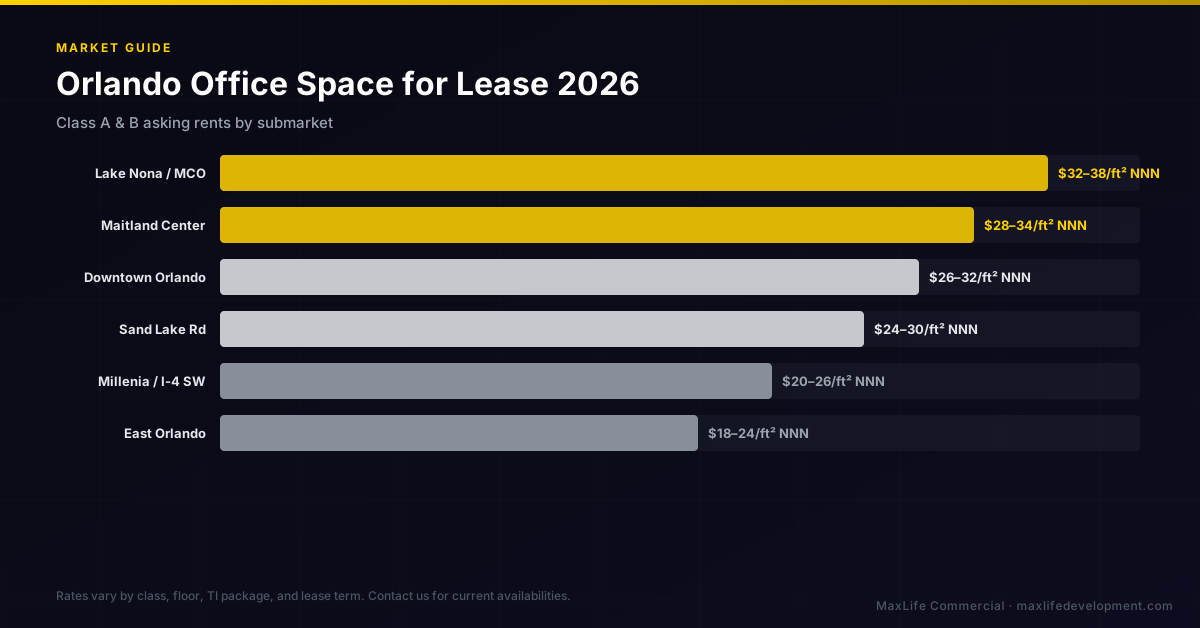
The Orlando office market is not a single market — it's a patchwork of distinct submarkets with very different demand profiles. Downtown Orlando and Lake Nona operate in a different universe than Maitland or East Orlando, and a tenant searching in the wrong corridor can easily pay 30–50% more than they need to. The first step for any tenant is understanding which submarket actually fits the business.
Average Cost to Lease Office Space in Orlando (2026)
Average office space lease cost per square foot in Orlando varies meaningfully by class and submarket. As of 2026, asking rents across actively marketed Orlando office product fall into the following ranges:
| Class | Rent / SF / Year | Typical Structure | Where |
|---|---|---|---|
| Class A | $35 – $55 | Full-service gross | Downtown, Lake Nona, Sand Lake/Dr. Phillips, Lake Mary |
| Class B | $22 – $32 | Modified gross or FSG | Maitland, Winter Park, suburban corridors |
| Class A Medical Office | $32 – $48 | NNN + base rent | Lake Nona, on-campus hospital MOB, Sand Lake |
| Flex / Creative Office | $20 – $28 | NNN or modified gross | Maitland, East Orlando, I-4 corridor |
| Class C | $15 – $22 | Modified gross | Older suburban product across the metro |
These are asking-rent ranges, not effective rent. In 2026 most Orlando landlords are still offering concession packages — typically 1 – 4 months of free rent on a 5-year deal plus a tenant improvement (TI) allowance of $25 – $80 per SF depending on class and lease term. Net effective rent on a Class A Orlando office lease can run 10 – 18% below the asking rate once you factor concessions, so always negotiate the full package, not just the headline number.
For a 5,000 SF Class A office lease in Orlando in 2026, you should expect to budget roughly $14,500 – $23,000 per month in base occupancy cost, plus parking ($75 – $150 per stall per month in urban submarkets), utilities if NNN, and CAM reconciliation. To see what's actively available, browse Orlando office space for lease.
For a deeper view of Orlando office cap rates and where landlords are pricing investment sales of these same buildings, see our Orlando office cap rates report.
Orlando Office Submarkets
Each of Orlando's office submarkets has its own tenant mix, rent structure, and commute profile. Here's how the major corridors stack up for tenants. For broader context on demand drivers across the metro, see our Orlando commercial real estate market overview.
Downtown Orlando / CBD
The Central Business District has the city's tallest and newest Class A product and is the natural home for law firms, financial services, accounting, and government-adjacent tenants that need to be near the courts and municipal offices. Downtown commands premium rents but offers the strongest amenity base and walkable urban context. Parking is at a premium — tenants should verify parking ratios and garage access during site selection.
Lake Nona / Medical City
Lake Nona is Orlando's fastest-growing office submarket and the epicenter of Central Florida's medical and life-science economy. Anchored by UCF College of Medicine, Nemours Children's Hospital, and the VA Medical Center, Lake Nona has generated strong demand for medical office, research space, and Class A professional office. Tenants in healthcare, biotech, and medical device should prioritize Lake Nona for its ecosystem effects — the right neighbors matter.
Maitland & Winter Park
Maitland and Winter Park are Orlando's mature suburban office submarkets. Tenant retention is historically strong, demographics are excellent, and commutes are manageable. These submarkets tend to be preferred by professional services firms (legal, wealth management, consulting) and medical practices serving the northeast metro. Rents are generally lower than Downtown or Lake Nona, and Class B value is readily available for cost-conscious tenants.
Sand Lake Road / Dr. Phillips
The Sand Lake and Dr. Phillips corridor offers Class A office product with proximity to affluent residential neighborhoods and the tourism corridor. This is a premium submarket for businesses serving high-income clients, luxury hospitality, and wealth management.
I-Drive & Convention Center Corridor
I-Drive is more known for hospitality than office, but a growing cluster of creative, entertainment, and convention-adjacent businesses are leasing flexible office space along the corridor. Tenants in events, media, tourism services, and experiential retail often find I-Drive a natural home.
Class A vs Class B vs Flex
Office buildings are classified A, B, or C based on age, finishes, amenities, and location. Class A is the newest and most expensive — typically institutionally owned, with updated mechanical systems, premium lobbies, and amenities like gyms and conference centers. Class B is a step down in age and finish but can offer excellent value for tenants that care more about rent than prestige. Flex office blends office and industrial/warehouse, popular with service trades, medical, logistics, and small operators that need a mix of desk space and roll-up doors.
A common mistake for first-time tenants is assuming they need Class A. In most Orlando submarkets, a well-maintained Class B building with a cooperative landlord and a strong TI package delivers better value than the cheapest Class A option. Your broker should help you pressure-test this tradeoff based on your actual business needs — not the marketing brochure.
Rent Structures: Gross vs NNN vs Modified Gross
Orlando office leases come in three main structures. A full-service gross lease bundles base rent, CAM, taxes, insurance, utilities, and janitorial into one per-square-foot number. A triple net (NNN) lease quotes a lower base rent but passes through operating expenses, taxes, insurance, and CAM separately. A modified gross lease falls somewhere in between — typically with a base year stop for operating expenses.
The trap for tenants is comparing a gross lease number directly against a NNN number. When you see a $32/SF full-service gross quote next to a $22/SF NNN quote with $12/SF in pass-throughs, the NNN deal is actually more expensive — and you're exposed to expense escalations. Always normalize to a comparable all-in number before evaluating options.
Tenant Improvement Allowance (TI)
Tenant improvement allowance is money the landlord provides to build out the space to the tenant's specifications. A standard TI package in Orlando ranges from a few dollars per square foot for shell-ready space up to tens of dollars per square foot for a custom build-out. TI is typically correlated with the lease term — the longer the commitment, the more the landlord is willing to spend on improvements.
TI is negotiable, and a strong tenant rep will push for higher allowances, longer amortization on over-spend, and flexible construction management. The difference between a $20/SF TI package and a $50/SF TI package can be the difference between a space you love and one you outgrow in two years.
Parking Ratios Matter
Parking is often an afterthought in office tours but it's one of the most operationally consequential lease terms. Orlando parking ratios range from around 3.0 spaces per 1,000 SF in the CBD to 5.0+ spaces per 1,000 SF in suburban submarkets. If your headcount density is higher than a typical office — common for call centers, tech, and professional services firms — a 3.0 ratio in Downtown can leave employees fighting for spots and damage morale and retention.
Why Use a Tenant Rep Broker
Tenant representation is paid by the landlord out of the transaction — so working with a tenant rep broker costs the tenant nothing while providing real negotiating leverage, full market visibility (including unlisted buildings), and experienced lease negotiation. Landlords have a listing broker and a leasing attorney advocating for their interests. Tenants who show up without representation are negotiating against two professionals, and they almost always leave money and terms on the table.
When you're ready to start your search, see our office space for lease Orlando page for a full overview of our tenant representation services, or contact us directly to discuss your requirements.
Related Articles
Orlando CRE Market Report 2026
Cap rates, sector outlooks, and submarket trends across Central Florida for the 2026 vintage.
Orlando Cap Rates Investor Guide
Current cap rate benchmarks by property type and submarket across the Orlando metro.
Central Florida Commercial Real Estate Submarkets
A submarket-by-submarket breakdown of Central Florida's most active commercial corridors.
Build-to-Suit vs. Existing Commercial in Orlando
When to build new vs. acquire existing — economics, timeline, and risk compared.
How to Buy Commercial Property in Orlando
Step-by-step guide to sourcing, underwriting, and closing commercial real estate in the Orlando metro.
Why Invest in Florida Commercial Real Estate?
The structural case for Florida CRE — population growth, no income tax, and diversified demand.
Looking for Office Space in Orlando?
Tell us your size, submarket, and target move-in date — our tenant-rep team will build a shortlist, schedule tours, and negotiate the lease on your behalf.
Get Off-Market CRE Deals in Your Inbox
Join our investor list for exclusive Central Florida opportunities, market reports, and deal analysis — delivered weekly. No spam, unsubscribe anytime.