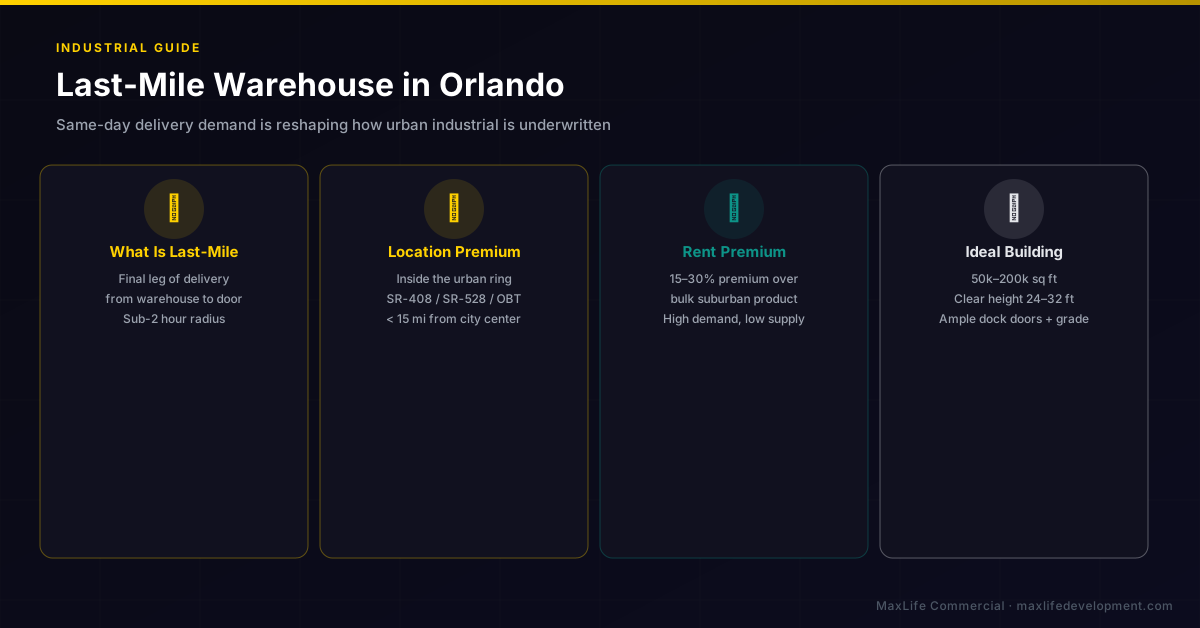
Why Orlando Last-Mile Is So Competitive
Orlando has three characteristics that make last-mile economics work — and make finding space hard. First, it's the fourth-fastest-growing large city in the US. Second, it's geographically sprawling, meaning delivery radii require multiple nodes to cover the metro. Third, infill industrial land close to population density is nearly gone.
The result: vacancy in the best last-mile submarkets (East Orlando, South Orlando, Lake Mary) is below 4%. When space comes available, it leases in weeks — sometimes to tenants who were already waiting on a broker call list.
Orlando Industrial Snapshot
5.8%
Metro Vacancy
$9.50–13/sf
Last-Mile Rent
+5.6%
YOY Rent Growth
3.5M+
Metro Population
Industry estimates — directional, not audited.
Orlando Last-Mile Submarkets
Choosing the wrong submarket can cost you an extra 30–45 minutes per delivery route. Here's how the key submarkets stack up for last-mile positioning:
East Orlando / UCF Corridor (SR-408 / SR-417)
$10–13/sf NNNBest for: E-commerce, same-day delivery to east/southeast metro
Covers the most densely populated growth corridor. Proximity to SR-417 provides fast access to Lake Nona, St. Cloud, and Kissimmee. Very tight vacancy — most available space is 10k–25k sf.
South Orlando / Airport (OIA Corridor)
$10.50–13.50/sf NNNBest for: Airport-adjacent logistics, international e-commerce, courier
Premium rents driven by airport proximity and tourism logistics. Amazon Prime Air and FedEx Freight both have major facilities here. Very limited availability.
Lake Mary / Sanford (I-4 North)
$9–11.50/sf NNNBest for: North Orlando and Volusia County delivery coverage
Growing submarket following population north. I-4 provides highway access; SR-417 offers toll-road express routes. More available square footage than south submarkets.
Apopka / NW Orlando (SR-429 / US-441)
$8.50–11/sf NNNBest for: West and northwest Orlando, Clermont, Osceola
Underutilized last-mile submarket with growing population in Horizon West and Four Corners. New industrial park developments. Best opportunity for operators who need lower rent with reasonable access.
Kissimmee / Osceola (US-192 / SR-417)
$8–10.50/sf NNNBest for: South-central Orlando, Osceola County, tourism corridor
High tourism density creates unique delivery demand patterns. Growing residential population in Poinciana corridor. More availability than most Orlando submarkets.
Spec Requirements for Last-Mile Industrial
Last-mile facilities have different spec priorities than bulk distribution. You don't need 36-foot clear height — you need lots of dock doors and grade-level access, good staging area, and proximity to highways. Here's what matters:
Most last-mile nodes are smaller than bulk DC
Lower than bulk; focus on dock count and staging
High dock ratio drives delivery throughput
Van and sprinter delivery staging
Delivery driver parking dominates spec
EV charging increasingly required
The Off-Market Advantage in Orlando
In a market where vacancy is below 5% and the best last-mile locations lease in weeks, the publicly listed inventory on LoopNet and CoStar isn't enough. The operators who consistently get into good space have one thing in common: they work with brokers who know about space before it's marketed.
Off-market opportunity sources in Orlando include:
Upcoming vacancies
Existing tenants with expiring leases whose landlords need to backfill. A broker with active landlord relationships can often get you first look 90–120 days before formal marketing.
Industrial park expansions
New phases of existing parks where allocation happens through broker relationships before public marketing.
Owner-user conversions
Business owners selling their building and simultaneously needing to lease back — or wanting to find a replacement tenant as they vacate.
Tenant-to-tenant sublease
Companies downsizing or exiting markets often sublease at below-market rents. These rarely appear on public databases.
Multi-Node Strategy for Central Florida Coverage
One facility can't efficiently cover Central Florida's geography. The metro stretches 60+ miles north-south and 50+ miles east-west. Operators serious about sub-2-hour delivery coverage typically run 2–3 nodes:
Node 1 (Primary)
20–40k sf
East Orlando or South OIA
East/South metro, airport corridor, I-4
Node 2 (North)
10–20k sf
Lake Mary or Sanford
North Orlando, Volusia, Seminole County
Node 3 (West)
10–15k sf
Apopka or Kissimmee
West Orange, Osceola, Horizon West
This structure achieves 95%+ of Central Florida population within 90-minute delivery window from a single dispatch system.
Frequently Asked Questions
What is last-mile warehouse rent in Orlando?
Last-mile infill industrial in Orlando runs $9.50–$13.50/sf NNN depending on submarket. East Orlando and airport corridor command premium rents. Apopka and Kissimmee offer better pricing with reasonable access.
How do I find last-mile delivery warehouse space in Orlando?
Work with a tenant rep broker who specializes in Orlando industrial. Off-market opportunity is critical in this market — sub-5% vacancy means the best space never reaches public listings.
How many last-mile nodes do I need to cover Orlando?
Most operators use 2–3 nodes to achieve efficient coverage. A single node works for smaller operations but limits delivery radius to the immediate metro core.
What size warehouse do I need for last-mile delivery in Orlando?
Most last-mile operations run in 10,000–50,000 sf facilities. Larger footprints (50k+) are rare in true last-mile locations and typically require build-to-suit.
Related Reading
Need Last-Mile Space in Orlando?
Tell us your delivery radius requirements, size, and timeline. We'll source on- and off-market options within 48 hours.
Related Articles
Lakeland Warehouse Space (I-4 Corridor)
Florida's central distribution hub — submarkets and rents.
Industrial Space for Lease in Jacksonville
Jacksonville port-adjacent and intermodal industrial market.
Orlando Industrial Real Estate Guide
Investor's guide to warehouse, flex, and distribution properties.
Orlando Entertainment District CRE
Tourism-driven last-mile demand near theme parks.
Central Florida CRE Submarkets
Submarket analysis for industrial site selection.
Orlando Cap Rates Investor Guide
Industrial cap rates by submarket — for owner-investors.